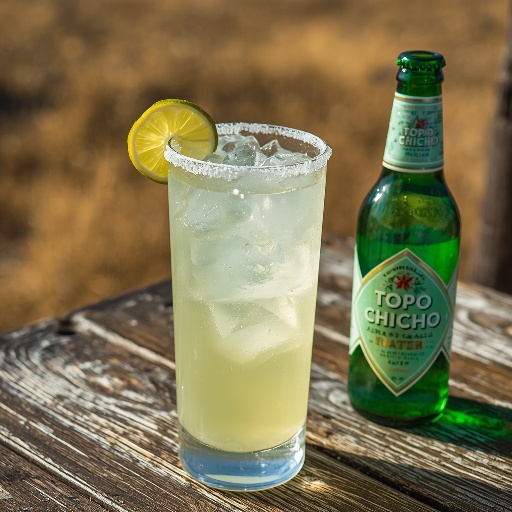
Three ingredients. No fuss. One of the most enduring cocktails ever to come out of the Southwest. This guide covers the original recipe, the history behind it, what actually makes it work, and every honest variation worth knowing about.
| 3 | 2 min | ~13% | 1 |
| Ingredients | Build time | Approx. ABV per serve | Glass to wash |
What Ranch Water Actually Is
Ranch Water is a highball. That’s the technical category — a spirit lengthened with a carbonated mixer, served over ice in a tall glass. In Ranch Water’s case, that means silver tequila, fresh lime juice, and sparkling mineral water. That’s the whole recipe. Three things.
What makes it different from a tequila soda with lime isn’t just the specific water — it’s the balance. Ranch Water uses more tequila relative to the mixer than most highballs, a full lime’s worth of fresh juice rather than a squeeze, and it’s built (not shaken) directly in the glass. The result is cleaner and sharper than a margarita, more flavourful than a basic tequila soda, and far more refreshing than either on a hot afternoon.
On the highball format: The highball is one of the oldest and simplest cocktail formats — a base spirit over ice in a tall glass, topped with a carbonated mixer. According to Wikipedia’s entry on highball cocktails, the style dates to the late 19th century and is defined by its simplicity and the emphasis on quality ingredients, since there’s nowhere to hide a mediocre spirit. Ranch Water fits this tradition exactly — and it’s worth understanding that context, because it explains why tequila quality matters so much in this drink.
Where It Came From — The West Texas Origin Story
The honest answer is that no one fully agrees on who invented Ranch Water, and in Texas that’s considered part of its authenticity rather than a problem. The most commonly cited origin is the Big Bend area of West Texas — specifically the stretch of ranching country around Terlingua and Marfa, where summer temperatures regularly exceed 100°F (38°C) and a cold drink with enough tequila to notice is less a luxury than a reasonable response to the climate.
The name itself is telling. “Ranch water” was a term used colloquially in the region to describe the mineral-rich, slightly fizzy water that came from the area’s natural springs — water that, when mixed with tequila and lime, made a drink that ranch hands and landowners alike apparently found difficult to argue with.
The Topo Chico connection: Topo Chico — the Mexican sparkling mineral water bottled in Monterrey — became the standard mixer for Ranch Water, and the two are now nearly inseparable in the cultural imagination of the drink. Topo Chico has been produced since 1895 and has long been popular across northern Mexico and Texas border communities. According to Wikipedia’s entry on Topo Chico, the brand’s higher carbonation level compared to most sparkling waters is a key part of what makes it distinctive in mixed drinks — the bubbles hold longer and the mineral character adds a subtle complexity that plain club soda doesn’t replicate.
By the early 2000s, Ranch Water had spread beyond West Texas ranching culture into Austin and the broader Texas cocktail scene. By the late 2010s, it was being made in bars across the country and had spawned a small industry of canned versions. None of them quite capture what the original tastes like made fresh, but they’ve done a reasonable job of telling people it exists.
The Original Three-Ingredient Recipe
Texas Ranch Water — Original
- 2 oz (60ml)Silver (blanco) tequila100% agave. This is non-negotiable. See tequila section below.
- 1 oz (30ml)Fresh lime juiceSqueezed to order. Bottled lime juice produces a noticeably flat, slightly bitter result. One medium lime gives roughly 1 oz.
- Top withTopo Chico sparkling mineral waterCold, freshly opened. The carbonation drops fast once the bottle is open — don’t open it in advance.
- EssentialIce — lots of itA highball glass filled to the top. The drink dilutes slightly as the ice melts, which is intentional and correct.
Optional: a salt rim or a lime wheel garnish. The original doesn’t have either. Both are acceptable. A salt rim changes the drink’s character meaningfully — more on that below.
Tequila — Which One to Use and Which to Avoid
The tequila choice matters more in Ranch Water than in almost any other tequila cocktail, because there’s nothing to hide behind. A margarita has triple sec and sugar. A Paloma has grapefruit juice. Ranch Water has lime, water, and tequila. If the tequila isn’t good, you’ll taste every bit of that.
| Blanco / Silver tequila | Reposado tequila | Añejo tequila |
| Original choice | Interesting variation | Not recommended |
| Unaged, clean, and bright. The agave character comes through most clearly. This is what the drink was always made with and what the recipe is built around. 100% agave is mandatory. | Aged in oak for 2–12 months, with gentle vanilla and wood notes. Makes a slightly warmer, more complex Ranch Water. Not traditional, but genuinely good. Some prefer it. | Aged 1–3 years. Too much oak and vanilla — clashes with the lime and mineral water. Worth sipping neat, but misused here. Save it for drinking straight. |
| Mixto tequila (not 100% agave) | Mezcal | Texas-distilled agave spirits |
| Avoid | Bold variation West Texas feel | Local pride |
| Made with a mix of agave and other sugars. Harsher, less clean, and — with nothing to mask the spirit — noticeably inferior. Check the label: it must say “100% agave.” | Smoky, complex, and not traditional — but the smokiness actually works well with the mineral water and lime. A mezcal Ranch Water is a different drink, and a good one. | Distilleries like Dulce Vida and Treaty Oak in Texas produce agave spirits domestically. Not technically tequila (which requires production in specific Mexican states), but regionally appropriate and interesting. |
On tequila and its legal definition: Tequila must be produced in specific regions of Mexico — primarily the state of Jalisco — and must be made from blue agave (Agave tequilana). According to the Tequila Regulatory Council (CRT) and Mexican law, only spirits meeting these geographic and production standards can be legally labelled as tequila. This matters for Ranch Water because the distinct character of genuine blanco tequila — its mineral, vegetal agave notes — is part of what makes the drink work. [Reference 3 — Wikipedia: Tequila — applied inline]
The Topo Chico Question
Can you make Ranch Water with a different sparkling water? Yes. Will it taste the same? Not quite.
Topo Chico has a higher carbonation level than most sparkling waters and a mineral profile — from the natural springs near Monterrey — that contributes a faint, almost chalky character that you notice when it’s absent. It also holds its bubbles notably longer after opening than many competitors, which matters in a drink you’re building and drinking over 10–15 minutes.
If you can’t find Topo Chico
Gerolsteiner (German sparkling mineral water) is the closest substitute — high carbonation, strong mineral character. Perrier works reasonably well. San Pellegrino is softer and works if that’s what’s available. Plain club soda from a soda gun is the furthest from the original — it lacks the mineral character — but it still makes a perfectly drinkable Ranch Water, just a simpler one.
Sparkling water temperature matters
The water should be as cold as possible when it goes in. Warm sparkling water loses carbonation faster on contact with ice. A refrigerated bottle of Topo Chico that’s been cold for at least a few hours will give you significantly more fizz in the final drink than one pulled from room temperature.
How to Build It Properly
Ranch Water is built — meaning assembled directly in the serving glass rather than shaken or stirred in a separate vessel. The technique matters more than it sounds.
- Fill a tall highball glass (12–16 oz) to the top with ice. Large cubes or a single large rock melt slower and dilute more gradually than crushed or small ice. Either works — larger is better if you have the choice.
- If you’re doing a salt rim, do it before the ice goes in — wet the outside rim of the glass with a cut lime and press into coarse salt or Tajín. Never submerge the inside of the rim in salt. That way you control every sip: those who want salt tilt the glass their way, those who don’t tilt the other way.
- Pour the tequila over the ice. 2 oz is the standard measure — generous but not reckless. Some Texans pour heavier. That’s a personal choice and no one in West Texas will judge you for it.
- Squeeze the lime directly over the glass. One medium lime, the whole thing. Catch the seeds with your hand or squeeze through a citrus press. The juice should hit the tequila and the ice — not sit separately on top.
- Open a fresh, cold bottle of Topo Chico and pour slowly down the side of the glass, not straight down into the middle. Pouring down the side preserves the carbonation. Pouring directly onto the ice causes the bubbles to escape immediately and you lose half the fizz before the first sip.
- Give it one gentle stir — one full rotation with a bar spoon or a straw. Not vigorous. Not multiple passes. Just enough to distribute the lime juice through the drink. Drop in a spent lime half as garnish if you like. Drink it now, while the bubbles are still alive.
| Glass choice | Salt rim vs. no salt | Lime variety |
| A 12–16 oz highball or a pint glass. Some people use a wide-mouthed mason jar — very on-brand for the West Texas aesthetic and works perfectly well. | The original doesn’t have salt. A Tajín rim adds a chile-lime complexity that works well. Straight coarse salt changes the character significantly — more margarita-adjacent. | Mexican limes (key limes) are smaller, more aromatic, and more acidic than Persian limes. If you can find them — common in Texas and Southwest markets — use them. The flavour difference is noticeable. |
| Pre-squeeze | No sweetener | Drink it quickly |
| Don’t squeeze lime juice in advance and store it. Lime juice oxidises quickly and loses its brightness within 30–45 minutes. Squeeze to order, always. | Ranch Water has no simple syrup, no agave nectar, no sugar. If you find it too tart, the lime is out of balance — use slightly less juice rather than adding sweetness. Adding sweetener changes the category of the drink. | The carbonation drops as the ice melts and warms the drink. Ranch Water is at its best in the first 10 minutes. After 20 minutes it’s still fine, but the fizz is mostly gone. |
Variations Worth Making
| Spicy Ranch Water | Mezcal Ranch Water | Grapefruit Ranch Water |
| Add 2–3 slices of fresh jalapeño to the glass before the tequila. Muddle lightly — just enough to release the juice, not mash the flesh into the drink. Alternatively, use a jalapeño-infused tequila. The heat and the mineral water work surprisingly well together. | Replace the blanco tequila with an unaged mezcal. The smokiness doesn’t fight the lime — it actually amplifies the mineral quality of the Topo Chico. Best with a mezcal that isn’t too heavily smoked, like a Espadín-based expression. | Replace half the lime juice with fresh grapefruit juice. Moves toward Paloma territory but retains the simplicity of Ranch Water. Pink grapefruit is sweeter and gentler; white grapefruit is more bitter and assertive. |
| Ranch Water Pitcher | Cucumber Ranch Water | Low-ABV Ranch Water |
| For groups: combine tequila and lime juice (scaled up) in a pitcher with ice. Pour Topo Chico per glass rather than into the pitcher — mixing the carbonated water in bulk kills the fizz. Pour the tequila-lime base over fresh ice in each glass, then top individually. | Add 3–4 thin slices of cucumber before the tequila and muddle gently. The cucumber’s fresh, mild character works well with the mineral water. Particularly good in summer. Finish with a cucumber ribbon garnish if you want to look like you know what you’re doing. | Use 1 oz tequila instead of 2, and add a splash of fresh lime juice alongside the standard measure. The lower spirit ratio makes the mineral water and lime more prominent. Good for longer drinking sessions in Texas heat where 2 oz every 15 minutes adds up quickly. |
What Makes It Different from a Paloma or a Margarita
These three drinks share tequila and lime and come up in the same breath regularly, but they’re genuinely different drinks.
Ranch Water vs. Margarita
A margarita is a short cocktail — usually 4–5 oz total — shaken with ice, triple sec or Cointreau for sweetness, and often served salted. It’s richer, more complex, and has more sugar. Ranch Water is a long drink — 10–12 oz or more — built rather than shaken, with no sweetener whatsoever. They share tequila and lime and that’s about it. Ranch Water is lighter, more refreshing, and far less caloric.
Ranch Water vs. Paloma
The Paloma uses grapefruit — either fresh juice or grapefruit soda — alongside lime and tequila. It has a fruity sweetness and more flavour complexity. Ranch Water strips all of that away. Just lime, sparkling mineral water, and tequila. The Paloma is more rounded; Ranch Water is sharper, more mineral, more direct. One isn’t better — they’re different tools for different moods.
Ranch Water vs. Tequila Soda
The closest comparison and the one that causes the most confusion. A tequila soda is tequila and plain club soda — minimal flavour beyond the spirit. Ranch Water adds fresh lime juice (a full ounce, not a squeeze) and uses mineral water with actual character rather than neutral carbonated water. The lime changes everything. It’s the difference between a drink with personality and one without.
Serving for a Crowd
Ranch Water scales well for outdoor parties, barbecues, and the kind of Texas gatherings where a hundred degrees and an open bar are considered perfectly normal co-existing conditions.
The key rule for batching: never mix the Topo Chico into the base. Combine the tequila and fresh lime juice in a large pitcher with ice. Set up a station with cold Topo Chico bottles, glasses filled with ice, and a ladle. Each person ladles the tequila-lime base over their ice and tops with Topo Chico themselves. This preserves the carbonation and ensures every drink has full fizz.
Batch ratios: For 10 people — 20 oz (600ml) blanco tequila, 10 oz (300ml) fresh lime juice (about 10 medium limes). Keep this mixture refrigerated until service. Have 10 cold bottles of Topo Chico ready. Each person gets approximately 3 oz of the base mixture topped with one bottle — adjust for heavier or lighter pours as preferred. The lime juice can be squeezed the morning of the event and refrigerated — use it within 6–8 hours for best flavour.
Common Mistakes
Using bottled lime juice
This is the most common mistake and the one that most undermines the drink. Bottled lime juice has a cooked, slightly bitter character from the preservation process. In a margarita with triple sec and sugar, it’s passable. In Ranch Water, where the lime is one of three total ingredients, it’s a significant downgrade. Fresh limes, squeezed to order. Non-negotiable.
Using a mixto tequila
If the tequila bottle doesn’t say “100% agave” somewhere on the label, it contains a percentage of non-agave sugar fermented alongside agave. These spirits are harsher, less clean, and in a Ranch Water they have nowhere to hide. The extra cost of a 100% agave blanco tequila is justified entirely by a drink with three ingredients.
Opening the Topo Chico too early
Sparkling water loses carbonation from the moment the bottle is opened. Opening your Topo Chico 10 minutes before you make the drink means you’re working with significantly flatter water. Open it, pour it, drink it. The whole build should take under two minutes from bottle opening to first sip.
Pouring the water straight down into the glass
This causes the carbonation to violently escape on contact with the ice. Pour down the inside wall of the glass slowly, the same way you’d pour a beer to avoid excessive foam. You’ll lose significantly less fizz and the drink will be livelier from start to finish.
Adding sweetener
Ranch Water is not supposed to be sweet. If it tastes too tart, the lime is out of balance — use slightly less, or choose a riper, less acidic lime. Adding simple syrup or agave turns it into something closer to a margarita, and while that might be a drink you enjoy, it’s a different drink. The point of Ranch Water is its clean, dry, unsweetened quality.
See Also – Dutch oven chicken thighs, stovetop — California style
See Also – Cast iron skillet cornbread — no buttermilk needed