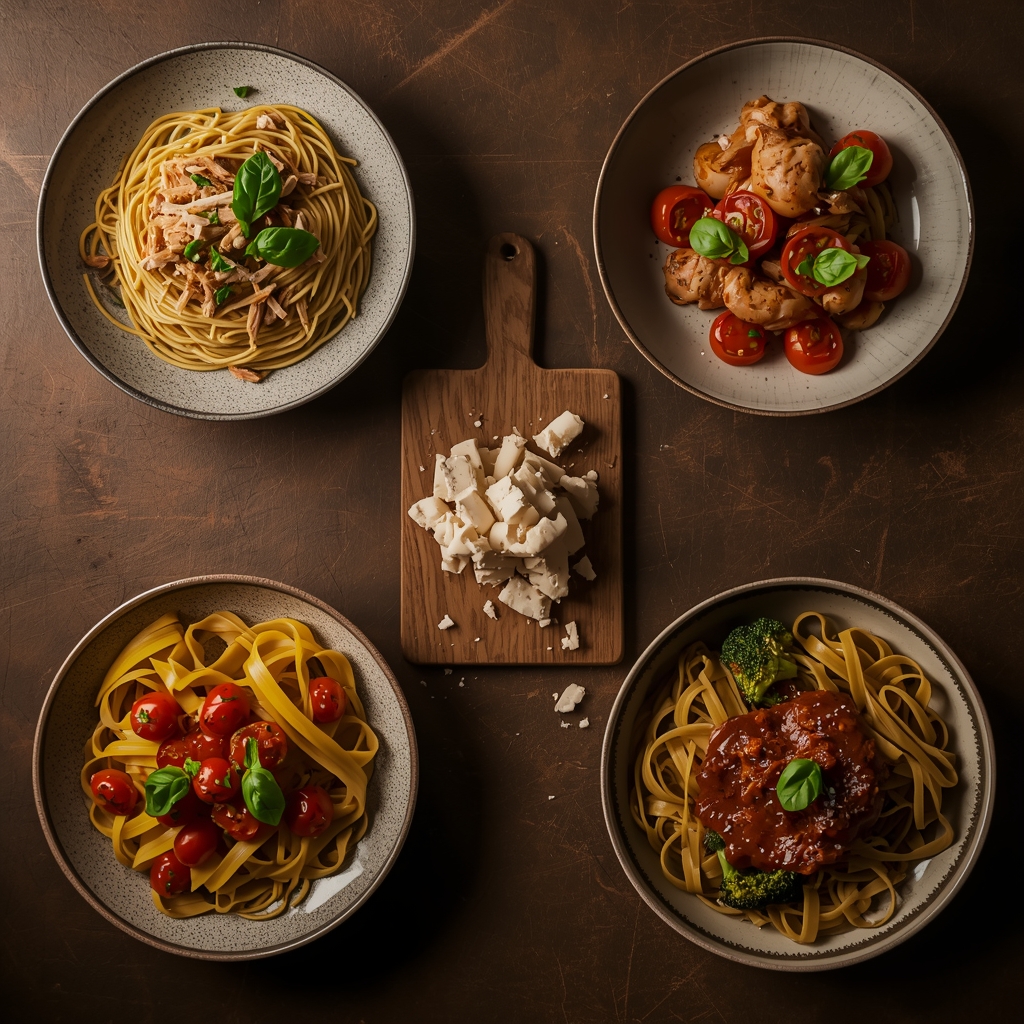
A rotisserie chicken from the grocery store might be one of the best value purchases in a home cook’s week. One bird feeds a family at dinner, and the leftovers — which are substantial — become the foundation for at least two more meals if you think ahead. Pasta is the most natural destination for that remaining chicken, and it doesn’t require cream to be genuinely good.
In fact, some of the best rotisserie chicken pasta recipes have nothing to do with cream. Olive oil, pasta water, tomatoes, lemon, garlic, anchovies — these build sauces with more complexity and better balance than a cream-based version, and they come together faster.
This article covers twelve pasta recipes, all without cream, organized from simplest to more involved. Every recipe is realistic for a weeknight and uses ingredients that are likely already in the kitchen.
Why No Cream?
The “no cream” approach isn’t about restriction — it’s about what works better. Rotisserie chicken already has seasoning, smoke, and fat from the cooking process. Adding cream can mute those qualities rather than amplify them. The chicken gets lost in richness rather than coming through as the main flavor.
Olive oil, pasta water, tomatoes, and lemon all interact with the chicken’s existing character and make it taste more like itself. Pasta water especially — starchy, slightly salty, warm — is what creates silky, cohesive sauces without any dairy involved. It’s the technique that Italian home cooks have relied on for generations, and it works for exactly the reasons those cooks understood: the starch emulsifies the fat and coats the pasta with something that has real body without heaviness.
That said, this article isn’t dogmatic about dairy entirely. Parmesan and pecorino are used freely — they add salt, umami, and fat in a more controlled way than cream does.
Before You Start: Getting the Most from Leftover Rotisserie Chicken
A rotisserie chicken stripped properly yields far more meat than people typically get from a quick tear-down. Pull the obvious pieces — breast, thighs, drumsticks — and then go back for what’s left: the oysters (two small pockets of dark meat beside the spine, often the best part of the bird), any meat along the rib cage, and the wing meat.
Save the carcass. Ten minutes of simmering in water with an onion half, a few peppercorns, and a bay leaf produces a simple stock that makes every pasta on this list better than water from the tap. Freeze it in small portions and pull out a cup whenever a recipe calls for pasta water or stock.
Store stripped chicken in an airtight container in the fridge. It keeps for three to four days. Beyond that, freeze in portions.
The Core Technique: Building Sauce Without Cream
Almost every cream-free pasta sauce is built on one of these foundations:
Emulsified olive oil and pasta water. Garlic cooked gently in olive oil, pasta water added gradually while tossing vigorously, Parmesan stirred in off the heat. This technique is the engine behind aglio e olio and dozens of variations.
Tomato-based sauce. Canned tomatoes, fresh cherry tomatoes, or a combination, cooked down with garlic and olive oil. The tomato provides body, acidity, and natural sweetness.
Broth reduction. Chicken stock simmered down to a more concentrated liquid, finished with olive oil and Parmesan. This produces a light but deeply savory coating rather than a full sauce.
Pesto or blended herb sauce. No cooking required beyond toasting nuts and blending. Olive oil is the fat that binds everything.
Understanding which technique you’re using makes the recipe easier to follow and easier to adapt if something isn’t in the fridge.
The Recipes
1. Garlic and Olive Oil Chicken Pasta (Aglio e Olio Style)
This is the fastest and most stripped-down recipe on the list — four ingredients if you count the pasta — and it’s excellent precisely because it doesn’t try to be more than it is.
Cook spaghetti or linguine until just under al dente. While it cooks, gently warm four to five sliced cloves of garlic in a generous amount of olive oil (roughly four tablespoons for two portions) over low heat. The garlic should soften and turn faintly golden, not brown. Add a pinch of red pepper flakes.
Add the pasta directly to the oil with a generous ladleful of starchy pasta water. Toss vigorously for about a minute until the water and oil emulsify into a light, glossy coating. Add shredded rotisserie chicken and toss again. Remove from heat and stir in a handful of grated Parmesan and chopped fresh parsley.
That’s the whole recipe. The key is the pasta water — it makes the difference between dry, oily pasta and something silky and cohesive.
2. Cherry Tomato and Chicken Pasta
Halve a punnet of cherry tomatoes. Heat olive oil in a wide pan and cook the tomatoes over medium-high heat until they blister and burst — about eight minutes. Add two cloves of sliced garlic and cook for a further minute. The tomatoes should be fully collapsed and producing a jammy, concentrated sauce.
Add shredded rotisserie chicken and a splash of pasta water. Toss with cooked pasta — penne or rigatoni works well here, the ridges catch the sauce. Season with salt and black pepper and finish with fresh basil torn over the top.
Simple and genuinely satisfying. The tomatoes are the sauce — no additions needed.
3. Lemon, Caper, and Chicken Pasta
This is a brighter, more acidic direction that cuts through the richness of rotisserie chicken particularly well. Cook pasta — spaghetti or angel hair. In a pan, warm olive oil with two cloves of minced garlic. Add capers (rinsed if salt-packed), the zest of one lemon, and the juice of half the lemon. Add a splash of pasta water and the cooked pasta. Toss.
Add shredded chicken and toss again. Finish with fresh parsley, a drizzle of good olive oil, and grated Parmesan.
The capers add a salty punch that works the same way anchovies do — they disappear into the dish while adding depth that keeps people eating without knowing exactly why. If you have both capers and a couple of anchovy fillets, add both. The anchovies dissolve in the hot oil and become part of the base flavor rather than anything identifiably fishy.
4. Puttanesca-Style Chicken Pasta
Puttanesca is one of the great pantry pastas — built from capers, olives, anchovies, garlic, and tomatoes, all of which are shelf-stable. Adding rotisserie chicken makes it more substantial without changing its essential character.
Warm olive oil, add two anchovy fillets and let them dissolve over medium heat. Add sliced garlic, black olives (Kalamata are best), capers, and crushed red pepper. Add a tin of crushed tomatoes and simmer for ten minutes until slightly thickened. Add shredded chicken in the last two minutes.
Toss with cooked spaghetti. No Parmesan — the dish is salty enough from the anchovies, capers, and olives, and the flavor is already complex.
5. Chicken Pesto Pasta
Make pesto in a food processor: a large bunch of fresh basil, a clove of garlic, a handful of pine nuts (or walnuts as a less expensive substitute), grated Parmesan, olive oil, salt, and a squeeze of lemon. Blend until smooth, adding oil until the consistency is loose and glossy.
Toss cooked pasta — fusilli, trofie, or casarecce are ideal shapes for catching pesto — with the pesto and a splash of warm pasta water, which helps the pesto coat the pasta rather than clumping. Add shredded rotisserie chicken.
Serve at room temperature or slightly warm. Pesto pasta is actually better not piping hot — the basil flavor is more pronounced when it hasn’t been cooked further.
6. Arrabbiata Chicken Pasta
Arrabbiata means angry in Italian — the name comes from the heat of the chili. Fry two to three cloves of sliced garlic in olive oil over medium heat with a generous pinch of dried red chili or two fresh chilis slit down the middle. Add a tin of crushed tomatoes, season with salt, and simmer for fifteen minutes until the sauce is thick and the oil has separated to the surface.
Add shredded rotisserie chicken and toss with cooked rigatoni or penne. No Parmesan in the traditional version — the dish stands alone. Fresh parsley is optional.
This is a straightforward, direct pasta. The heat from the chili is the point. Don’t reduce it unless cooking for children.
7. Chicken Pasta with Roasted Red Pepper Sauce
Roast red peppers directly over a gas flame or under a broiler until completely charred all over. Seal in a plastic bag for ten minutes, then peel and remove seeds. Blend the roasted pepper flesh with a clove of garlic, a tablespoon of olive oil, a splash of pasta water, and a pinch of smoked paprika until smooth.
Toss with cooked pasta — pappardelle or tagliatelle — and shredded rotisserie chicken. Finish with crumbled feta or ricotta salata for a salty, creamy counterpoint.
This sauce is silky and slightly sweet from the roasted pepper, with a smokiness that complements the rotisserie chicken’s own char. It’s a dish that looks impressive and takes about twenty minutes.
8. Chicken and Spinach Pasta with Lemon
Wilt a large bag of spinach in a pan with a clove of garlic and a drizzle of olive oil — it takes about two minutes over medium heat. Season with salt, pepper, and a squeeze of lemon. Add shredded rotisserie chicken to the pan with a splash of pasta water and toss everything together.
Cook linguine or spaghetti and add directly to the pan, tossing until everything is combined and coated. Finish with grated Parmesan and lemon zest.
This is one of the lighter options on the list. The spinach adds vegetable content without complicating anything, and the lemon keeps the dish feeling fresh rather than heavy.
9. Chicken Pasta Primavera (No Cream Version)
Primavera usually involves cream, but it doesn’t need to. The vegetables are the point — seasonal, quickly cooked, with the pasta providing the background.
Sauté diced zucchini, asparagus cut into short lengths, and halved cherry tomatoes in olive oil over high heat until slightly charred. Add garlic, season well, and deglaze with a splash of white wine or pasta water. Add shredded chicken.
Toss with cooked pasta — a medium shape like penne or farfalle. Finish with a generous amount of Parmesan and fresh basil.
The key difference from a cream primavera: cook the vegetables in a very hot pan so they char slightly rather than steam. That caramelization adds flavor that cream primavera gets from the richness of the dairy.
10. Chicken, Broccoli, and Anchovy Pasta
Blanch broccoli florets in the pasta cooking water for two minutes, remove, and set aside. In the same water, cook orecchiette or penne. While the pasta cooks, fry two anchovy fillets in olive oil until dissolved. Add two cloves of garlic and the blanched broccoli, mashing some of the broccoli lightly into the oil to form a rough sauce.
Add the pasta with a splash of cooking water and shredded rotisserie chicken. Toss vigorously. Finish with grated Pecorino and red pepper flakes.
The broccoli-anchovy combination is classic in Pugliese cooking and works brilliantly with chicken. The anchovies disappear into the base but their flavor is unmistakable. This is one of the best pasta dishes on this list for flavor per unit of effort.
11. Chicken Pasta with Sun-Dried Tomatoes and Olives
Roughly chop a handful of sun-dried tomatoes (oil-packed are better than dry here). Slice Kalamata olives. Warm olive oil with garlic, add the sun-dried tomatoes and olives, cook for two minutes. Add a splash of the sun-dried tomato oil from the jar — it’s deeply flavored and shouldn’t be wasted.
Add shredded rotisserie chicken, pasta, and a splash of pasta water. Toss together. Finish with fresh basil and Parmesan.
The sun-dried tomatoes here are doing most of the work — they’re concentrated and slightly sweet, and they make a sauce without needing much additional liquid. This is a reliable pantry pasta that can be assembled with almost nothing fresh in the house.
12. Chicken Pasta with Walnut Sauce
Blend walnuts, a clove of garlic, a handful of Parmesan, a splash of olive oil, and enough pasta water to create a loose, creamy paste. Season with salt and pepper.
Toss cooked pasta — pappardelle or linguine — with the walnut sauce and a splash more pasta water if needed. Add shredded rotisserie chicken and finish with fresh parsley and a few extra whole walnuts for texture.
This sauce is rich but not heavy — the walnuts provide creaminess through their natural fat rather than dairy. It’s a northern Italian preparation that’s less known outside Italy but worth cooking regularly.
Tips for Making Rotisserie Chicken Pasta Without Cream
Always save pasta water. Set a measuring cup next to the pot before draining and scoop out at least a full cup. Cold pasta water works in a pinch but warm water emulsifies better. Pasta water is the single most important technique in cream-free pasta.
Shred the chicken, don’t dice it. Shredded chicken distributes through pasta more evenly than chunks and picks up sauce better. The irregular surface area of a pulled piece of chicken holds more flavor than a clean cube.
Add chicken at the end. The chicken is already cooked. It needs heat, not more cooking. Adding it in the last minute of tossing is enough — too long in a hot pan dries it out.
Season in layers. Salt the pasta water generously (it should taste distinctly salty). Taste the sauce before adding the pasta. Taste again after adding Parmesan, which adds saltiness. Adjust only at the end with the finished dish in front of you.
Use the pan drippings. If reheating chicken in a pan before adding to pasta, the bits that stick to the pan are flavor. Add pasta water or white wine to deglaze and use that liquid in the sauce.
Pasta Shapes and Which Recipes They Suit
Not every pasta works in every recipe. Shape matters more than people typically account for.
Long pasta (spaghetti, linguine, pappardelle): Best with oil-based sauces, pesto, and light tomato sauces. The long strands twirl with sauce rather than trapping it.
Ridged short pasta (rigatoni, penne, fusilli): Best with chunky tomato sauces, arrabbiata, and anything with pieces of vegetable or chicken that need to be caught.
Wide shapes (pappardelle, tagliatelle): Best with meatier, more substantial combinations — the walnut sauce, roasted red pepper, or primavera.
Small shapes (orecchiette, farfalle): Best with broccoli, vegetables, or chunky pestos. The cup shape holds small pieces of ingredient in each bite.
How to Store and Reheat Leftover Pasta
Pasta made with olive oil-based sauces holds better in the fridge than cream-based versions — no dairy means no separation or graininess when reheated.
Store cooked pasta in an airtight container for up to three days. Reheat in a pan over medium-low heat with a splash of water, stock, or olive oil, tossing gently until warm. This is significantly better than microwaving, which makes pasta uneven and can dry the outer layer before the center warms through.
If reheating in a microwave: add a tablespoon of water, cover the container loosely, and use medium power in ninety-second intervals, stirring between each.
A Quick Reference Table
| Recipe | Key Flavor | Best Pasta Shape | Time |
|---|---|---|---|
| Aglio e Olio style | Garlic, olive oil | Spaghetti | 15 min |
| Cherry tomato | Bright, fresh tomato | Penne, rigatoni | 20 min |
| Lemon and caper | Acidic, briny | Spaghetti | 15 min |
| Puttanesca style | Bold, salty, spiced | Spaghetti | 25 min |
| Pesto | Herby, nutty | Fusilli, trofie | 15 min |
| Arrabbiata | Spicy, tomato | Rigatoni | 25 min |
| Roasted red pepper | Smoky, sweet | Pappardelle | 30 min |
| Chicken and spinach | Light, lemony | Linguine | 15 min |
| Primavera (no cream) | Fresh vegetables | Penne, farfalle | 25 min |
| Broccoli and anchovy | Savory, rich | Orecchiette | 20 min |
| Sun-dried tomato | Concentrated, savory | Any short pasta | 15 min |
| Walnut sauce | Nutty, creamy | Pappardelle | 20 min |
Final Thoughts
Rotisserie chicken pasta without cream is not a compromise. It’s often a better result — the chicken stays at the center of the dish instead of getting absorbed into richness, and the sauces have a brightness and clarity that cream can sometimes bury.
The techniques in this article — emulsifying oil and pasta water, building depth from anchovies and capers, using pasta water to adjust consistency — are skills that carry over into all pasta cooking. Learn them once with a rotisserie chicken and a bag of pasta and they become part of how you cook permanently.
The fastest recipes here are fifteen minutes. The most involved are thirty. All of them are genuinely good dinner options on a Tuesday when the chicken is already in the fridge.
See Also –
See Also –