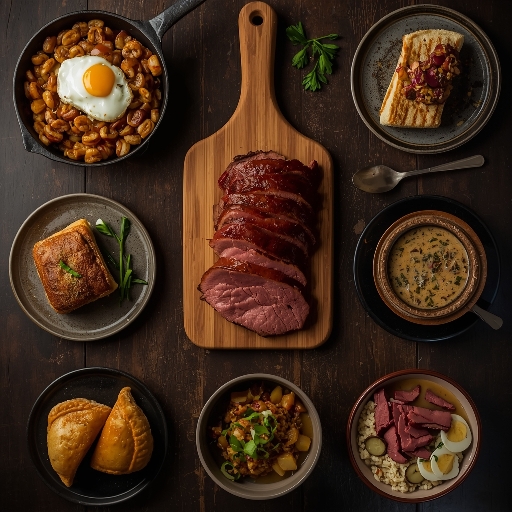
Corned beef is almost always made in a quantity larger than one meal requires. A whole brisket, braised low and slow for several hours, produces far more meat than most households get through at a single sitting. Which is, if you think about it, exactly how it should be.
The leftovers are the point. Corned beef that’s already been cooked once — sliced or pulled apart, resting in its own juices — becomes something different on day two. The flavor deepens. The texture firms slightly. And it takes to other dishes in a way that makes it feel like it was designed for them.
This article covers twenty real uses for leftover corned beef, organized by meal type and with enough detail to follow through.
Why Leftover Corned Beef Is So Versatile
Corned beef has a flavor profile that’s simultaneously briny, savory, and slightly sweet from the curing spices. That combination is bold enough to hold its own against strong competing flavors — mustard, horseradish, sauerkraut, cheddar, hot sauce — but mellow enough that it doesn’t overwhelm more delicate preparations like a simple egg scramble or a light salad.
It’s also already cooked and fully seasoned, which means it functions as a ready-to-use protein that just needs heat and pairing. The fat content of brisket keeps it moist through reheating — corned beef doesn’t dry out the way lean proteins like chicken breast do.
The one thing to watch: corned beef is salty. In any recipe that calls for additional salt, add it at the end, after tasting, rather than at the beginning.
Breakfast and Brunch
Corned Beef Hash
This is the most iconic use of leftover corned beef and for good reason — it’s genuinely excellent when done properly. Dice the corned beef into rough half-inch cubes. Do the same with cooked potato, or use raw potato that you’ve par-boiled for five minutes. Dice an onion and a bell pepper.
Heat a cast-iron skillet with a neutral oil over medium-high heat. Add the potatoes first and let them crisp on one side without stirring — about five minutes. Add the onion and bell pepper, cook until softened. Add the corned beef. Toss everything together and then leave it again, pressing flat with a spatula, for another four to five minutes. You want a crust — a dark, caramelized layer at the bottom of the pan.
The hash is ready when there are crispy edges throughout and the bottom of the pan has a uniform browning. Top with a fried egg. Press the yolk slightly with a fork so it runs down through the hash.
Don’t stir constantly. The crust is everything.
Corned Beef Scramble
Simpler than hash and faster. Roughly chop or shred leftover corned beef. Beat three or four eggs with a splash of milk, salt (go easy), and black pepper. Heat butter in a non-stick pan, add the corned beef and warm it through, then pour in the eggs. Cook over medium-low heat, stirring slowly and pulling from the edges, until the eggs are just set and still slightly soft.
Add shredded Swiss or cheddar cheese right at the end. Serve with buttered toast or rye bread.
This takes less than ten minutes from start to plate. It’s filling, and the corned beef’s salt means you need almost no additional seasoning.
Corned Beef and Potato Breakfast Burrito
Build a breakfast burrito: flour tortilla, scrambled eggs, diced corned beef, shredded cheese, diced onion, and a spoonful of salsa or hot sauce. Roll tightly and toast in a dry skillet until golden on both sides.
These travel well and can be made ahead. Wrap in foil, refrigerate overnight, and reheat in a 350°F oven for fifteen minutes or in the microwave for two minutes — they hold up well either way.
Corned Beef Benedict
Replace the Canadian bacon in a classic eggs Benedict with slices of warmed leftover corned beef. Toasted English muffin, corned beef, poached egg, hollandaise. The saltiness of the corned beef pairs extremely well with the richness of hollandaise — the combination is more interesting than the original in several ways.
A quick blender hollandaise (butter, egg yolks, lemon, processed for thirty seconds) takes five minutes and works reliably. Serve immediately; hollandaise doesn’t hold well.
Sandwiches and Handheld Meals
Classic Reuben Sandwich
If there’s one dish that exists almost specifically for leftover corned beef, it’s the Reuben. Pile sliced corned beef generously on rye bread. Add Swiss cheese, sauerkraut that’s been squeezed dry, and a generous spread of Russian or Thousand Island dressing on both slices of bread.
Butter the outside of the bread and cook in a skillet over medium heat, pressing down with a spatula, until golden on both sides and the cheese has melted fully. Three to four minutes per side.
The proportions matter. A Reuben with too little corned beef is just a mediocre sandwich. One with too much becomes unwieldy. The right amount is more than you think it should be before you do it.
Corned Beef and Swiss Melt
Simpler than a Reuben — just corned beef, Swiss cheese, and Dijon mustard on sourdough or rye, cooked in butter until golden and melted. No sauerkraut, no dressing. This is the stripped-back version that lets the beef itself take center stage.
Good for people who find sauerkraut too assertive, or who just want something uncomplicated and fast.
Open-Faced Corned Beef on Toast
Toast a thick slice of bread — rye or sourdough both work well. Lay sliced corned beef over it, add a schmear of whole-grain mustard, and top with thin-sliced gherkins or capers. This is more of a Nordic-inspired open sandwich than a traditional American preparation, but the flavors are complementary.
Add a poached egg on top if you want to make it more substantial.
Corned Beef Wrap with Pickled Vegetables
Warmed corned beef, shredded into pieces, in a large flour tortilla with quick-pickled red onion, shredded cabbage dressed with a little apple cider vinegar, and a spoonful of horseradish cream (sour cream mixed with prepared horseradish). Wrap tightly and eat immediately.
The pickled, acidic elements cut through the richness and salt of the beef in a way that makes the whole thing feel lighter than it is.
Pasta, Rice, and Grain Dishes
Corned Beef Fried Rice
Cold leftover rice plus corned beef is a genuinely unusual combination that works better than most people expect. Heat a wok or large skillet over very high heat. Add oil, then diced onion and garlic. Add cold rice and press into the pan, letting it toast slightly. Add shredded corned beef, a splash of soy sauce (go light — the beef is already salty), a drizzle of sesame oil, and sliced scallion.
Push everything to the sides and scramble two eggs in the center, tossing together just before fully set.
The briny, spiced flavor of the corned beef translates surprisingly well into fried rice. Serve with sriracha or chili oil on the side.
Corned Beef and Cabbage Pasta
Thinly slice leftover cabbage from the original boil (or use fresh). Sauté cabbage in butter with a diced onion until softened and lightly caramelized — about ten minutes. Add shredded corned beef and toss briefly. Cook egg noodles or a wide pasta like pappardelle, reserve a cup of pasta water, and toss the pasta with the cabbage and beef mixture.
Add a splash of pasta water, a knob of butter, and whole-grain mustard. Toss until the pasta is coated and glossy. Finish with black pepper and fresh parsley.
This dish leans Eastern European in character — hearty, a little rustic, and deeply satisfying on a cold evening.
Corned Beef Hash Bowl with Grain
Build a grain bowl using barley, farro, or brown rice as the base. Top with a small amount of warmed corned beef hash (see the breakfast section above), a soft-boiled egg, sliced avocado, quick-pickled cucumber, and a drizzle of tahini or a mustard vinaigrette.
This is the healthiest iteration of leftover corned beef on the list. The grain base adds fiber, the avocado adds fat that balances the saltiness, and the pickled cucumber cuts through everything. It works well as a lunch bowl.
Soups and Stews
Corned Beef and Vegetable Soup
Use the cooking liquid from the original corned beef, if you kept it, as the broth — it’s deeply flavored and already well-seasoned. If not, use chicken or beef stock. Dice any remaining boiled vegetables from the original dish: potato, carrot, turnip, and cabbage all work.
Add shredded corned beef to the broth with the vegetables, bring to a simmer, and cook for fifteen minutes. Taste before adding any salt — the broth from corned beef is often salty enough. Season with black pepper and fresh parsley.
This is the fastest soup on this list and one of the best uses for the cooking liquid that most people pour down the drain.
Corned Beef and Potato Chowder
In a pot, sweat diced onion and celery in butter until soft. Add flour, stir for a minute. Add chicken stock gradually while stirring, then add diced potato and shredded corned beef. Simmer for fifteen minutes until the potato is completely tender.
Add a cup of heavy cream or whole milk and simmer gently for five more minutes. Season with white pepper, a pinch of thyme, and fresh chive on top.
This chowder is thick, rich, and filling. The corned beef makes it saltier than a standard potato chowder, so be careful with any additional seasoning. A slice of Irish soda bread alongside is the right call.
Corned Beef and Bean Soup
Sauté onion and garlic in olive oil. Add a tin of crushed tomatoes and a tin of drained white beans. Pour in two cups of beef or chicken stock. Add shredded corned beef and a pinch of smoked paprika. Simmer for twenty minutes.
Add chopped kale or cabbage in the last ten minutes. Finish with a splash of apple cider vinegar to brighten everything.
This is a straightforward, filling soup that uses pantry staples alongside the leftover beef. It freezes well and improves overnight as the flavors settle together.
Pies, Pastries, and Baked Dishes
Corned Beef Pasties
Pasties — short pastry filled with meat and vegetables, sealed and baked — are traditional to Cornwall, England, though versions of them appear across Irish and British home cooking. Make or buy shortcrust pastry. Fill each circle with a mixture of diced corned beef, diced raw or par-boiled potato, diced onion, and a pinch of white pepper.
Fold the pastry over, crimp the edges, brush with egg wash, and bake at 400°F for twenty-five to thirty minutes until golden.
These are excellent hot or cold and transport well for packed lunches. They also freeze well before baking — freeze on a tray, then transfer to bags and bake from frozen at 375°F for thirty-five minutes.
Corned Beef and Potato Pie
This is a simpler, larger version of the pasty concept. Line a pie dish with shortcrust pastry. Fill with a mixture of shredded corned beef, sliced boiled potato, caramelized onion, a spoonful of whole-grain mustard, and a small amount of beef stock to keep the filling moist. Top with a pastry lid, crimp the edges, and brush with egg wash.
Bake at 400°F for thirty minutes. Rest for ten minutes before cutting. Serve with pickles and a green salad.
Corned Beef Cottage Pie
Replace the ground beef in a standard cottage pie with shredded corned beef. Make a simple sauce with onion, carrot, beef stock, a splash of Worcestershire sauce, and a small amount of tomato paste. Add the corned beef, transfer to a baking dish, and top with mashed potato. Rough up the surface with a fork and bake at 400°F until golden.
The corned beef adds a distinctive briny note to the pie that’s different from standard cottage pie but just as satisfying. It requires almost no additional seasoning because of the beef’s existing curing.
Salads and Lighter Dishes
Corned Beef and Slaw Salad
Shred green and red cabbage finely. Dress with a mixture of apple cider vinegar, a small amount of oil, a teaspoon of sugar, and caraway seeds if you have them. Let the slaw sit for at least fifteen minutes. Top with thin slices of cold corned beef, a scatter of gherkins or capers, and a spoonful of whole-grain mustard stirred into the dressing.
This is a cold dish that works well in warmer months. The acidity of the slaw cuts through the richness of the beef and makes it feel lighter than it is.
Corned Beef, Potato, and Egg Salad
Boil waxy potatoes until tender, cool, and slice. Arrange on a plate with sliced cold corned beef, halved hard-boiled eggs, sliced gherkins, red onion, and a scattering of fresh dill. Dress with a mustard vinaigrette.
This is a composed salad in the German or Scandinavian tradition — more substantial than a green salad, closer to a cold plate. It’s a good lunch that requires almost no cooking beyond the potatoes and eggs.
Tips for Storing and Reheating Leftover Corned Beef
Leftover corned beef keeps in the refrigerator for three to four days in an airtight container. If possible, store it with a small amount of its cooking liquid — this keeps the meat moist and prevents it drying out on the surface.
To reheat sliced corned beef: place in a covered skillet with a tablespoon or two of water or broth over medium-low heat for five minutes. Or wrap in foil and warm in a 300°F oven for fifteen minutes.
For shredded corned beef going into soups or hash: it can go in cold and will heat through quickly in the dish itself. No need to pre-warm.
Corned beef freezes well. Portion into usable amounts (enough for one dish), wrap tightly in foil and then a zip-lock bag, and freeze for up to two months. Thaw overnight in the refrigerator before using.
A Quick Reference by Meal Type
| Meal Type | Best Uses |
|---|---|
| Breakfast / Brunch | Hash, scramble, breakfast burrito, Benedict |
| Sandwiches | Reuben, Swiss melt, open-faced, wrap |
| Pasta and Rice | Fried rice, cabbage pasta, grain bowl |
| Soups | Vegetable soup, potato chowder, bean soup |
| Baked Dishes | Pasties, cottage pie, potato pie |
| Cold and Salads | Corned beef slaw, potato and egg salad |
Final Thoughts
Leftover corned beef doesn’t need to be treated like a problem to solve. It’s a genuinely useful ingredient — bold enough to anchor a dish on its own, versatile enough to work across cuisines and meal types from breakfast through dinner.
The Reuben will always be the first instinct, and it’s a good one. But corned beef hash with a properly crisped bottom and a runny egg on top is just as good, and possibly more satisfying on a cold morning. The pasta with cabbage is quieter but surprisingly excellent. The chowder uses almost nothing extra from the pantry and produces something that tastes like real effort.
The rule that applies across all of them: go easy with salt, trust the beef’s existing seasoning, and add acid — mustard, pickles, vinegar — wherever the dish feels heavy or flat.
See Also –
See Also –