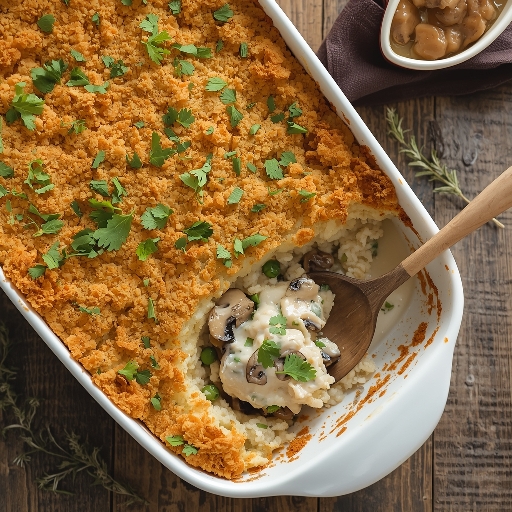
All the comfort of the classic — without any of the dairy. And yes, it actually tastes good.
Why This Recipe Exists (and Why It’s Worth Making)
Chicken casserole made with cream of mushroom soup is one of those dishes that’s been a weeknight staple in American kitchens for decades. It’s simple, filling, and almost universally liked. The problem, for a lot of people, is that the traditional version is built on dairy — butter, regular cream of mushroom soup, sometimes sour cream or shredded cheese on top.
For anyone avoiding dairy — whether due to lactose intolerance, a milk allergy, or a dietary choice — the standard recipe is off the table. According to the National Institutes of Health, an estimated 68 percent of the world’s population has some degree of lactose malabsorption, making dairy-free adaptations far more necessary than most recipe developers acknowledge.
The good news: a proper dairy-free version of this casserole isn’t a compromise. With the right ingredients and a few straightforward swaps, you get the same creamy, savory, comfort-food result — and most people can’t tell the difference.
Understanding the Dairy Problem in Classic Casseroles
Before getting into the recipe, it helps to know where the dairy actually hides in a traditional chicken casserole. It’s not always obvious.
The Obvious Sources
Butter is the most visible one — often used to sauté vegetables or drizzle over the top. Cream of mushroom soup, in its standard canned form, contains milk. Any recipe that adds sour cream, heavy cream, or shredded cheese as a finishing layer is stacking dairy on top of dairy.
The Hidden Sources
Some versions of this casserole use boxed stuffing mix as a topping, which can contain milk powder or butter. Certain broths — particularly some powdered or concentrated versions — occasionally contain dairy derivatives. It’s worth reading labels if you’re cooking for someone with a true allergy, not just an intolerance.
The dairy-free version tackles all of these substitutions without making the recipe more complicated.
Making Dairy-Free Cream of Mushroom Soup (From Scratch)
This is the core of the recipe, and it’s worth doing right. Canned dairy-free cream of mushroom soup exists in some markets, but it’s not universally available and can be expensive. Making a simple version from scratch takes about 15 minutes and uses ingredients most people already have.
What You Need
- 2 cups mushrooms, finely chopped (cremini or white button both work)
- 1 small onion, finely diced
- 3 cloves garlic, minced
- 3 tablespoons olive oil or dairy-free butter
- 3 tablespoons all-purpose flour (or a gluten-free flour blend if needed)
- 1½ cups unsweetened oat milk or full-fat canned coconut milk
- ½ cup chicken or vegetable broth
- Salt, black pepper, thyme to taste
How to Make It
Heat the oil in a saucepan over medium heat. Add the onion and cook until soft, about 5 minutes, then add the garlic and mushrooms. Let the mushrooms cook down — they’ll release liquid, and that liquid needs to mostly evaporate before you move on, which takes another 5 to 8 minutes.
Sprinkle in the flour and stir it into the mushroom mixture. Cook for a minute or two to get rid of the raw flour taste. Then slowly add the plant-based milk and broth, whisking as you go to keep it smooth. Let it simmer until it thickens, about 5 minutes. Season to taste.
This gives you roughly the equivalent of one and a half cans of cream of mushroom soup, and it’s genuinely better than the canned version — dairy or not.
A note on milk choice: Oat milk produces the most neutral result and closely mimics the flavor of a dairy-based sauce. Full-fat coconut milk works well too but adds a faint sweetness and coconut note that some people notice. Unsweetened almond milk is thinner and produces a slightly less creamy result, though it still works. Avoid sweetened or flavored versions of any of these.
The Full Dairy-Free Chicken Casserole Recipe
Ingredients (Serves 4–6)
For the casserole:
- 1.5 lbs boneless, skinless chicken breasts or thighs, cut into bite-sized pieces
- 1 batch dairy-free cream of mushroom soup (recipe above)
- 1 cup chicken broth (dairy-free; most regular broths are fine)
- 1 cup frozen peas or mixed vegetables
- 1 cup long-grain white rice, uncooked (or 2 cups cooked rice if you prefer)
- 1 teaspoon garlic powder
- 1 teaspoon onion powder
- ½ teaspoon smoked paprika
- Salt and pepper to taste
- 2 tablespoons olive oil
For the topping (optional):
- ½ cup crushed crackers (check the label for dairy) or dairy-free breadcrumbs
- 1 tablespoon olive oil or melted dairy-free butter
- Fresh parsley, chopped
Step-by-Step Instructions
Step 1: Preheat and prepare. Preheat your oven to 375°F (190°C). Lightly grease a 9×13-inch baking dish with olive oil.
Step 2: Season the chicken. Toss the chicken pieces with garlic powder, onion powder, smoked paprika, salt, and pepper. You can do this in a bowl or directly in the baking dish.
Step 3: Combine the casserole base. In a large bowl, mix together the dairy-free cream of mushroom soup, chicken broth, and uncooked rice. Stir until combined. Add the frozen vegetables. Pour this mixture into the prepared baking dish and spread it evenly.
Step 4: Add the chicken. Nestle the seasoned chicken pieces into the rice and soup mixture, pressing them down slightly so they’re partially submerged. This keeps the chicken from drying out on top.
Step 5: Cover and bake. Cover the dish tightly with aluminum foil. Bake for 45 minutes. The foil traps steam and cooks the rice while keeping the chicken moist.
Step 6: Add the topping and finish. Remove the foil. If using a breadcrumb or cracker topping, mix the crushed crackers with the olive oil and scatter over the top. Return to the oven uncovered for another 15 minutes, until the top is golden and the chicken is cooked through (internal temperature 165°F).
Step 7: Rest and serve. Let the casserole sit for 5 to 10 minutes before serving. This helps the sauce thicken slightly and makes it easier to portion.
Ingredient Swaps and Variations
Chicken Thighs vs. Breasts
Thighs are more forgiving in a casserole. They stay juicy even if the casserole runs a few minutes long, whereas breasts can dry out. If you’re feeding people who are particular about texture, go with thighs. If you’re using leftover rotisserie chicken, reduce the bake time by about 10 minutes since it’s already cooked.
Rice vs. Other Bases
The recipe above uses uncooked rice, which absorbs the liquid as it bakes. If you prefer pasta, use a short shape like penne or rotini and reduce the chicken broth by about ¼ cup, since pasta doesn’t absorb as much liquid as rice. Egg noodles are another common option — check the label on your preferred brand, as some contain milk.
For a lower-carb version, skip the grain entirely and use extra vegetables — cauliflower florets, diced zucchini, or green beans all work and hold up well through a 45-minute bake.
Vegetable Options
Frozen peas are traditional. Frozen mixed vegetables (peas, carrots, corn, green beans) also work well and require no prep. If you have fresh vegetables around — diced bell peppers, sliced celery, broccoli florets — add them in the same step. Just chop them fairly small so they cook through in time.
Adding More Mushrooms
If you want more mushroom presence in the final dish beyond what’s in the soup base, slice a cup of mushrooms and layer them on top of the rice mixture before adding the chicken. They’ll roast slightly during the uncovered portion of the bake and add a more pronounced earthiness to the finished casserole.
Getting the Texture Right: Common Problems and Fixes
The Rice Is Undercooked
This usually means the casserole wasn’t covered tightly enough, or the oven ran cool. Make sure the foil is sealed firmly around the edges of the dish. If the rice is still firm after 45 minutes, add a splash more broth, re-cover, and bake for another 10 to 15 minutes.
The Sauce Is Too Thin
If the finished casserole looks soupy, it likely needs more time uncovered. Return it to the oven without the foil for an extra 10 minutes. The liquid will reduce and thicken as it sits after baking too, so don’t panic if it looks loose right out of the oven.
The Chicken Is Dry
This is almost always caused by using too-thin pieces of chicken breast, baking uncovered too long, or skipping the foil step entirely. Thighs are more forgiving. If using breasts, try to cut pieces that are roughly even in size — about 1.5 to 2 inches — so they cook at the same rate.
It Tastes Flat
Dairy-free versions can sometimes taste less rich because they’re missing the fat and salt that dairy products naturally contribute. If something seems off, add a bit more salt first. Then try a splash of soy sauce or a small amount of nutritional yeast stirred into the soup base — both add savory depth without changing the overall flavor profile. A squeeze of lemon juice at the end can also brighten everything up.
Make-Ahead and Storage
Assembling in Advance
This casserole is a good candidate for make-ahead cooking. Assemble everything up to the point of baking, cover the dish tightly with plastic wrap or foil, and refrigerate for up to 24 hours. When you’re ready to cook, pull it out of the fridge while the oven preheats and add about 10 extra minutes to the bake time since it’s starting cold.
Storing Leftovers
Leftovers keep well in the refrigerator for 3 to 4 days in a covered container. The rice absorbs more liquid as it sits, so the texture will be slightly different the next day — thicker and denser, which some people actually prefer.
Freezing
This casserole freezes reasonably well, though the texture of the rice changes somewhat after freezing and thawing. If you’re planning to freeze it, slightly undercook the rice during the initial bake. Freeze in individual portions for easy reheating. Thaw overnight in the refrigerator and reheat covered in a 350°F oven until warmed through, adding a splash of broth if it looks dry.
Why Plant-Based Milks Behave Differently in Cooking
This is worth understanding because it affects how you make the cream of mushroom base and how the overall sauce comes together.
Dairy milk contains proteins and fats that behave in specific ways when heated — they emulsify easily, thicken sauces predictably, and don’t separate under sustained heat. Plant-based milks vary considerably. Food science researchers at institutions like the Institute of Food Technologists have documented how oat milk tends to be the most stable under heat because of its starch content, while nut milks can break or thin out if heated too aggressively.
The practical takeaway: use full-fat oat milk or coconut milk for the cream of mushroom base, keep the heat at medium rather than high when making the sauce, and add the milk gradually rather than all at once. These small adjustments prevent the sauce from separating or turning grainy — the most common problem when swapping dairy milk into a cooked sauce.
A Note for People Cooking for Allergies vs. Preferences
There’s a meaningful difference between cooking for someone with a dairy preference (they’d rather not eat dairy but it’s not medically significant) and cooking for someone with a true milk allergy where even trace amounts matter.
For preference-based dairy-free cooking, the substitutions in this recipe are entirely sufficient. For allergy-level cooking, you’ll also need to check: the dairy-free butter or plant-based spread for traces of milk protein, the crackers or breadcrumbs used as toppings, the broth (some concentrates contain lactose or casein), and any store-bought dairy-free cream of mushroom soup you might use instead of homemade.
Reading labels takes an extra few minutes but matters significantly when cooking for someone with a genuine allergy.
Serving Suggestions
The casserole is a complete meal on its own — protein, starch, and vegetables are all in the dish. But a few simple sides round it out nicely.
A basic green salad with a sharp vinaigrette cuts through the richness. Steamed broccoli or roasted asparagus alongside gives you additional vegetables without much effort. Some people serve it with crusty bread to scoop up the sauce, which works well if bread is something you can eat.
For a more substantial spread — a family dinner or a dish brought to someone’s home — this casserole feeds a crowd without requiring much active time in the kitchen.
Summary: A Casserole That Doesn’t Feel Like a Compromise
The dairy-free version of this casserole works because the core technique doesn’t change — you’re still building a creamy, savory sauce and using it to cook chicken and rice together in the oven. The substitutions (plant-based milk, olive oil instead of butter, homemade soup base) don’t weaken the dish. In some ways, making the soup from scratch actually improves on the canned version, regardless of dairy content.
It’s a practical weeknight dinner that reheats well, feeds a group without much effort, and works for a wider range of people than the original. That makes it worth keeping in rotation.
See Also – Leftover Ham Bone Soup Recipe: Slow Cooker Method (The One Worth Making)
See Also – What to Do with Leftover Roast Chicken Besides Soup