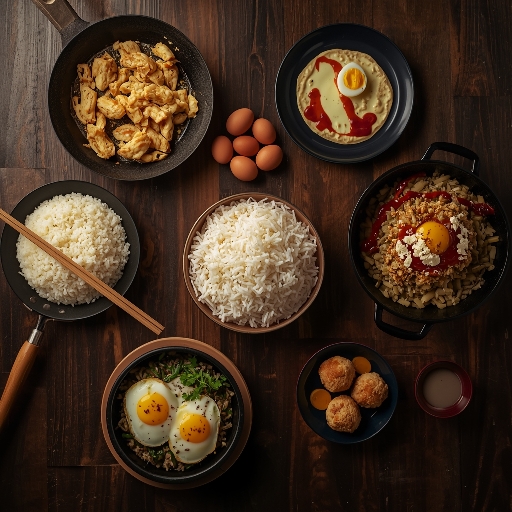
Leftover rice and eggs are probably the two most dependable things in a home kitchen. The rice is already in the fridge. The eggs are always there. Together, they’re not just a fallback — they’re a genuinely good starting point for a surprising number of meals, from fast weeknight dinners to unhurried weekend brunches.
What makes this combination so useful is that cold leftover rice actually behaves better in most recipes than freshly cooked rice. It’s drier, firmer, and doesn’t clump the same way. And eggs, as anyone who cooks regularly already knows, are one of the most adaptable proteins available — they bind, they enrich, they add protein, and they make almost anything more satisfying.
This article covers eighteen real recipes organized by meal type. Each one is practical enough to make on a Tuesday evening and interesting enough to come back to intentionally.
Why Cold Leftover Rice Is Actually Better
This is worth explaining once before getting into recipes, because it changes how you think about leftover rice.
Fresh rice is hot, moist, and sticky. Those qualities are perfect for eating plain alongside a dish. They’re not ideal for frying, forming into cakes, or incorporating into a batter — the excess moisture makes things steam rather than sear, and the stickiness means the grains clump instead of separating.
Cold leftover rice, after a night in the fridge, has dried out significantly. The individual grains separate easily. They fry rather than steam. They absorb surrounding flavors without turning to paste. In every recipe on this list, cold rice from the fridge outperforms freshly cooked rice.
If you don’t have leftover rice and want to use freshly cooked, spread it on a baking sheet and refrigerate it for at least an hour before cooking. It’s not identical, but it gets close.
Breakfast and Brunch Recipes
Egg Fried Rice (Classic and Fast)
This is the most obvious recipe and also one of the most underrated breakfasts when done correctly. Heat a wok or large skillet over very high heat — genuinely high, not medium-high — and add a neutral oil. Add cold rice and press it into the pan without stirring for thirty seconds. This lets a crust form on the bottom. Then toss.
Push the rice to the sides, crack two or three eggs into the center, scramble briefly until just set, then toss with the rice before the eggs are fully cooked. The residual heat finishes them. Season with soy sauce, a drizzle of sesame oil, and white pepper.
This takes eight minutes. It’s a complete breakfast with protein and carbohydrate. The key is the heat — a tepid pan produces soggy, gray rice. A screaming hot pan produces something with toasted edges and separate grains.
Rice Congee with a Soft-Boiled Egg
Congee — the rice porridge eaten across much of East and Southeast Asia — is one of the most comforting things you can make from leftover rice. Add cold cooked rice to a pot with four times its volume of water or chicken stock. Simmer over medium-low heat, stirring occasionally, for twenty to thirty minutes until the rice breaks down into a thick, creamy porridge.
Season with salt, white pepper, and a small amount of sesame oil. Serve with a soft-boiled egg (seven minutes in simmering water, transferred immediately to ice water), sliced thin on top. Add sliced scallion, a drizzle of chili oil, and a pinch of toasted sesame seeds.
This is what to make when someone in the house is unwell, or when the morning is cold and the idea of chewing through a normal breakfast feels like too much work.
Rice Pancakes with Fried Egg
Mix one cup of cold leftover rice with one egg, two tablespoons of flour, a pinch of salt, and a small amount of grated onion or scallion. The mixture will be thick and slightly sticky. Drop spoonfuls into a lightly oiled skillet and flatten gently. Cook over medium heat for three to four minutes per side until golden.
Top each pancake with a fried egg. The pancake provides a slightly crispy, chewy base; the egg yolk breaks over it like a sauce.
These work with almost any leftover rice — plain white rice, seasoned rice, even rice that has a little garlic flavor from a previous meal. The added seasonings cover most flavor variations.
Rice Frittata
Beat four to six eggs with salt, pepper, and a splash of milk. Stir in cold cooked rice — about a cup — along with whatever add-ins you have: diced ham, shredded cheese, sliced scallion, roasted red pepper, or fresh herbs. Mix briefly to distribute everything evenly.
Pour into an oven-safe skillet with a little butter or oil over medium heat. Cook until the edges are set and beginning to pull away — about five minutes. Transfer to a 375°F oven for ten to twelve minutes until the center is just firm.
Rest for five minutes before slicing. The rice adds a slightly chewy texture to the frittata and makes it more filling than a standard egg dish. It slices cleanly and keeps well for lunch the next day.
Quick Weeknight Dinners
Kimchi Fried Rice with Egg
Add chopped kimchi to hot oil in a wok alongside cold leftover rice. The kimchi juices caramelize against the pan and add a tangy, slightly spicy, deeply savory flavor to the rice. Season with a small amount of soy sauce and gochujang (Korean chili paste). Fry an egg separately, keeping the yolk soft, and serve it directly on top of the rice.
When the yolk breaks and runs into the rice below, it becomes a sauce. This is arguably the best thing you can make with two ingredients and ten minutes.
If you don’t have kimchi, substitute sauerkraut with a small amount of chili paste — it’s not the same, but the principle holds.
Spanish Rice and Egg Skillet
Heat olive oil in a skillet. Add diced onion and bell pepper, cook until softened. Add garlic and a tin of diced tomatoes. Simmer for five minutes, then stir in cold leftover rice and a pinch of smoked paprika, cumin, and chili powder. Let everything heat through and caramelize slightly at the bottom.
Create small wells in the rice mixture and crack one egg into each well. Cover the skillet and cook on medium-low heat until the egg whites are set but the yolks remain runny — about five to six minutes.
Serve directly from the skillet. Top with crumbled feta, fresh cilantro, and hot sauce if you want it. This is a one-pan dinner that takes under twenty-five minutes and uses almost entirely pantry staples.
Arancini (Italian Rice Balls)
Arancini take more effort than most dishes on this list, but they’re worth doing occasionally — especially if you have risotto leftovers rather than plain rice.
Mix cold cooked rice with an egg yolk, a generous amount of grated Parmesan, salt, and pepper. Take small handfuls and flatten into a disc. Place a small cube of mozzarella in the center, then close the rice around it and roll into a ball. Roll each ball in flour, dip in beaten egg, then coat in breadcrumbs.
Shallow-fry in an inch of oil at 350°F until golden all around, turning carefully. Serve with warm tomato sauce for dipping.
The cheese inside melts completely during frying. Cutting into a properly made arancini is one of the small genuine pleasures of Italian cooking.
Rice Omelette (Omurice)
Omurice is a Japanese comfort food that combines fried rice wrapped in a thin, soft omelette. It’s more popular than most Western home cooks realize, and it’s genuinely excellent.
Make fried rice first — rice with diced chicken or ham, onion, frozen peas or corn, ketchup, and soy sauce. Season well. Set aside.
Beat two or three eggs with a pinch of salt. Heat a small amount of butter in a non-stick pan over medium heat. Pour in the eggs and swirl to coat the pan evenly. Before the eggs are fully set — when the surface is still slightly wet — mound a portion of fried rice down the center. Fold the sides of the omelette over the rice and roll onto a plate, seam side down.
Squeeze a thin line of ketchup over the top. This sounds simple and looks simple. It’s also somehow deeply comforting in a way that’s difficult to explain until you’ve eaten it.
Egg and Rice Stuffed Peppers
Halve bell peppers and remove seeds. Mix cold cooked rice with beaten eggs, diced onion, garlic, shredded cheese, diced tomato, and whatever seasoning you like — Italian herbs, cumin, or just salt and pepper. Fill the pepper halves generously and bake at 375°F for thirty minutes until the peppers are tender and the egg-rice filling has set.
Top with more cheese in the last five minutes. These are filling, colorful, and require very little hands-on time after the filling is assembled. They also reheat well the next day.
Asian-Inspired Dishes
Japanese Tamago Kake Gohan
This is the simplest dish on the entire list, and in Japan it’s eaten for breakfast regularly. Warm leftover rice in a bowl — just briefly, so it’s not cold but not steaming. Crack one raw egg directly over the rice. Add a few drops of soy sauce and a pinch of salt. Stir everything together vigorously until the egg is fully incorporated into the rice, coating every grain.
The result is a bowl of glossy, creamy, slightly sticky rice with a rich egg flavor. It sounds unlikely to be satisfying and is, in fact, quite satisfying. A drizzle of sesame oil and a sprinkle of furikake (Japanese rice seasoning) make it better.
Only use fresh, high-quality eggs here since the egg is consumed raw.
Rice Porridge with Century Egg (Jook)
A more complex version of congee, this Cantonese preparation uses century egg (preserved duck egg with a strong, mineral flavor) alongside fresh egg for a deeply savory result. Simmer leftover rice in chicken broth until broken down. Add sliced century egg — which has a dark, gelatinous interior and a flavor that’s pungent and distinctive — and a raw egg stirred in at the last minute, which cooks in the residual heat.
Season with white pepper, soy sauce, and sesame oil. Garnish with shredded ginger, scallion, and fried shallots.
This is not a beginner dish in terms of flavor profile, but for anyone who grew up eating it, it’s irreplaceable.
Bibimbap-Style Rice Bowl
Bibimbap is a Korean rice dish assembled from individually prepared toppings over a base of rice. With leftover rice, the main work is already done. Warm the rice in a pan until slightly crispy on the bottom — or simply reheat it and serve at room temperature if you prefer.
Top with any combination of: sautéed spinach seasoned with sesame oil and garlic, julienned carrot stir-fried briefly, bean sprouts blanched for two minutes, thinly sliced beef or tofu seasoned with soy sauce, and a fried egg in the center.
Serve with a spoonful of gochujang (Korean chili paste) mixed with sesame oil and a little sugar on the side. Stir everything together at the table before eating.
This is a genuinely nourishing bowl that uses small amounts of multiple vegetables. It’s one of those dishes where the assembly is the cooking.
Thai Basil Fried Rice with Egg
Heat oil in a wok over very high heat. Add garlic and sliced Thai chili, fry for thirty seconds. Add cold cooked rice and toss vigorously. Season with fish sauce, oyster sauce, and a small amount of white pepper. Add a large handful of fresh Thai basil and toss just until wilted.
Fry an egg separately in a generous amount of oil — the edges should become crispy and lacy — and serve it on top of the rice.
The combination of the fragrant basil rice with the crispy-edged egg is one of Thailand’s most popular street food dishes. Using Thai basil specifically, rather than Italian basil, is what makes this taste the way it should — the flavor is different enough to matter.
Soups and Comfort Bowls
Egg Drop Soup with Rice
Bring chicken or vegetable stock to a simmer in a pot. Season with soy sauce, white pepper, and a few drops of sesame oil. Beat two eggs together in a small cup. While the broth simmers, pour the beaten egg in a thin stream into the pot while stirring slowly in a circular motion. The egg cooks immediately into thin, delicate ribbons.
Stir in cold cooked rice — it warms through in about two minutes. Finish with sliced scallion and a pinch of white pepper.
This is a ten-minute soup that tastes like something requiring more effort. The rice thickens the broth slightly and makes the soup more filling than a standard egg drop. It’s good for when someone is unwell, when the weather is cold, or when there’s almost nothing else in the fridge.
Congee with Poached Egg
Similar to the soft-boiled egg version above, but with a poached egg instead. A properly poached egg — white fully set, yolk completely liquid — placed on top of a bowl of thick congee breaks when pressed and floods the porridge with rich yolk.
To poach: bring water to a gentle simmer (not boiling), add a splash of white vinegar, create a gentle swirl with a spoon, and slide the egg from a small cup into the center of the swirl. Three minutes for a runny yolk, four for a set one. Lift out carefully with a slotted spoon.
The poached egg presents better than a soft-boiled egg and is, if anything, more dramatic at the table. Worth the extra three minutes.
Baked and Formed Dishes
Rice and Egg Casserole
This works well for feeding several people without much work. Combine three cups of cold cooked rice with four beaten eggs, a cup of shredded cheese, half a cup of milk, diced onion, garlic powder, salt, pepper, and any mix-ins — diced ham, frozen peas, roasted vegetables, or green chiles. Pour into a greased baking dish and bake at 350°F for thirty-five to forty minutes until set in the center and golden on top.
Let it cool for ten minutes before cutting. It slices into portions cleanly and reheats well. This is the kind of dish that disappears quickly at a casual brunch gathering without anyone remarking on the fact that it’s made from leftovers.
Rice Cakes with Egg on Top
Mix cold rice with a little egg, flour, and seasoning. Pan-fry in rounds until crispy. Stack two or three, top with a poached or fried egg, and finish with sriracha, avocado, or quick-pickled cucumber.
These are the kind of thing that photographs well but also actually tastes good, which is not always the case. The crispy rice cakes provide texture that’s genuinely satisfying against the soft egg.
Tips for Cooking Rice and Eggs Together
A few practical notes that apply across most of these recipes:
Use the highest heat you can for fried rice. Restaurant fried rice tastes different from home fried rice primarily because of heat. A domestic stove can’t fully replicate a commercial wok burner, but the closest approximation is a very hot cast-iron pan or wok, oil that shimmers immediately, and not overcrowding the pan. Cook in batches if needed.
Cold eggs can cause uneven cooking. Take eggs out of the fridge fifteen to twenty minutes before you need them for dishes that involve them in a hot pan. Room-temperature eggs cook more evenly and are less likely to shock a hot pan and cause sticking.
Season rice again before using it. Cold leftover rice has absorbed moisture and the seasoning mutes overnight. Taste it before adding it to a recipe and adjust — a pinch of salt mixed into the cold rice before it hits the pan makes a difference.
Don’t wash eggs before storing or using — the protective coating on the shell helps keep them fresh. Simply crack directly into a bowl before adding to any recipe.
A Quick Reference by Cooking Time
| Under 15 Minutes | 15–30 Minutes | 30+ Minutes |
|---|---|---|
| Egg fried rice | Spanish rice skillet | Arancini |
| Tamago kake gohan | Rice and egg stuffed peppers | Rice casserole |
| Egg drop soup with rice | Omurice | Ham bone and rice soup |
| Thai basil fried rice | Rice pancakes with egg | Bibimbap bowl |
| Kimchi fried rice | Congee with egg | Rice frittata |
Final Thoughts
Rice and eggs are the kind of combination that holds up well under almost any circumstance — nearly empty fridge, ten minutes before school, needing to feed several people without much planning. The recipes in this list range from genuinely effortless (tamago kake gohan, egg drop soup) to properly satisfying weekend cooking (arancini, omurice, bibimbap).
The underlying principle across all of them is simple: cold rice is a head start, not a compromise. And eggs, reliably, are the most useful thing in the fridge.
See Also – Substitute for Celery in Chicken Soup: What Works and Why
See Also – Can You Substitute Milk for Half and Half in Pasta Sauce?