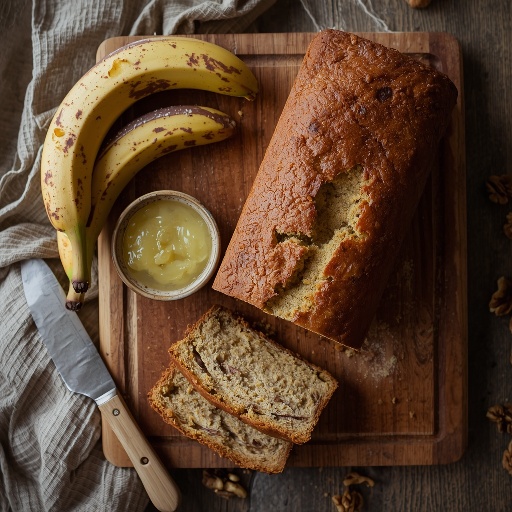
No eggs, no compromise. This guide walks through everything — from choosing bananas to understanding why your loaf stays perfectly tender without a single egg.
Why Eggs Aren’t Actually Essential Here
Most people assume banana bread needs eggs. That’s understandable — almost every classic recipe calls for one or two. But here’s the thing: ripe bananas already do most of what eggs are supposed to do.
Eggs in baking serve three purposes — they bind ingredients, add moisture, and help the loaf rise slightly. Overripe bananas, the kind with deep brown spots all over the skin, are naturally dense, wet, and sticky. They bind. They moisten. And when paired with the right leavening, they lift. You’re not missing much.
Worth knowing: Food scientists at institutions like King Arthur Baking have long noted that banana acts as a natural emulsifier due to its pectin content. The riper the banana, the more pectin — and the better it holds the batter together without eggs. (Reference 1 placement: see authority links below)
That said, you do need to be thoughtful about what you use in place of the egg. Skip it entirely and you’ll notice — the texture gets slightly crumbly and the loaf may not hold its shape cleanly when sliced. The right substitute closes that gap completely.
The Best Egg Substitutes — And When to Use Them
Not all substitutes work equally well here. Some are better for cakes, some for cookies. For banana bread, you want something that adds a bit of binding and doesn’t fight the flavor of the banana.
Flax egg (most reliable)
How to make it
Mix 1 tablespoon of ground flaxseed with 3 tablespoons of water. Let it sit for 5–10 minutes until it thickens into a gel. That gel is your egg replacement.
This is what most experienced egg-free bakers reach for first. It’s neutral in flavor, adds a bit of fiber, and gels reliably. The loaf comes out with a good crumb — slightly denser than a traditional egg version, but in a way that actually feels intentional rather than like something’s missing.
Unsweetened applesauce
Use 3–4 tablespoons in place of one egg. Applesauce adds moisture and a very mild sweetness. It works particularly well if your bananas are on the less-ripe side. The texture comes out softer and a touch more cake-like. Some people prefer it over flax egg for exactly that reason.
Plain yogurt or plant-based yogurt
About ¼ cup of yogurt works well here. It adds richness and a slight tang that actually complements banana quite nicely. If you’re going fully vegan, coconut or soy yogurt does the job just as well as dairy. The loaf tends to be slightly more tender with yogurt than with the other options.
Chia egg
Same ratio as the flax egg — 1 tablespoon of chia seeds to 3 tablespoons of water, rested for 10 minutes. Chia seeds are slightly more visible in the final loaf and add a mild texture. Not a problem, just something to be aware of if you’re baking for picky eaters.
Flax egg – 1 tbsp ground flax + 3 tbsp water. Best all-around binder. Neutral flavor.
Applesauce – 3–4 tbsp. Adds moisture. Mild sweet flavor. Great for less-ripe bananas.
Yogurt – ¼ cup. Rich and tender crumb. Works with dairy or plant-based versions.
Chia egg – 1 tbsp chia + 3 tbsp water. Similar to flax, adds slight texture.
The Full Recipe
This recipe uses a flax egg as the default because it’s the most consistent across different kitchens and banana ripeness levels. If you prefer one of the other substitutes, the swap is straightforward — just replace the flax egg with your choice at the same stage.
What you’ll need
3 very ripe bananas – Heavily spotted or fully brown skin. The riper, the better.
1 flax egg – 1 tbsp ground flax + 3 tbsp water, rested 10 min.
⅓ cup melted butter or coconut oil – Coconut oil gives a slightly richer crumb.
¾ cup sugar – Brown sugar preferred — adds depth. White sugar works fine too.
1 tsp vanilla extract – Don’t skip this one.
1 tsp baking soda – Not baking powder — soda reacts better here.
Pinch of salt – About ¼ tsp. It sharpens all the other flavors.
1½ cups all-purpose flour – Spoon into the cup, don’t scoop. Packed flour dries things out.
Step by step
- 1Prepare your flax egg first. Combine 1 tablespoon of ground flaxseed with 3 tablespoons of water in a small bowl, stir, and set aside. It needs at least 5–10 minutes to gel properly.
- 2Preheat your oven to 175°C (350°F). Grease a standard 9×5 inch loaf pan with butter or oil, or line it with parchment paper.
- 3Mash the bananas in a large mixing bowl. Use a fork — a potato masher tends to leave chunks, which is actually fine if you like that texture. Aim for mostly smooth with a few small lumps.
- 4Add the melted butter (or coconut oil), sugar, flax egg, and vanilla extract to the mashed banana. Stir until combined.
- 5Sprinkle in the baking soda and salt, then stir again briefly. Add the flour and fold it in gently — stop as soon as you can’t see dry flour. Overmixing develops gluten and makes the loaf tough.
- 6Pour the batter into the prepared pan. It should be fairly thick and look a bit like sticky brownie batter.
- 7Bake for 55–65 minutes. Start checking at 55 minutes — a toothpick inserted in the center should come out clean or with just a few moist crumbs (not wet batter). Ovens vary, so trust the toothpick over the clock.
- 8Let the loaf cool in the pan for 10–15 minutes before turning it out onto a wire rack. Cutting it too soon leads to a gummy center — patience here really does matter.
How to Keep It Moist — The Real Tricks
Moisture is the one thing people worry about most when baking without eggs, and understandably so. But a dry banana bread is almost always a technique problem, not an ingredient problem.
Banana ripenessUse the ripest bananas you can find. Frozen and thawed bananas work brilliantly — they release more liquid and taste sweeter.
Don’t overmixStir the batter only until the flour disappears. Every extra stroke develops more gluten and tightens the crumb.
Fat mattersDon’t reduce the butter or oil. Fat is what carries moisture through the loaf during baking.
Pull it earlyThe loaf continues cooking as it cools. If the toothpick is clean, take it out — another 5 minutes can push it from moist to dry.
Brown sugar helpsBrown sugar retains more moisture than white because of its molasses content. Small difference, but noticeable.
Room temp mattersCold butter or cold coconut oil can create uneven mixing. Melt it fully before adding.
One thing worth mentioning: egg-free banana bread tends to improve overnight. The moisture redistributes through the loaf as it sits, so day two is often better than day one. Worth keeping in mind if you’re baking ahead for something.
Variations and Mix-Ins
The base recipe is pretty forgiving when it comes to add-ins. Here are some that work particularly well without complicating the texture.
Chocolate chips
About ½ cup of chocolate chips folded in at the end. Dark chocolate works best — the slight bitterness offsets the sweetness of the banana. Semi-sweet is also great. White chocolate is a polarizing choice that has its fans too.
Walnuts or pecans
½ cup of roughly chopped walnuts. Toast them first in a dry pan for 3–4 minutes if you have the time — it deepens the nutty flavor considerably. Add them with the flour so they get evenly distributed through the batter.
Spiced version
Add ½ teaspoon of cinnamon and a small pinch of nutmeg with the flour. This makes the loaf taste slightly more autumnal and works especially well when the bananas are very sweet.
Whole wheat variation
Swap up to half the all-purpose flour for whole wheat flour. The loaf comes out denser and slightly more earthy, but still moist if you use very ripe bananas. Don’t go beyond 50% whole wheat or the texture starts to get heavy.
Common Mistakes and How to Avoid Them
Most problems with egg-free banana bread come down to a handful of repeating issues. If something went wrong the first time, it’s almost certainly one of these.
Loaf didn’t rise properly
Check that your baking soda is fresh. Baking soda loses potency over time — if yours has been in the pantry for more than six months without being sealed, it may be past its best. Test it by adding a small amount to hot water; it should bubble immediately.
Gummy or underbaked center
This usually means it needed more time, or the oven ran cooler than the dial suggested. Use an oven thermometer if you’re not sure — many home ovens run 10–20 degrees off. Also, don’t skip the cooling time in the pan.
Too dense or compact
Likely overmixed, or the bananas weren’t ripe enough. With egg-free baking, the banana really is carrying a lot of the structural work — unripe bananas are firmer and don’t mash as completely, which leaves the batter stiffer and the result heavier.
Dry or crumbly texture
Baked a touch too long, or the flour was packed into the measuring cup. Always spoon flour into the cup and level it off — scooping compresses it and adds more than the recipe intends.
Storing Your Banana Bread
At room temperature, wrapped in foil or kept in an airtight container, this loaf will last 3–4 days and actually improves slightly over the first two. In the fridge, it’ll keep for up to a week, though the texture firms up a little — 15–20 seconds in the microwave brings it back nicely.
It freezes very well. Slice the cooled loaf, wrap individual slices in cling film, and freeze them. Pull out what you need the night before and let it thaw at room temperature. It comes back to almost exactly the same texture as fresh. This is genuinely useful if you bake a batch over the weekend and want to spread it across the week.
Quick tip: If you have very ripe bananas but don’t want to bake immediately, freeze them whole in their skins. When you’re ready to bake, thaw them on the counter or in the fridge overnight — they turn soft, very sweet, and work even better than fresh ripe bananas in this recipe.
See Also – What to Make with Leftover Pulled Pork Besides Sandwiches
See Also – Substitute for Celery in Chicken Soup: What Works and Why