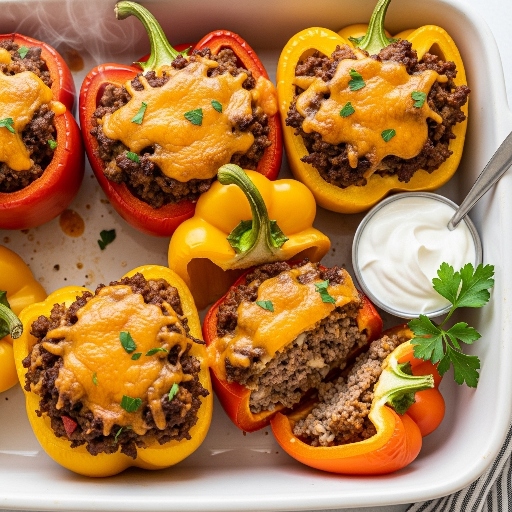
Everything you actually need to know — what to use instead of rice, how to build a filling that holds together, and how to get the peppers tender without them turning to mush.
| ~7g | ~28g | 35 min | 4–6 |
| Net carbs per pepper | Protein per serving | Prep + cook time | Servings |
Why Skip the Rice — and What You Actually Lose
Stuffed peppers are one of those dishes that seems completely dependent on rice. Open any traditional recipe and it’s right there — a cup or two mixed through the meat, there to bulk everything out and absorb the cooking juices.
But rice in stuffed peppers is mostly a filler. It adds bulk and a mild starchy texture, but it doesn’t do much for flavour. The real work is done by the meat, the tomatoes, the seasoning, and the pepper itself. Pull the rice out and those things step forward. A lot of people find the riceless version actually tastes better — more concentrated, more satisfying, less stodgy.
Worth knowing: Bell peppers, even without any filling, are quite low in carbohydrates — roughly 4–7g of net carbs per medium pepper depending on colour. Red and yellow peppers are slightly sweeter and marginally higher in natural sugars than green ones. According to nutritional data on Wikipedia’s entry for bell peppers, they’re also excellent sources of vitamin C and vitamin A. (Reference 1 placement — see authority links below)
What you do lose, practically speaking, is a little volume. Rice-filled peppers are quite filling because you’re essentially eating a full cup of grains alongside the meat. Without it, the pepper can feel slightly less stuffed. The fix is straightforward: increase the meat quantity slightly, add a low-carb bulking ingredient, or simply serve two per person instead of one.
The Best Low Carb Rice Replacements, Honestly Ranked
There are a few common suggestions floating around the internet for what to use instead of rice. Some work better than others. Here’s a realistic breakdown.
| Cauliflower rice | Zucchini, diced small | Chopped mushrooms |
| Very low carb | Very low carb | Very low carb |
| The most direct swap. Grate or pulse raw cauliflower, cook briefly, mix in. Absorbs flavour well. Must be cooked before adding or it steams the pepper from inside. | Adds bulk, moisture, and a mild flavour. Cooks down a lot — use more than you think. Works well in a meaty filling. | Meaty texture and deep savory flavour. Best sautéed until most moisture is released before adding to the filling. A favourite for vegetarian versions. |
| Extra ground meat | Lentils or black beans | Quinoa |
| Zero carb | Higher carb | Moderate carb |
| Simplest option — just increase the meat. No texture filler needed. Filling is denser and more protein-forward. Many people prefer this. | Common in some low carb circles but not actually low carb. Fine for general healthy eating, not suitable for strict keto or under-20g-carb days. | Often suggested as a “healthy” swap but it’s not significantly lower in carbs than rice. Skip if you’re tracking carefully. |
For most people, cauliflower rice or diced zucchini mixed through the meat is the most satisfying replacement. Cauliflower rice in particular mimics the texture closely enough that you don’t really notice it’s gone after a few bites.
The Full Recipe
This version uses a beef and cauliflower rice filling with a tomato base. It’s straightforward, works reliably, and doesn’t require anything you wouldn’t normally have in the kitchen. The cauliflower rice can be swapped for any of the alternatives above at the same quantity.
Ingredients
| 4–6 bell peppers Any colour. Red and yellow are sweeter; green are firmer and slightly more bitter. | 500g ground beef 80/20 fat ratio gives more flavour. Leaner mince works but needs more seasoning. | 1½ cups cauliflower rice Raw, pulsed in a food processor or box-grated. Pre-cook briefly before adding to filling. |
| 1 can diced tomatoes (400g) Or 3–4 fresh ripe tomatoes, roughly chopped. Check labels — some canned tomatoes have added sugar. | 1 medium onion, finely diced White or brown. Red onion also works and adds a slightly sweeter flavour. | 3 garlic cloves, minced More is fine. Garlic is the kind of ingredient where the recipe amount is usually the minimum. |
| 1 tsp cumin, 1 tsp paprika Smoked paprika adds depth. Cumin gives warmth. Both are important here. | Salt, pepper, olive oil Season generously. Under-seasoned filling is the most common complaint with this dish. | ½ cup shredded cheese Cheddar or mozzarella. Optional but it does a lot of work — adds richness and helps seal the top. |
Step by step
- Preheat oven to 190°C (375°F). Cut the tops off the peppers and remove the seeds and white membranes inside. Keep the tops — chop the flesh from them and add to the filling. Nothing wasted.
- Pre-roast the peppers for 10 minutes in a lightly oiled baking dish. This gives them a head start and means they come out tender all the way through, not crunchy in the middle with an overcooked filling.
- While the peppers roast, cook the cauliflower rice. Heat a dry frying pan over medium-high heat, add the cauliflower and a pinch of salt, and stir for 3–4 minutes until it starts to dry out and smell slightly nutty. Set aside.
- In the same pan, heat a tablespoon of olive oil over medium heat. Fry the onion for 4–5 minutes until soft. Add the garlic and cook for another minute. Add the chopped pepper flesh from the tops and cook for 2 minutes more.
- Add the ground beef. Break it up well with a spatula and cook until browned — about 6–7 minutes. Don’t rush this step. A proper brown on the meat adds flavour that simmering alone can’t replicate.
- Add the diced tomatoes, cumin, paprika, salt, and pepper. Stir and simmer uncovered for 8–10 minutes until the liquid reduces. You want the mixture to look thick and cohesive, not watery. Watery filling is what makes the pepper fall apart.
- Fold the pre-cooked cauliflower rice into the meat mixture and stir to combine. Taste and adjust seasoning — this is the moment to add more salt, a pinch of chilli flakes, or a splash of Worcestershire sauce if it needs depth.
- Spoon the filling into the pre-roasted peppers, packing it in firmly. Top each with shredded cheese. Return to the oven for 20–25 minutes until the cheese is golden and the peppers are completely tender when pierced with a knife.
- Rest for 5 minutes before serving. The filling tightens slightly as it cools, which makes the peppers easier to eat without everything falling out.
Getting the Peppers Right — Tender Without Collapsing
Pepper texture is the thing most people get wrong the first time. Too short in the oven and you’re cutting through a half-raw, slightly bitter shell. Too long and the pepper walls turn translucent, lose their structure, and the whole thing sags onto the plate.
The pre-roasting step matters more than most recipes admit. Ten minutes in the oven before filling means the pepper is already partly cooked before the filling goes in. Once filled and returned to the oven, the remaining 20–25 minutes is enough to finish the pepper without overcooking the filling.
Choose uniform peppers – Same size = same cooking time. Mismatched sizes mean some are overdone before others are ready.
Stand them upright – If they won’t stand flat, cut a thin sliver off the base — don’t cut all the way through.
Don’t skip the resting time – Five minutes out of the oven makes the filling settle and the structure firm back up.
Dry the filling well – A wet filling steams the pepper from inside and makes it go soft fast. Reduce the sauce properly before filling.
Cover with foil initially – For very large peppers, cover with foil for the first 15 minutes of the filled stage, then uncover to brown the cheese.
Test with a knife – A sharp knife should slide through the pepper wall with almost no resistance when it’s done.
Filling Variations
Turkey and mushroom
Swap the beef for ground turkey and add a cup of finely chopped mushrooms to the onion stage. Turkey is leaner and milder — the mushrooms do a lot to add substance and umami. Season more aggressively than you would with beef, as turkey is easy to under-flavour.
Fully vegetarian
Skip the meat entirely. Use 2 cups of finely chopped mushrooms and half a cup of walnuts roughly processed in a food processor. The walnut adds a meaty density that works surprisingly well. Add a tablespoon of tomato paste and a teaspoon of soy sauce (or tamari for gluten-free) to deepen the flavour.
Italian-style with sausage
Use Italian pork sausage, removed from the casing. It already has seasoning built in — go lighter on the extra spices. Add a handful of fresh basil at the end and use mozzarella on top. Pairs well with a side of simple green salad.
Mexican-inspired
Season the beef with cumin, chilli powder, garlic powder, and a small amount of oregano. Add a few tablespoons of diced jalapeño to the onion stage. Top with a mix of cheddar and Monterey Jack. Serve with sour cream and sliced avocado on the side.
Make-Ahead and Meal Prep Notes
This is genuinely one of the better dishes for meal prep. The filling and peppers can be prepared separately, refrigerated, and assembled just before baking. Or the whole thing can be assembled, covered tightly, and refrigerated uncooked for up to 24 hours.
For keto meal planning specifically: Stuffed peppers without rice refrigerate well for 3–4 days and reheat cleanly in the microwave or oven. The filling tends to tighten up in the fridge, which actually makes leftover peppers easier to eat — less falling apart, more structured. Many people prefer them on day two. (Reference 2 placement — see authority links below)
To freeze: allow the cooked peppers to cool completely, wrap individually in cling film, and freeze for up to 3 months. Thaw overnight in the fridge and reheat covered in a 180°C oven for 20–25 minutes, or until heated through. The cheese on top gets a little darker on reheating but the flavour holds well.
Common Problems and Fixes
Filling is watery and the pepper won’t hold its shape
The tomato sauce wasn’t reduced enough before filling. Next time, simmer the filling an extra 5 minutes until it looks almost dry. You can also blot cauliflower rice with kitchen paper before adding it — it holds more water than you’d think.
Pepper is still tough in the middle
Skipped the pre-roast step, or the oven temperature was too low. Add the pre-roast next time. If you’re mid-cook and notice the pepper is underdone, cover loosely with foil and add 10–15 minutes.
Filling tastes bland
Under-seasoning is very common here. The cauliflower rice and the pepper itself both dilute the seasoning in the filling. Season more boldly at the pan stage, and always taste the filling before it goes into the pepper — that’s your last chance to fix it.
Cauliflower rice turns mushy inside the pepper
It was added raw, or cooked but not dried out enough in the pan. Raw cauliflower releases a lot of steam inside the pepper and essentially cooks itself into a soft, wet mass. Always dry-fry cauliflower rice until it smells slightly nutty before mixing it in.
Cheese burns before the pepper is done
The pepper needs longer at a lower temperature. Cover with foil for the first part of the cooking time and remove for the last 8–10 minutes only, so the cheese browns without burning.
See Also – What to Do with Too Many Zucchini from the Garden
See Also – Leftover Rotisserie Chicken Pasta Recipe (No Cream): 12 Ways That Actually Work