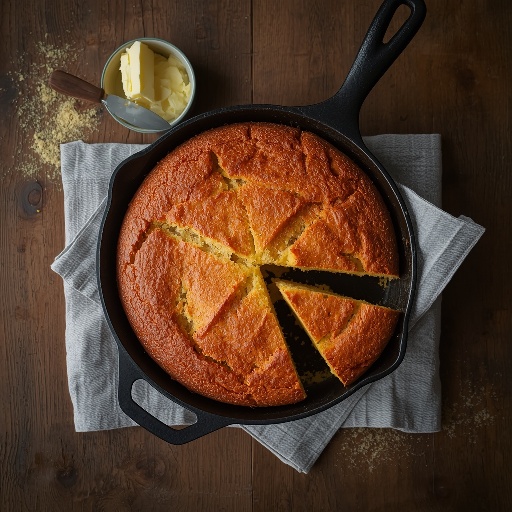
No buttermilk in the fridge shouldn’t stop this recipe. This guide covers what buttermilk actually does in cornbread, the substitutes that genuinely work, and how to get that signature golden-brown crust from a well-seasoned cast iron skillet.
| 10 min | 20–25 min | 8 | 425°F |
| Prep time | Bake time | Slices (10-inch skillet) | Oven temperature |
Why cast iron makes better cornbread
You can bake cornbread in a regular baking pan. It’ll come out fine. But cast iron does something a standard metal pan simply can’t — it retains heat so evenly and intensely that the moment the batter hits the preheated surface, the bottom and sides of the cornbread begin forming a crust immediately.
That crust is what people mean when they talk about “real” cornbread. It’s slightly crisp, deeply golden, and has a texture that’s distinctly different from the soft, cake-like interior. The contrast between the crust and the crumb is what makes cast iron cornbread worth making.
The heat retention advantage: Cast iron distributes and holds heat more evenly than thin aluminium or non-stick pans, which tend to have hot spots and lose heat quickly when cold batter is added. According to research on cast iron cookware, its high thermal mass means the pan temperature drops minimally when batter is poured in — which is precisely why that initial sizzle happens and the crust forms immediately. That sizzle is the sound of good cornbread.
A 10-inch cast iron skillet is the standard size for this recipe. If yours is smaller (8-inch), reduce the recipe by about a quarter and check for doneness 4–5 minutes earlier. Larger skillets work too — the cornbread will just be thinner and cook faster.
What buttermilk does — and why you can skip it
Buttermilk does two things in cornbread: it provides acidity, and it adds a mild tang that gives Southern-style cornbread its characteristic flavour. The acidity matters because cornbread typically uses baking soda as a leavener, and baking soda needs an acid to activate. Without that acid, the baking soda doesn’t produce enough carbon dioxide, the bread doesn’t rise properly, and you get a flat, slightly dense result with a faint metallic aftertaste from the unused baking soda.
But here’s the thing — buttermilk is not the only acidic dairy product that works here. Several common pantry and fridge staples replicate both functions very effectively. This is one of those “essential” ingredients that turns out to be a lot more replaceable than most recipes suggest.
The best buttermilk substitutes
These work. Not as a compromise — as a genuine replacement. The batter behaves the same way, the reaction with the baking soda is the same, and the finished cornbread tastes right.
| Milk + white vinegar | Milk + lemon juice | Plain yogurt |
| Best overall | Best overall | Very good |
| 1 cup whole milk + 1 tbsp white vinegar. Stir and rest 5 minutes until slightly curdled. Closest to buttermilk in behaviour and taste. Works every time. | 1 cup milk + 1 tbsp fresh lemon juice. Same method as vinegar. Adds a very faint citrus background — virtually undetectable in the finished bread. | Full-fat or low-fat both work. Use the same volume as buttermilk. Slightly thicker, so thin it with 2–3 tbsp water before using. Produces a slightly more tender crumb. |
| Sour cream | Plant milk + vinegar | Kefir |
| Very good | Vegan Dairy-free | Direct swap |
| Very similar to yogurt. Richer fat content adds a softer texture. Thin with water to the consistency of heavy cream before adding to the batter. | Oat milk or soy milk + 1 tbsp vinegar. Oat milk curdles slightly less than dairy but still works. Produces a slightly softer crust than the dairy versions. | If you have it, use it 1:1. Kefir is the closest in consistency, acidity, and flavour profile to buttermilk. Many people keep it in the fridge already and don’t realise it’s ideal here. |
The 5-minute rest matters: When you add vinegar or lemon juice to milk, the acid causes the milk proteins to partially denature and form curds — you’ll see small flecks appear and the liquid thicken slightly. This is the same process used to make buttermilk commercially. The resting time (5 minutes minimum) allows this reaction to complete fully before the liquid goes into the batter. Don’t skip it. (Reference 2 — see authority links)
The full recipe
This recipe uses the milk-and-vinegar substitution as the default. If you’re using one of the other alternatives, the quantities stay the same — just swap the liquid at the same stage.
Ingredients
| 1 cup (120g) yellow cornmeal | 1 cup (120g) all-purpose flour | 1 cup whole milk + 1 tbsp white vinegar |
| Stone-ground cornmeal has more flavour and a slightly coarser texture. Fine ground is more tender but less characterful. Either works — use what you have. | The flour-to-cornmeal ratio determines texture. This 1:1 ratio gives a good balance of structure and tenderness. More cornmeal = coarser, drier. More flour = softer, more cake-like. | Your buttermilk substitute. Make this first, before anything else, so it has time to rest and curdle while you measure the dry ingredients. |
| 2 large eggs | ¼ cup (60ml) melted butter or neutral oil | 1–2 tbsp sugar (optional) |
| Room temperature eggs incorporate more evenly. Take them out of the fridge 15 minutes before you start. Cold eggs can cause the fat to seize slightly when mixing. | Butter adds more flavour; oil produces a slightly more moist crumb. Either works. If using butter, let it cool slightly after melting before adding to the eggs — hot butter scrambles them. | This is the battleground of cornbread. See the sweet vs. savoury section below. Start with 1 tablespoon if you’re undecided. |
| 1 tsp baking powder | ½ tsp baking soda | ¾ tsp salt |
| Works alongside baking soda. The baking powder provides additional lift regardless of the acid level in the milk substitute. | This reacts specifically with the acid in your buttermilk substitute. Don’t increase it — too much baking soda leaves a soapy, metallic taste. | Essential. Cornbread without enough salt tastes flat and one-dimensional even if everything else is right. |
| 1–2 tbsp butter or bacon fat (for the skillet) | ||
| Goes into the skillet before it heats. Bacon fat is the traditional Southern choice and adds real flavour to the crust. Butter works beautifully. Vegetable oil works too but doesn’t contribute flavour. |
Step by step
- Mix the milk and vinegar together in a small bowl or measuring jug. Stir once and set aside. Don’t touch it for at least 5 minutes. By the time you’ve measured everything else, it’ll be ready.
- Preheat your oven to 220°C (425°F). Put your 10-inch cast iron skillet in the oven as it heats. The pan needs to be genuinely hot before the batter goes in — this is what creates the crust. At least 10 minutes in the oven.3In a large mixing bowl, whisk together the cornmeal, flour, baking powder, baking soda, salt, and sugar if using. Make sure it’s well combined — uneven distribution of baking soda means uneven rising.
- In a separate bowl, beat the eggs, then add the melted butter (cooled slightly) and the curdled milk mixture. Stir to combine.
- Pour the wet ingredients into the dry and stir until just combined — about 15–20 strokes. There will be lumps. That’s correct. Overmixing cornbread batter develops gluten and makes the crumb tough and rubbery. Stop when you can’t see dry flour.
- Remove the hot skillet from the oven carefully — oven gloves are mandatory, the handle will be extremely hot and stays hot longer than you expect. Add the butter or bacon fat and swirl to coat the bottom and sides. It will melt immediately and start to brown — this is fine, even desirable.
- Pour the batter into the hot skillet in one motion. You should hear an immediate sizzle. That’s the crust forming. Smooth the top quickly with the back of a spoon and return to the oven immediately.
- Bake for 20–25 minutes until the top is deep golden brown and a toothpick inserted in the centre comes out clean. The edges should have pulled away slightly from the sides of the skillet. Don’t underbake — the top should be genuinely golden, not pale.
- Allow to cool in the skillet for 5 minutes before slicing. Cornbread served too hot falls apart at the slightest pressure. Five minutes of patience is all it takes to get clean slices. Serve straight from the skillet — there’s no reason to transfer it.
The hot skillet technique — why it matters
This step separates genuinely good cast iron cornbread from decent baked cornbread. Putting the batter into a cold skillet produces a soft, pale bottom — the skillet heats up gradually with the batter in it, and the bottom never gets the intense initial contact with a hot surface.
Putting the batter into a preheated, fat-coated skillet creates an immediate, direct sear on the base. The batter in contact with the surface sets almost instantly. The result is a crisp, dark-gold crust that resists even the most enthusiastic slice with a spatula.
| Minimum preheat time | Don’t let the fat burn | Work quickly |
| 10 minutes at 220°C. The skillet should be hot enough to make the fat sizzle instantly when it hits the surface. | Swirl and pour batter immediately after adding fat. A few seconds of browning is flavour. More than that and the crust tastes bitter. | Pour the batter in one continuous motion. The longer it sits in the bowl after mixing, the more the leaveners activate without the heat to set them. |
| Listen for the sizzle | Handle safety | Bacon fat option |
| No sizzle when the batter hits the pan means the skillet wasn’t hot enough. The bread will be fine — just without the deep crust. | Cast iron handles hold heat as long as the pan itself. Mark yours with a folded oven cloth draped over the handle so you don’t accidentally grab it bare-handed. | Render a couple of strips of bacon in the skillet on the stovetop before baking. Remove the bacon, keep the fat, heat in the oven, then pour in the batter. The crust flavour is exceptional. |
Sweet vs. savoury — the cornbread debate
This is genuinely contested territory in American baking. Northern-style cornbread tends to be sweeter, more cake-like, and higher in flour relative to cornmeal. Southern-style is typically unsweetened or very lightly sweetened, denser, and made with a higher proportion of cornmeal. Cast iron is firmly associated with the Southern tradition.
Neither is wrong. They’re different products with different uses. Sweet cornbread is better alongside butter and honey, or as a standalone treat. Savoury cornbread is what you want next to chilli, beans, or braised greens, where sweetness would clash.
If you want Northern-style (sweeter)
Increase sugar to 3–4 tablespoons. Increase flour to 1¼ cups and reduce cornmeal to ¾ cup. Add an extra tablespoon of butter. The result is lighter, more tender, and noticeably sweeter — closer to a quick bread than a traditional cast iron cornbread.
If you want Southern-style (savoury)
Omit the sugar entirely, or use just a teaspoon. Increase cornmeal to 1¼ cups and reduce flour to ¾ cup. Use bacon fat in the skillet rather than butter. The result is more textured, with more pronounced corn flavour and a crisper crust.
Variations and mix-ins
| Jalapeño cheddar | Honey cornbread | Corn kernels |
| Fold in ½ cup shredded sharp cheddar and 2 finely diced jalapeños (seeds removed for mild, kept for heat). Goes directly into the batter before pouring. The cheese melts into the crumb and the jalapeño flavour distributes evenly. | Replace sugar with 2 tablespoons of honey. Add it to the wet ingredients. Slightly darker colour from the honey sugars, with a floral sweetness that white sugar doesn’t replicate. | Fold in ½ cup of fresh or thawed frozen corn kernels. Adds bursts of sweetness and moisture through the crumb. Particularly good in savoury versions served with soup or chilli. |
| Herb and onion | Dairy-free version | Brown butter cornbread |
| Add 2 tablespoons of finely sliced spring onion and 1 teaspoon of fresh thyme or chopped rosemary. Savoury and aromatic — pairs well with roasted meats or soups. | Oat milk + 1 tbsp apple cider vinegar as the milk substitute. Replace butter with refined coconut oil or a neutral vegetable oil. Use dairy-free butter in the skillet. Crust is slightly softer but the interior holds up well. | Instead of regular melted butter, brown it in a small saucepan until it smells nutty and turns amber. Cool briefly, then use as directed. Adds a deep, toasted flavour note that elevates the whole bread. |
Caring for your cast iron after baking
Cornbread is one of the kinder cast iron recipes — the sugar and fat in the batter tend to build seasoning rather than strip it. But cleaning correctly still matters.
Immediately after serving
While the skillet is still warm (not scalding hot), rinse with hot water and scrub gently with a stiff brush or chain mail scrubber. No soap — or if you must use a small amount, rinse very thoroughly and dry immediately. Soap strips the polymerised oil layer that forms your seasoning.
Drying is the most important step
Any water left in cast iron causes rust. After rinsing, dry immediately with a towel, then place on the stovetop over low heat for 2–3 minutes until completely dry. You’ll see steam rising — keep going until it stops.
A thin oil coat before storing
While still warm from drying, rub a very thin layer of neutral oil (flaxseed, vegetable, or refined coconut) over the interior surface with a folded paper towel. Thin is the operative word — too much oil goes rancid and makes the skillet sticky. The surface should look barely shiny, not wet.
Common mistakes and fixes
Pale, soft bottom crust
The skillet wasn’t hot enough before the batter went in. Next time, preheat for at least 10 full minutes at the correct temperature. The sizzle test: a drop of water flicked into the skillet should evaporate instantly.
Dense, gummy interior
Usually underbaked. The toothpick test is the most reliable guide — it should come out clean, not with wet batter clinging to it. Moist crumbs are fine; wet batter is not. If the top is browning too fast before the centre sets, loosely tent with foil and continue baking.
Flat cornbread that didn’t rise
One of two causes. Either the baking soda and powder are old and have lost their leavening power (test baking soda by dropping a small amount into hot water — it should bubble immediately), or the buttermilk substitute wasn’t acidic enough to fully activate the baking soda. Make sure the milk-vinegar mixture has visibly curdled before using it.
Tough, rubbery crumb
Overmixed batter. Once the wet and dry ingredients come together, stop. Cornbread batter is meant to be lumpy. The gluten development that happens with continued stirring is exactly what you’re trying to avoid.
Cornbread sticking to the skillet
Either insufficient fat in the skillet, or the skillet wasn’t well-seasoned to begin with. Make sure the fat fully coats the bottom and sides before the batter goes in. A newly purchased cast iron skillet benefits from several rounds of seasoning before it performs reliably for baking.
See Also – Paleo pot roast recipe without wine
See Also – Vegan comfort food recipes that are actually filling