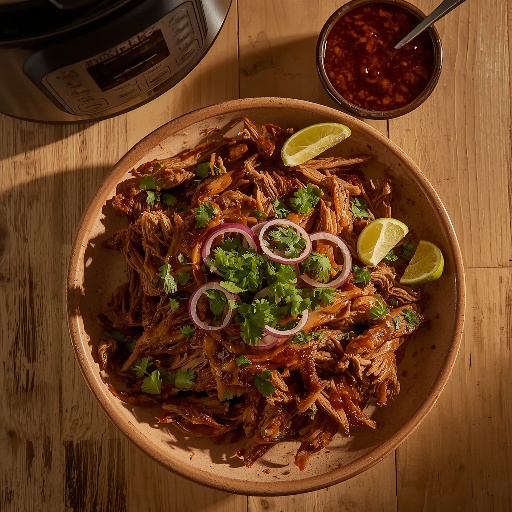
No thawing required. A frozen pork shoulder in a pressure cooker produces genuinely tender, shreddable pulled pork in about two hours — and in Arizona, where the summer heat makes long oven braises genuinely unpleasant, this method is the practical choice year-round. This guide covers everything: timing, spice rubs, Southwest flavour variations, and every mistake worth avoiding.
| 5 min | ~90 min | 20 min | 165°F+ |
| Prep time | Cook time (frozen) | Natural release | Target internal temp |
Why Pressure Cooking from Frozen Works in Arizona
In most of the country, forgetting to thaw meat is a minor inconvenience. In Phoenix or Tucson in July, it’s a weekly reality — the freezer is stocked because the idea of going grocery shopping when it’s 112°F outside is genuinely unappealing. You buy in bulk, you freeze in bulk, and you sometimes discover at 5pm that the pork shoulder you meant to pull out this morning is still a solid frozen block.
The pressure cooker — specifically the Instant Pot or any electric multi-cooker — solves this completely. A frozen 2–3 pound pork shoulder produces genuinely shreddable, tender pulled pork in about 90 minutes at high pressure. It works. Not as a compromise or a workaround — it actually works, producing results comparable to a thawed cook with the right timing.
Arizona, heat, and indoor cooking: According to the National Oceanic and Atmospheric Administration (NOAA)’s climate data, Phoenix, Arizona averages over 100 days per year above 100°F, with summer highs regularly exceeding 110°F. Indoor cooking methods that don’t heat the kitchen — like pressure cookers, slow cookers, and multi-cookers — are disproportionately useful in this climate because they generate significantly less ambient heat than ovens or stovetop braises. For pulled pork specifically, a pressure cooker achieves in 90 minutes what an Arizona backyard smoker achieves in 8 hours, without adding heat to a kitchen that’s already battling a 110-degree day. [Reference 1 — NOAA Climate Data — applied inline]
There’s also the practical rhythm of Arizona cooking. Outdoor grilling and smoking culture is strong in the state, but it shifts heavily to fall and winter when the temperature drops to the 70s and standing over a pit at 6am in October actually sounds pleasant. The pressure cooker covers the gap during summer — all the pulled pork flavour, none of the heat management.
The Science: How Pressure Cooking Handles Frozen Meat
A pressure cooker raises the boiling point of water by trapping steam and increasing the internal pressure. At standard pressure, water boils at 100°C (212°F). Inside a sealed pressure cooker at high pressure, the liquid reaches approximately 121°C (250°F) — a temperature significantly higher than any conventional braising or slow cooking method.
This elevated temperature does two critical things simultaneously. It penetrates frozen meat faster than any conventional cooking method because the pressurised steam transfers heat into the protein far more efficiently than air or water at normal boiling temperature. And it converts the collagen in tough, connective-tissue-rich cuts like pork shoulder into gelatin — which is exactly what creates the tender, shreddable texture of proper pulled pork.
Food safety with frozen meat in a pressure cooker: The USDA’s food safety guidance establishes that pork should reach an internal temperature of at least 145°F (63°C) with a three-minute rest, or 160°F (71°C) for ground pork. According to the USDA Food Safety and Inspection Service, cooking from frozen is considered safe in a pressure cooker because the appliance reaches and maintains temperatures well above safe minimums throughout the cook. The critical factor is adding approximately 50% more cooking time compared to a thawed piece of the same weight — the extra time accounts for the time needed to bring the frozen core up to temperature before the actual cooking begins. [Reference 2 — USDA FSIS — applied inline]
Choosing the Right Cut of Pork
Cut selection is more important with frozen cooking than with thawed, because you have less flexibility to compensate for a dry or lean piece of meat during the cook. The right cut gives you margin for error; the wrong one doesn’t.
| Pork shoulder (bone-in) | Pork butt (boneless shoulder) | Pork picnic shoulder |
| Best choice, Arizona staple | Excellent | Very good |
| The definitive pulled pork cut. High fat, high collagen, extremely forgiving. The bone adds flavour to the cooking liquid. Freezes well and cooks beautifully from frozen. | Same muscle group as bone-in shoulder, just without the bone. More uniform shape makes timing more predictable from frozen. Widely available and usually slightly cheaper per pound. | Lower portion of the front leg. More connective tissue than the butt — needs slightly longer cooking. Produces exceptionally rich cooking liquid. Excellent if you can find it. |
| Pork loin | Pork tenderloin | Country-style pork ribs |
| Not recommended | Wrong cut | Good shortcut |
| Too lean. Pressure cooking from frozen dries it out before the surface develops any texture. May still be edible but will be stringy rather than tender. Wrong tool for the job. | Extremely lean and cooks fast when thawed. From frozen under pressure it overcooks instantly. Not a pulled pork cut under any method. Save it for grilling. | Cut from the blade end of the loin. More available in small packages — good if you only want to cook 1–2 lbs. From frozen, reduce cooking time to 60–70 minutes at high pressure. |
The Exact Timing Chart — Frozen vs. Thawed
The most common question with frozen pressure cooker cooking is how long to add compared to a thawed piece. The answer depends on weight, not just whether it’s frozen — and bone-in cuts need slightly more time than boneless of the same weight because the bone slows heat penetration through the thickest part.
| Weight | Thawed (high pressure) | Frozen (high pressure) | Natural release |
|---|---|---|---|
| 1–1.5 lbs boneless | 45–50 min | 70–75 min Easy batch | 15 min |
| 2–2.5 lbs boneless | 60–65 min | 90–95 min Sweet spot | 20 min |
| 3–3.5 lbs boneless | 75–80 min | 110–115 min | 20–25 min |
| 4–5 lbs boneless | 90–100 min | 130–140 min Check at 120 min | 25 min |
| 2–3 lbs bone-in | 70–75 min | 100–110 min | 20 min |
| 4–5 lbs bone-in | 90–100 min | 135–150 min Verify temp | 25–30 min |
If it’s not shreddable after the cook time
If a fork meets resistance when you try to pull the pork — it bends but doesn’t shred — the collagen hasn’t fully converted to gelatin. This doesn’t mean it’s undercooked for safety; it means it needs more time to become pull-apart tender. Seal the lid and cook at high pressure for an additional 15–20 minutes. This almost always fixes it. The second pressure cycle is fast because the meat is already hot.
Full Recipe — Step by Step
Ingredients
| 2–3 lbs frozen pork shoulder or butt | 1 cup chicken or pork stock | 2 tbsp dry spice rub |
| Straight from the freezer. Don’t partially thaw — either fully thawed or fully frozen produces more consistent results than something in between. | The pressure cooker needs minimum liquid to build pressure. 1 cup is the minimum for most 6-qt models. Don’t use water — stock adds flavour to the cooking liquid that carries into the meat. | Applied directly to the frozen meat — it won’t penetrate deeply, but it seasons the exterior and flavours the cooking liquid which then redistributes into the shredded meat. See spice rub options below. |
| 4 garlic cloves, smashed | 1 chipotle pepper in adobo + 1 tbsp adobo sauce | 1 tbsp apple cider vinegar |
| Added to the cooking liquid. Infuses through the liquid during the long cook. Doesn’t need to be minced — smashed cloves release flavour gradually. | The Arizona flavour element. Adds smoky heat that approximates what a pit smoker does over hours. Scale up or down based on heat preference — one chipotle is mild to medium. | Acid in the cooking liquid helps break down collagen and adds a brightness that fat-rich pork needs. Don’t skip this — the difference in the final taste is noticeable. |
| 1 tsp dried oregano (Mexican variety preferred) | Salt and black pepper | |
| Mexican oregano has a slightly different flavour profile than Mediterranean — more citrusy, less minty. Common in Arizona grocery stores and far more appropriate for Southwest pork dishes. | Season the cooking liquid generously. With frozen meat, some of that liquid redistributes into the shredded pork — adequately seasoned liquid means adequately seasoned pork. |
Method
- Take the pork directly from the freezer. If multiple pieces are frozen together in a block, try to separate them — individual pieces cook more evenly and build pressure faster than one large mass. A brief run under cold water for 30 seconds usually separates frozen pieces without thawing them.
- Rub the dry spice mix over the frozen pork as well as you can. It won’t stick perfectly to a frozen surface — that’s fine. Press it on firmly and what stays is enough. The rub on the exterior will dissolve into the cooking liquid and redistribute when you shred.
- Add the stock, garlic, chipotle and adobo sauce, apple cider vinegar, and oregano to the pressure cooker insert. Stir briefly. Place the frozen pork in the liquid — it doesn’t need to be submerged, just sitting in the liquid with the lid able to seal above it.
- Seal the lid. Set to high pressure for 90 minutes (for 2–2.5 lbs boneless; adjust per the chart above for other weights). The cooker will take 15–20 minutes to come up to pressure because it’s starting from frozen — this is normal. Don’t count this time against the cook time; the appliance handles it automatically.
- When the cook cycle ends, allow the pressure to release naturally for 20 minutes. Don’t quick-release — a rapid pressure drop on a large cut of collagen-rich pork causes the meat to tighten and the juices to push out too fast. Natural release produces visibly more tender results. After 20 minutes, release any remaining pressure manually.
- Remove the pork and check it. Insert a fork and twist — it should shred with very little resistance. If it resists significantly, return to the pot, seal, and cook at high pressure for another 15 minutes. If it’s ready, remove the bones if bone-in, and shred using two forks or bear-claw meat shredders if you have them.
- Don’t discard the cooking liquid. Ladle out most of the fat (there will be a lot from the pork shoulder — skim it or use a fat separator), then pour the remaining defatted liquid over the shredded pork. Toss to combine. This is the step that separates moist, flavourful pulled pork from dry, bland pulled pork. The liquid carries all the chipotle, garlic, and spice flavour back into the meat.
- Taste and season. This is your last chance to adjust salt, acid, or heat. A squeeze of fresh lime juice at the end is the Arizona finishing touch — it brightens everything and cuts the richness of the pork fat.
Arizona-Inspired Spice Rubs
With frozen cooking, the rub primarily seasons the cooking liquid rather than the meat surface directly. This actually works in your favour — the flavours distribute evenly through every bite of shredded pork rather than being concentrated on the exterior only.
| Southwest desert rub | Sonoran-style | Applewood smoke simulation |
| Arizona signature | Tucson influenced | Pit-smoker feel |
| 2 tsp smoked paprika, 1 tsp cumin, 1 tsp chili powder, ½ tsp garlic powder, ½ tsp onion powder, ½ tsp dried Mexican oregano, ¼ tsp cayenne, 1 tsp salt, ½ tsp black pepper. The core Arizona flavour profile — smoky, earthy, mildly hot. | 2 tsp ancho chili powder, 1 tsp cumin, ½ tsp coriander, ½ tsp cinnamon, ¼ tsp cloves, 1 tsp salt. Inspired by Sonoran Mexican cuisine across the border — deeper, slightly sweet spice notes that pair with citrus finishing sauces. | 2 tsp smoked paprika, ½ tsp liquid smoke added to the cooking liquid (not the rub), 1 tsp brown sugar, 1 tsp salt, ½ tsp garlic powder, ½ tsp black pepper. Approximates a smoked pulled pork flavour without outdoor equipment. |
| Classic American BBQ | Arizona-New Mexico | Citrus-forward |
| Traditional | Green chile variation | Fresh and bright |
| 2 tsp brown sugar, 1 tsp smoked paprika, 1 tsp garlic powder, ½ tsp onion powder, ½ tsp mustard powder, ½ tsp celery salt, ½ tsp black pepper, 1 tsp salt. For when you want pulled pork sandwiches with coleslaw and nothing too regional about it. | 1 tsp cumin, 1 tsp garlic powder, 1 tsp salt, ½ tsp dried oregano — then add ½ cup diced roasted Hatch green chiles (canned or fresh-roasted) directly to the cooking liquid instead of chipotle. Produces a green-chile-braised pulled pork that’s distinctly Southwest. | 1 tsp orange zest, 1 tsp lime zest, 1 tsp cumin, ½ tsp smoked paprika, 1 tsp salt, ½ tsp pepper — add ¼ cup fresh orange juice to the cooking liquid. Bright and fresh. Excellent in tacos with minimal additional seasoning needed. |
How to Serve It — Southwest Style
| Pulled pork tacos | Pulled pork burritos | Green chile pork stew |
| Warm corn tortillas, pulled pork, pickled red onion, cotija cheese, fresh cilantro, salsa verde. The definitive Arizona presentation. Make a double batch of the pickled onion — they last a week and improve every taco they touch. | Large flour tortilla, pork, Mexican rice, black beans, shredded cheese, sour cream, guacamole. The Tucson burrito tradition — substantial, filling, and excellent cold the next day. | Use the green chile variation rub. Keep some of the cooking liquid as a broth base, add diced potatoes and roasted Hatch green chiles, simmer 20 minutes. Serve in bowls with warm flour tortillas. |
| Pulled pork nachos | Classic sandwich | Pork over rice bowls |
| Tortilla chips, pulled pork, shredded jack cheese, jalapeños, black beans. Broil until cheese melts. Top cold with sour cream, pico de gallo, and avocado. Arizona stadium food translated to a weeknight dinner. | Brioche or potato bun, pulled pork with a little BBQ sauce, coleslaw. The American classic. Works with the BBQ rub variation. The chipotle base version is also excellent here with a chipotle mayo instead of traditional BBQ sauce. | White rice, pulled pork, sautéed peppers and onions, avocado, lime crema. A fast assembly bowl dinner that comes together in five minutes once the pork is ready. The cooking liquid makes an excellent sauce drizzled over the rice. |
Sauce Options Without Bottled BBQ
Commercial BBQ sauce works fine, but it competes with the chipotle and Southwest flavours this recipe builds. These three homemade options take under ten minutes and pair specifically with the Arizona spice profile.
Chipotle-lime sauce (5 minutes)
Blend 2 chipotles in adobo, 2 tbsp adobo sauce, 3 tbsp honey, 2 tbsp lime juice, 1 tbsp apple cider vinegar, and ¼ cup tomato paste. Thin with a splash of water to your preferred consistency. Smoky, tangy, slightly sweet — the natural partner for the Southwest rub.
Hatch green chile sauce (10 minutes)
Sauté 1 diced white onion and 3 garlic cloves in a little oil until soft. Add 1 cup diced roasted Hatch green chiles (canned is fine), ½ cup chicken stock, ½ tsp cumin, salt. Simmer 5 minutes, blend until smooth. This is a specifically Arizona sauce — Hatch chiles from New Mexico are available at Arizona grocery stores and at Costco during late summer harvest season.
Reduced cooking liquid glaze (zero extra ingredients)
After removing the pork, pour the defatted cooking liquid into a small saucepan. Simmer over medium-high heat for 8–10 minutes until it reduces by half and becomes thick enough to coat a spoon. This is the easiest “sauce” and often the best — it’s concentrated pulled pork, chipotle, and garlic flavour in liquid form. Pour over the shredded meat or serve alongside for dipping.
Meal Prep and Storage
| Refrigerator | Freezing cooked pork | Batch cooking |
| Pulled pork keeps 4–5 days tightly covered. Always store with some cooking liquid — it keeps the pork moist and prevents the edges from drying out overnight. | Portion into 1-cup freezer bags with a few tablespoons of cooking liquid each. Freeze flat. Reheat from frozen in the microwave (3–4 minutes on 50% power) or in a covered pan with a splash of stock over medium-low heat. | The pressure cooker handles 4–5 lbs as easily as 2 lbs. Cook a full shoulder, use half for dinner, portion and freeze the rest. Extends the meal into three to four future dinners with zero extra effort. |
| Reheat quality | Cooking liquid | Arizona summer tip |
| Pulled pork reheats exceptionally well — often better than day one because the flavours continue to develop overnight. The only enemy is dryness; always reheat with liquid and a covered pan or microwave cover. | Freeze the leftover cooking liquid separately. It’s too flavourful to discard — use it as a broth base for rice, beans, or soup, or as the liquid when reheating subsequent portions from frozen. | In Phoenix in summer, the refrigerator is more important than usual — food safety timelines shorten in a hot environment. Don’t leave pulled pork at room temperature for more than two hours at any indoor temperature above 70°F. |
Common Mistakes and Fixes
Meat won’t shred after the cook time
Not a food safety issue — it’s a collagen conversion issue. The meat is cooked through but the connective tissue hasn’t fully broken down into gelatin. Solution: return to the pot, reseal, and add 15–20 more minutes at high pressure. One additional cycle almost always resolves it. This happens more often with bone-in cuts and with pieces over 4 lbs frozen.
Dry or bland shredded pork
The cooking liquid was discarded or wasn’t added back to the meat after shredding. This is the single most common reason pulled pork tastes disappointing. Defat the liquid, taste it, season it if needed, and pour it over the shredded meat. Toss well. Let it sit for 5 minutes before serving — the meat absorbs the liquid back and the difference in both moisture and flavour is significant.
“Burn” warning on the Instant Pot
The Instant Pot’s burn sensor fires when liquid near the heating element becomes too concentrated or the liquid level is too low. With frozen pork, the meat initially sits above the liquid as a frozen block — this is usually fine once pressure builds. If you get a burn warning: quick release immediately, open the lid, add ½ cup more stock, scrape any stuck bits from the bottom, reseal and continue. The warning is a safety feature, not an indication the cook is ruined.
Greasy or watery final texture
Pork shoulder releases a lot of fat during pressure cooking — this is normal and desirable for flavour, but needs to be managed. Use a fat separator or ladle to remove most of the visible fat from the cooking liquid before adding it back to the meat. A little fat is good; a lot makes the pork greasy rather than moist. Refrigerating the cooking liquid overnight allows the fat to solidify on top for easy removal.
Pork frozen in an irregular shape or large block
An unusually thick or irregular frozen piece may need the maximum time from the chart plus an extra 15 minutes. If you can break it into two pieces before cooking (sometimes possible with a quick thaw of the outer surface), you’ll get more consistent results and save 15–20 minutes of cook time. The pressure cooker doesn’t care about shape per se, but thickness at the thickest point determines how long the frozen core takes to come up to temperature.
See Also – Waffle iron hash browns — crispy, Oregon style
See Also – Air fryer frozen shrimp — no breading, how long, Mississippi style