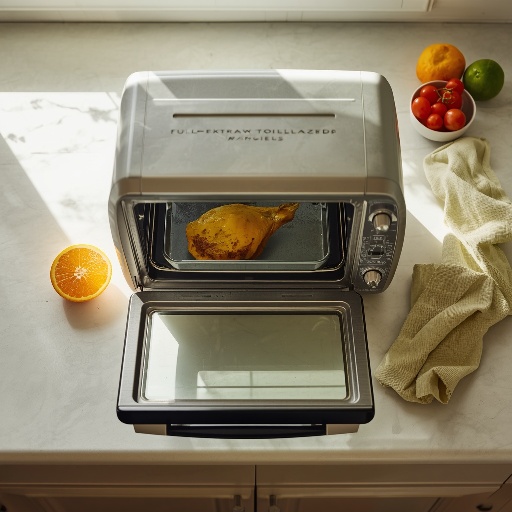
Whether you’re in a condo in Naples, a studio in Miami, or a retirement cottage near St. Pete — cooking for one in Florida has its own rhythm. This guide covers twelve toaster oven recipes built around the state’s best produce, scaled to a single plate, and designed for real kitchens without a full-size oven.
| 12 | 1 | 15–30 | 0 |
| Complete recipes | Serving each | Minutes, most recipes | Times you heat the house |
Why a Toaster Oven Makes Particular Sense in Florida
Florida doesn’t get the seasonal reprieve from heat that most of the country takes for granted. When it’s 93°F in August in Tampa — and humid enough to feel like you’re breathing through a wet towel — turning on a full-size oven to roast a single chicken thigh is an act of genuine self-sabotage. The kitchen heats up, the AC works overtime, and the whole apartment feels like a slow cooker for the next two hours.
A toaster oven uses a fraction of the energy and generates significantly less radiant heat into the room. For single-person cooking, where a full-size oven is almost always oversized for the task anyway, the toaster oven becomes the rational primary appliance rather than a secondary convenience gadget.
On energy use and heat output: A standard full-size oven consumes between 2,000 and 5,000 watts and heats a substantial surrounding area. According to the U.S. Department of Energy’s guidance on kitchen appliances, a toaster oven uses roughly one-third to one-half the energy of a conventional oven for the same cooking task, and because its smaller cavity heats faster, preheat time is significantly reduced. In a Florida climate where air conditioning runs year-round, this difference matters practically — both for electricity cost and for keeping the kitchen habitable.
There’s also the reality of Florida living arrangements. The state has the highest percentage of single-person households over 65 of any state in the country, and a significant portion of those residents live in condos, apartments, or smaller homes where a large oven is either under-used or impractical. Cooking for one, in a warm climate, with a compact appliance, is genuinely the most common cooking situation in large parts of the state.
Florida Produce Worth Building Recipes Around
Florida’s agricultural output is exceptional and dramatically underused in most mainstream recipe content. The state is the largest producer of oranges in the U.S., a major grower of tomatoes, strawberries, avocados, and sweet corn, and has a diverse tropical fruit production in South Florida that most of the country never encounters fresh.
Florida as an agricultural state: According to the Florida Department of Agriculture and Consumer Services, Florida ranks second in the nation in total agricultural value and produces over 300 commodities. The state’s subtropical and tropical climate zones allow year-round growing of citrus, vegetables, and tropical fruits that aren’t commercially viable elsewhere in the contiguous U.S. This means Florida residents have access to exceptional fresh produce throughout the year — a significant cooking advantage that’s worth leaning into.
| Florida citrus (oranges, grapefruit) | Strawberries (Plant City) | Tomatoes | Avocados (South Florida) |
| Peak: Nov–April | Peak: Dec–March | Peak: Oct–June | Peak: June–Oct |
| Best citrus in the country, fresh. Use zest and juice for marinades, glazes, and finishing sauces. | Florida produces winter strawberries when nowhere else can. Sweet, large, and exceptional roasted. | Florida’s tomato season is the inverse of most states. Best tomatoes in winter and spring. | Larger, creamier, less fatty than Hass. Excellent baked. Peak in summer — opposite of California. |
| Sweet corn | Mango (South Florida) | Gulf shrimp | Key limes |
| Peak: March–May | Peak: May–Sept | Year-round | Year-round |
| Florida sweet corn season is spring. Exceptional for toaster oven roasting in the husk. | Over 500 varieties grown locally. Incredible as a glaze for fish or chicken in the toaster oven. | Not produce, but Florida Gulf shrimp is one of the best single-serving proteins for toaster oven cooking — fast, flavourful, minimal waste. | More aromatic and more acidic than Persian limes. Use the juice and zest to finish almost any savoury toaster oven dish. |
Toaster Oven Basics for Single-Serving Cooking
A few things work differently in a toaster oven compared to a full-size oven, and knowing them saves a lot of trial and error.
| Preheating | Pan choice | Hot spots |
| Always preheat, even though the cavity is small. A toaster oven that hasn’t reached temperature when food goes in produces uneven cooking — the element cycles on and off erratically trying to stabilise. | Use small metal or ceramic pans, not glass for high-heat cooking. Glass can crack under rapid temperature changes in a small oven cavity. Quarter-sheet pans (9″×13″ or smaller) are the ideal size. | Most toaster ovens run hotter near the rear element. Rotate the pan halfway through if you notice uneven browning. Some models have a convection fan — use it for roasting and turn it off for baking. |
| Temperature accuracy | Foil lining | Single-serving sizing |
| Many toaster ovens run 15–25°F hotter or cooler than the dial suggests. An inexpensive oven thermometer placed inside tells you the real temperature — worth the $8 investment for consistent results. | Line the tray with foil for easy cleanup when roasting anything with fat or sugar (shrimp, glazed proteins, citrus). Don’t cover the crumb tray completely — it needs airflow. | For most proteins, one piece (one chicken thigh, one fish fillet, 4–6 shrimp) fits comfortably on a small baking tray with room to spare. Never crowd — single-serving portions need space to roast, not steam. |
Breakfast Recipes
01 – Florida grapefruit broiled with honey and cinnamon
5 min, Broil setting, Vegan, Florida classic
This is the simplest recipe in the article and one of the best. Broiled grapefruit has been a Florida breakfast staple since at least the 1920s — the heat caramelises the natural sugars, softens the membrane, and concentrates the citrus flavour into something that tastes luxurious for essentially no effort.
Ingredients
- ½ large Florida grapefruit (Ruby Red or Marsh White)
- 1 tsp honey or brown sugar
- ¼ tsp cinnamon
- Optional: a pinch of flaky sea salt
Method
- Set the toaster oven to broil (high). Line the small baking tray with foil.
- Cut the grapefruit in half. Run a paring knife around each segment to loosen. Place cut-side up on the tray.
- Drizzle honey over the cut face. Dust with cinnamon. Add the pinch of salt if using — it amplifies the citrus flavour.
- Broil for 4–6 minutes until the top bubbles and turns golden-amber at the edges. Watch it — the line between caramelised and burnt is narrow under a broiler.
- Rest for 2 minutes before eating — the juice is extremely hot immediately out of the oven.
02 – Avocado toast with baked egg — Florida style
12 min, 375°F / 190°C, Vegetarian
Avocado toast is not a new idea, but most versions miss the opportunity a toaster oven creates — baking the egg directly in a small ramekin or directly on the toast for a unified, hot breakfast that doesn’t require a stovetop at all. Florida avocados in summer are larger and creamier than most people expect.
- 1 thick slice sourdough or whole grain bread
- ½ ripe Florida avocado (or 1 small Hass)
- 1 large egg
- Key lime juice, red pepper flakes, salt, black pepper
- Optional: sliced cherry tomato, fresh cilantro
- Preheat toaster oven to 375°F. Toast the bread slice on the rack for 4 minutes until firm.
- Mash avocado with key lime juice, salt, and pepper. Spread thickly over the toast. Place on the foil-lined tray.
- Make a small well in the centre of the avocado with the back of a spoon. Carefully crack the egg into the well.
- Bake for 7–9 minutes until the egg white is set but the yolk still moves when gently tilted. Add cherry tomatoes around the tray if using — they’ll blister beautifully.
- Finish with red pepper flakes and fresh cilantro. Eat immediately.
03 – Roasted strawberry and cream cheese toast
15 min, 400°F / 205°C, Vegetarian, Winter–Spring
Plant City, about 20 miles east of Tampa, produces some of the best winter strawberries in the country. Roasting them concentrates their flavour and turns their juice into a syrupy glaze. Spread onto toast with cream cheese, it’s a genuinely good breakfast for practically no effort.
- 5–6 Florida strawberries, hulled and halved
- 1 tsp honey
- 1 thick slice bread
- 2 tbsp cream cheese or ricotta
- Fresh basil or mint leaves to finish
- Preheat to 400°F. Toss strawberries with honey on the foil-lined tray. Roast for 10–12 minutes until jammy and slightly caramelised.
- While the berries roast, toast the bread in the toaster oven rack for the final 3 minutes.
- Spread cream cheese generously over the hot toast. Spoon roasted berries and their juice over the top.
- Tear a few basil or mint leaves over the top. The herb makes this taste finished rather than improvised.
Lunch Recipes
04 – Gulf shrimp tacos — oven-roasted filling
15 min, 425°F / 220°C, Gluten-free option
Florida Gulf shrimp roasted in a toaster oven at high heat for eight minutes produces a better result than many stovetop methods — the edges caramelise slightly, the shrimp stays juicy, and the whole thing requires almost no attention.
- 6–8 large Gulf shrimp, peeled and deveined
- 1 tsp olive oil, ½ tsp cumin, ½ tsp smoked paprika, salt
- 2 small corn tortillas
- Shredded cabbage, sliced avocado, key lime, fresh cilantro
- Optional: sour cream or plain yogurt
- Preheat to 425°F. Toss shrimp with olive oil and spices on the foil-lined tray in a single layer.
- Roast for 7–8 minutes. The shrimp are done when they curl into a loose C-shape and the edges are just beginning to colour. Overcooked shrimp curl into a tight O — watch for that as the signal to pull them.
- Warm tortillas directly on the oven rack for the final 2 minutes.
- Build tacos: shredded cabbage, shrimp, avocado, a squeeze of key lime, fresh cilantro. Serve immediately.
05 – Tomato and feta baked egg — single ramekin
20 min, 375°F / 190°C, Vegetarian, Winter tomatoes
Florida’s winter tomato season produces the best domestic tomatoes available in the country between November and April. Baked with olive oil, feta, and a single egg in a small ramekin, they make a lunch that looks considerably more refined than the ten minutes of active work it requires.
- 3–4 small Florida tomatoes or a handful of cherry tomatoes, halved
- 1 large egg
- 2 tbsp crumbled feta
- 1 tsp olive oil, dried oregano, salt, pepper
- Crusty bread to serve
- Preheat to 375°F. Place tomatoes cut-side up in a small oven-safe ramekin or mini gratin dish. Drizzle with olive oil, season with oregano, salt, and pepper.
- Bake 10 minutes until tomatoes soften and release their juices.
- Remove, scatter feta over the tomatoes, make a small well and crack the egg in.
- Return to oven for 8–10 minutes until the white is just set. Serve directly in the ramekin with bread to soak up the tomato juices.
06 – Citrus-glazed salmon fillet
18 min, 400°F / 205°C, High protein
A single salmon fillet with a Florida orange glaze is one of the most complete single-serving toaster oven meals — protein, flavour, and almost no cleanup. The orange glaze takes three minutes to make and transforms a plain piece of fish into something that tastes genuinely considered.
- 1 salmon fillet (5–6 oz / 140–170g), skin-on
- 2 tbsp fresh Florida orange juice + ½ tsp orange zest
- 1 tsp honey, 1 tsp soy sauce (or coconut aminos), ¼ tsp ginger
- Salt, pepper, olive oil
- Fresh herbs or sliced spring onion to finish
- Stir together orange juice, zest, honey, soy sauce, and ginger in a small bowl. This is the glaze.
- Preheat to 400°F. Place salmon skin-side down on the foil-lined tray. Brush with olive oil, season with salt and pepper.
- Spoon half the glaze over the fillet. Bake for 10 minutes.
- Spoon the remaining glaze over and bake for another 3–4 minutes. The glaze should be sticky and slightly caramelised at the edges. The salmon is done when it flakes easily but the centre is still slightly translucent.
- Scatter spring onion or fresh herbs over the top before serving.
Dinner Recipes
07 – Mango-glazed chicken thigh
35 min, 425°F / 220°C, Summer mangoes
South Florida mango season runs roughly May through September and produces varieties — Keitt, Kent, Tommy Atkins — available fresh at roadside stands, farmers markets, and often directly from neighbourhood trees. Pureed into a glaze with lime and a touch of heat, it’s one of the most distinctly Florida things you can do with a chicken thigh.
- 1 bone-in, skin-on chicken thigh
- 3 tbsp fresh mango puree (or very ripe mango, mashed)
- 1 tbsp key lime juice, ½ tsp chilli flakes, ½ tsp garlic powder, salt
- 1 tsp olive oil
- Mix mango puree, lime juice, chilli flakes, and garlic powder. Season the chicken with salt and olive oil. Let sit 15 minutes if time allows.
- Preheat to 425°F. Place chicken skin-side up on the foil-lined tray. Spoon half the mango glaze over it.
- Roast for 20 minutes. Spoon remaining glaze over the skin and roast for another 10–12 minutes until the skin is golden-dark and caramelised and the internal temperature reaches 165°F (74°C).
- Rest 5 minutes. The glaze firms slightly as it cools and the skin crisps a little more off the heat.
08 – Roasted cherry tomato pasta sauce — one serving
25 min, 400°F / 205°C, Vegetarian, Winter peak
Roasting a small tray of cherry tomatoes in the toaster oven while pasta boils on the stovetop is one of the most efficient single-serving dinners possible. Florida cherry tomatoes in winter are genuinely sweet — roasting them for twenty minutes concentrates everything that’s good about them.
- 1 cup Florida cherry tomatoes, halved
- 2 garlic cloves, smashed
- 1 tbsp olive oil, salt, pepper, dried basil or fresh
- 75g (2.5 oz) pasta of your choice
- Parmesan to finish
- Preheat to 400°F. Toss tomatoes and garlic with olive oil, salt, and pepper on the foil-lined tray.
- Roast 20 minutes until tomatoes are blistered and their juice has reduced into a jammy pool around them.
- Cook pasta while tomatoes roast. Reserve a few tablespoons of pasta water before draining.
- Toss hot pasta with the roasted tomatoes, garlic, all the tray juices, and a splash of pasta water to loosen. Finish with parmesan and fresh basil if available.
09 – Sheet pan shrimp and vegetables — one tray
20 min, 425°F / 220°C, Complete meal, Gulf shrimp
Everything on one small tray, one person, done in twenty minutes. This is the weeknight dinner the toaster oven was made for. Gulf shrimp, zucchini, cherry tomatoes, and whatever else is in the fridge, tossed together and roasted at high heat until everything is slightly caramelised and the shrimp are just cooked.
- 6–8 Gulf shrimp, peeled
- ½ small zucchini, sliced into half-moons
- Handful cherry tomatoes
- ½ bell pepper, diced
- 1 tbsp olive oil, 1 tsp Italian seasoning, salt, pepper, lemon to finish
- Preheat to 425°F. Toss the vegetables (not the shrimp yet) with olive oil and seasoning on the lined tray. Spread in a single layer.
- Roast vegetables for 10 minutes until starting to soften and colour at the edges.
- Push vegetables to the sides, add shrimp in the centre. Return for 7–8 minutes until shrimp are cooked through.
- Squeeze lemon over everything the moment it comes out. Serve from the tray if you’re washing up alone anyway.
10 – Florida-spiced grouper fillet
18 min, 400°F / 205°C, Local fish
Grouper is the quintessential Florida fish — firm, mild, and widely available fresh throughout the state. It bakes beautifully in a toaster oven: the high, dry heat develops a golden crust on the surface while the centre stays moist. A simple spice rub with Florida-adjacent flavours is all it needs.
- 1 grouper fillet (5–7 oz), or substitute mahi-mahi or snapper
- ½ tsp smoked paprika, ¼ tsp garlic powder, ¼ tsp cumin, pinch cayenne, salt
- 1 tbsp olive oil
- Key lime juice and fresh cilantro to finish
- Preheat to 400°F. Mix spices with olive oil into a paste. Rub over both sides of the fillet.
- Place on the lined tray. Bake 12–15 minutes depending on thickness. The fish is done when it flakes easily at the thickest point — don’t wait until it looks fully opaque, it continues cooking off the heat.
- Squeeze key lime over immediately out of the oven. The acid brightens the spice rub and finishes the dish. Scatter fresh cilantro and serve.
Snack and Side Recipes
11 – Roasted Florida sweet corn — one cob
20 min, 425°F / 220°C, Spring season, Vegan
Florida sweet corn peaks in spring — March through May — and the state produces some of the sweetest corn available anywhere. Roasting one cob in a toaster oven, husked or in the husk, produces a concentrated, slightly caramelised result that plain boiling can’t match.
- 1 ear Florida sweet corn, husked
- 1 tsp olive oil or softened butter, salt
- Optional finish: key lime juice, cotija cheese, chilli powder (elote-style)
- Preheat to 425°F. Rub corn with oil or butter and season with salt.
- Place directly on the oven rack (put a piece of foil on the tray below to catch drips). Roast 18–20 minutes, turning once halfway, until the kernels are tender and the highest points are beginning to brown.
- For elote-style: brush with mayo, squeeze key lime over, scatter cotija and chilli powder while hot.
12 – Baked Key West-style stuffed tomato
22 min, 375°F / 190°C, Vegetarian
One large beefsteak or heirloom tomato, hollowed out and filled with breadcrumbs, parmesan, garlic, and herbs, baked until the crust is golden — this is a side dish or light snack that looks like something from a restaurant and takes less than five minutes to assemble.
- 1 large Florida beefsteak or heirloom tomato
- 2 tbsp breadcrumbs, 1 tbsp parmesan, 1 small garlic clove (minced)
- 1 tsp olive oil, salt, pepper, fresh or dried basil
- Preheat to 375°F. Cut the top off the tomato and scoop out some of the seeds and core with a spoon, leaving the walls intact.
- Mix breadcrumbs, parmesan, garlic, olive oil, and basil. Season with salt and pepper. Press into the tomato cavity.
- Place on the lined tray. Bake 18–20 minutes until the top is golden and the tomato walls have softened completely. Cool slightly before eating — the inside will be very hot.
Tips for Scaling Any Recipe to One Person
The single-serving mindset: Most cookbooks and online recipes assume 4–6 servings as the default. Scaling to one isn’t just dividing everything by four — some ingredients (spices, salt, leaveners in baked goods, oil for greasing a pan) don’t scale linearly. The general rule for spices: cut them by slightly less than your proportional reduction. For a recipe that serves 4 scaled to 1, use ⅓ of the spices rather than ¼. For salt: always salt to taste at the end rather than scaling precisely.
Proteins — single-serving portions
One piece is almost always enough: one chicken thigh, one fish fillet (5–6 oz), 6–8 large shrimp, one pork chop. These portions fit a small toaster oven tray with room for vegetables. Don’t be tempted to cook two and save one unless you have proper refrigerator storage — cooked fish doesn’t reheat well after more than a day.
Vegetables — buy small or use half
In Florida, farmers markets and Latin grocery stores often sell individual portions — a single cob, half an avocado in the shell, loose cherry tomatoes by weight. These are far more practical for single-serving cooking than a full bag of something you’ll use once. Publix also typically sells small quantities of most produce without requiring bulk purchases.
Leftover produce — the toaster oven solution
Half a bell pepper, three mushrooms, a handful of cherry tomatoes, two small zucchini — the Florida heat accelerates produce deterioration, so using small amounts quickly matters. The sheet pan shrimp and vegetables recipe (Recipe 9) is designed specifically for this: whatever is about to turn gets roasted at high heat and eaten that night.
See Also – Paleo pot roast recipe without wine
See Also – Vegan comfort food recipes that are actually filling