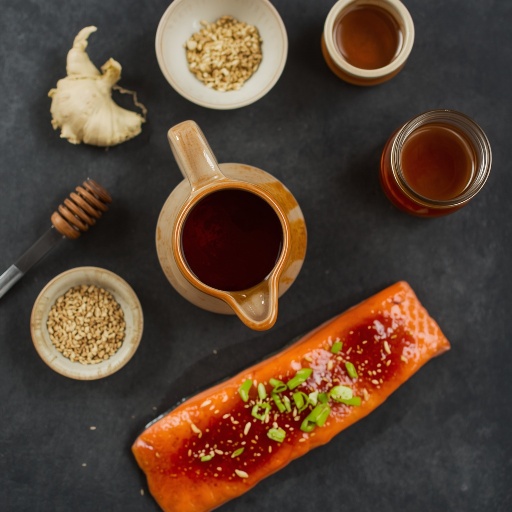
Everything that makes teriyaki taste like teriyaki — the sweet-savoury glaze, the depth, the slight stickiness — without any soy. This guide covers the substitutes, the ratios, and how to make it properly at home.
| 15 min | 5 | 2 weeks | ~6 tbsp |
| Total cook time | Core ingredients | Fridge shelf life | Yield per batch |
What makes teriyaki taste like teriyaki
Teriyaki is a Japanese cooking technique — the word combines “teri,” meaning shine or gloss, and “yaki,” meaning grill or broil. The sauce is what creates that characteristic lacquered appearance on grilled fish or chicken: a sweet, glossy coat that caramelises slightly at high heat.
Traditional teriyaki sauce has four core components: soy sauce (the savoury, umami base), mirin (sweet rice wine that adds both sweetness and complexity), sake (dry rice wine), and sugar. That’s it. The richness and depth people associate with teriyaki comes almost entirely from fermented soy and the interplay of sweet and salty.
Worth understanding: Soy sauce is made from fermented soybeans and wheat — which means it contains both soy and gluten. People avoid it for different reasons: soy allergies or intolerances, soy sensitivity, thyroid-related dietary choices, or simply because they’re following a paleo eating pattern. According to Wikipedia’s entry on soy sauce, it has been used in East Asian cooking for over 2,500 years and is one of the most widely consumed condiments in the world — which explains why finding a replacement that actually works matters to a lot of people. (Reference 1 — see authority links)
The challenge of making a soy-free version is replacing that fermented, savoury, umami-rich base. Soy sauce isn’t just salty — it has depth and complexity that plain salt doesn’t come close to replicating. The substitutes that work best are the ones that bring their own fermentation character to the sauce.
The best soy-free substitutes, compared honestly
There are several options people reach for when they need to replace soy sauce. They’re not all equal, and they behave differently in a teriyaki sauce context.
| Coconut aminos | Tamari (wheat-free) | Liquid aminos (Bragg’s) |
| Soy-freeGluten-freeWidely available | Contains soyGluten-free | Contains soyGluten-free |
| The best all-around substitute. Made from fermented coconut sap. Slightly sweeter and less salty than soy sauce — adjust sugar and salt accordingly. Closest to soy sauce in behaviour. | Gluten-free but NOT soy-free. Often recommended as a soy sauce swap but only removes the wheat. Not suitable here unless soy isn’t the concern. | Also contains soy — derived from soybeans. Commonly confused with coconut aminos. Check the label carefully. Not suitable for soy-free cooking. |
| Fish sauce | Worcestershire sauce | Miso paste (soy-free) |
| Soy-freeVery high umami | Usually soy-freeGood umami | Soy-free versions exist Deep umami |
| Soy-free and extremely high in umami. Works well in small amounts alongside coconut aminos — about 1 tsp per 4 tbsp coconut aminos. Too much and it dominates. Not suitable for vegans. | Most versions are soy-free but contain anchovies. Adds complexity but also a distinct tang — use in small amounts, not as a direct 1:1 swap. Not vegan. | Chickpea miso and rice miso are the soy-free versions. Adds real fermented depth. Dissolve in a little water before using. Not as easy to find but worth seeking out. |
For most people making soy-free teriyaki at home, coconut aminos is the right starting point. It’s the most straightforward swap, it’s available in most health food shops and increasingly in mainstream supermarkets, and it behaves similarly to soy sauce in a sauce context.
On umami: Umami is the fifth basic taste — savoury, rich, and deeply satisfying. It’s generated by glutamates, which form naturally during fermentation. Soy sauce is one of the highest-glutamate foods in the world. Coconut aminos contains far fewer glutamates, which is why soy-free teriyaki sometimes tastes “thinner” than the original — the fix is to add umami back through fish sauce, soy-free miso, or mushroom powder.
The full recipe
This recipe uses coconut aminos as the base, with the option to add a small amount of fish sauce or soy-free miso for deeper umami. The base version is fully vegan and gluten-free. The enhanced versions are noted separately.
Base soy-free teriyaki sauce
| 60ml (4 tbsp) coconut aminos | 2 tbsp mirin | 1 tbsp sake or dry sherry | 1 tbsp honey or maple syrup |
| The soy sauce replacement. It’s sweeter and less salty — account for this in the rest of the recipe. | Traditional ingredient — sweet rice wine. Adds characteristic sweetness and a faint tang. Check the label — some mirnins contain no alcohol, others do. Both work here. | Sake is traditional; dry sherry works as a substitute. If avoiding alcohol, use rice wine vinegar instead — use half the amount (½ tbsp) as it’s more acidic. | Because coconut aminos is already sweeter than soy sauce, start with 1 tbsp rather than the larger amounts some recipes call for. Taste and adjust. |
| 1 tsp sesame oil | 1 clove garlic, minced (optional) | ½ tsp fresh ginger, grated (optional) | 1 tsp cornstarch + 1 tbsp cold water |
| Toasted sesame oil, not plain. Added off heat — it adds fragrance but can turn bitter if cooked at high temperatures for long periods. | Not traditional in classic teriyaki, but very common in home recipes. Adds depth. Omit for a cleaner, more traditional flavour. | Same as the garlic — not strictly traditional but widely used. A microplane makes this fast. | For thickening into a glaze. Mix together before adding — this is a slurry. If you prefer a thin marinade-style sauce, skip this entirely. |
Method
- Combine the coconut aminos, mirin, sake (or sherry), honey, and garlic and ginger if using in a small saucepan. Stir to combine. Taste it at this stage — it should taste pleasantly sweet and savoury, but noticeably flat. That changes when it heats.
- Bring to a gentle simmer over medium heat. You’ll see small bubbles forming around the edges first — that’s when to start paying attention. Let it simmer uncovered for 3–4 minutes. The liquid will reduce slightly and the colour deepens. Stir occasionally.
- If you want a thicker glaze (for brushing over grilled chicken or salmon), stir the cornstarch and cold water together in a small bowl until completely smooth, then pour it into the simmering sauce while stirring constantly. It will thicken within about 60 seconds. Remove from heat as soon as it reaches the consistency you want — it continues to thicken as it cools.
- Remove from heat and stir in the sesame oil. Taste. If it needs more salt, add a tiny pinch — remember coconut aminos is less salty than soy sauce. If it needs more sweetness, add a small amount of honey. If it needs more depth, see the variation notes below.
- Use immediately or let cool and transfer to a sealed jar. The sauce thickens further as it cools — if you’re using it as a marinade rather than a glaze, thin it with a tablespoon of water before using.
Variation: deeper umami version (not vegan)
Add 1 teaspoon of fish sauce to the saucepan at step 1. This is a meaningful improvement in depth and richness. The fish flavour itself doesn’t come through — you just get more savoury complexity. Start with less than you think you need. A little too much fish sauce and it becomes the dominant note in the sauce.
Variation: vegan umami boost
Dissolve 1 teaspoon of soy-free miso (chickpea or rice miso) in 1 tablespoon of warm water, then add it at step 1. Alternatively, add ¼ teaspoon of mushroom powder (dried shiitake ground to a powder, available at most Asian grocery stores). Either option brings back some of the fermented depth that coconut aminos alone doesn’t quite achieve.
Getting the consistency right
Teriyaki sauce can be made in two ways depending on what you’re using it for: a thin marinade or a thick glaze. The same base recipe handles both — you just control the cornstarch.
| For marinades (thin) | For glazes (thick) | For dipping sauces (medium) |
| Skip the cornstarch entirely. The sauce stays pourable and can be used to soak chicken, tofu, or salmon for 30 minutes to several hours before cooking. The marinade penetrates the protein. This version is better for dishes where the sauce needs to absorb, not coat. | Add the cornstarch slurry. The sauce should coat the back of a spoon and hold its shape briefly when drizzled. This is the right consistency for brushing over grilled food in the final few minutes of cooking, or for stir-fry dishes where the sauce needs to cling to the ingredients. | Use half the amount of cornstarch slurry — about ½ tsp cornstarch to ½ tbsp water. This gives a slightly syrupy consistency that pours but has enough body to make a satisfying dipping sauce for spring rolls, grilled skewers, or dumplings. |
One thing worth knowing: cornstarch-thickened sauces thin out again when refrigerated and reheated. If you’re batch-making and planning to store the sauce, either wait to add the cornstarch until you’re about to use it, or accept that you’ll need to re-thicken on reheating by simmering briefly in a pan.
Thickness guide — cornstarch ratio
| Marinade (none) | Dipping sauce | Stir-fry sauce | Glaze | Thick glaze |
| 0 tsp | ½ tsp | ¾ tsp | 1 tsp | 1½ tsp |
How to use soy-free teriyaki sauce
The sauce is versatile. Here’s where it works best and what to keep in mind for each application.
| Grilled chicken | Salmon | Tofu |
| Brush over chicken thighs in the last 5–6 minutes of grilling. Do it too early and the honey scorches before the chicken cooks through. | Classic pairing. Brush over fillets in the last 3 minutes of baking or pan-frying. Teriyaki salmon with a sesame seed crust is genuinely hard to improve on. | Press firm tofu, cube it, and marinate in the thin version for 30 minutes minimum. Then bake at 200°C until caramelised, brushing with more glaze in the final minutes. |
| Stir-fry | Noodles | Dipping sauce |
| Use the medium-thick version. Add to the wok in the last 2 minutes after the protein and vegetables are almost cooked. Toss to coat and cook for one more minute. | Thicker version works well tossed through soba or rice noodles with sesame seeds and sliced spring onions. Add a splash of the noodle cooking water to loosen if needed. | Serve the medium version alongside grilled skewers, edamame, gyoza, or rice paper rolls. A small amount of rice vinegar stirred in brightens it as a dip. |
Adjusting for different dietary needs
Alcohol-free
Replace the sake with half the amount of rice wine vinegar (½ tablespoon). The acidity does some of the same work as the alcohol in cutting through sweetness. The result is slightly more tangy, which most people find acceptable. Alternatively, use 1 tablespoon of unsweetened white grape juice — the fermented character is lost, but the liquid balance is maintained.
Low sodium
Coconut aminos is already significantly lower in sodium than regular soy sauce — about 90mg per teaspoon versus around 280mg in standard soy sauce. For an even lower-sodium version, reduce the coconut aminos to 3 tablespoons and add 1 tablespoon of water, then boost umami with a small amount of mushroom powder rather than more liquid.
Paleo and Whole30
Coconut aminos is paleo and Whole30 compatible. Swap the honey for a compliant sweetener like medjool date paste (1 teaspoon) or simply rely on the natural sweetness of the mirin and coconut aminos. Omit the cornstarch for thickening and reduce the sauce longer instead — more time on the heat achieves a similar viscosity without any starch.
No mirin or sake
If you don’t have mirin: use 1 tablespoon of honey and 1 teaspoon of rice wine vinegar to approximate the sweet-tangy character. If you don’t have sake: dry sherry works well, or just skip it and add an extra tablespoon of water. Traditional teriyaki purists may wince, but in a home kitchen, these substitutions produce a sauce most people can’t distinguish from the original in a finished dish.
Storage and batch making
This sauce keeps well. Transfer to a clean, sealed glass jar and refrigerate. It will last two weeks without any loss of quality. The consistency may change slightly in the fridge — the cornstarch-thickened version tends to firm up. Stir before using, and if it’s too thick, warm it gently in a small pan with a splash of water.
It’s worth making a double batch. The sauce takes fifteen minutes to make whether you’re making one serving or four. Keep a jar in the fridge and weeknight dinners — grilled chicken, stir-fried vegetables, baked tofu — become significantly faster because the sauce is already made. This is one of those things that shifts from being an occasional recipe to being a permanent pantry staple once you’ve made it a few times.
It does not freeze especially well once thickened — the cornstarch texture changes. If you want to freeze it, leave out the cornstarch and freeze the base sauce, then add the thickener when you use it.
Common mistakes
Not accounting for coconut aminos being sweeter
Coconut aminos is noticeably sweeter than soy sauce. A direct 1:1 substitution in a recipe that also calls for sugar or honey produces an overly sweet sauce. Reduce the added sweetener when using coconut aminos — start with half the honey the recipe suggests and taste as you go.
Adding the cornstarch slurry to cold liquid
Cornstarch only activates when heated. Adding the slurry to cold sauce and then refrigerating it doesn’t thicken anything — it just creates a cloudy liquid. The sauce needs to be at a simmer when the slurry goes in, and it needs at least 60 seconds of simmering to fully activate.
Applying the glaze too early when grilling
The honey in the sauce burns at relatively low temperatures. If you brush it over chicken at the start of grilling, you’ll have charred black skin and an undercooked interior. Apply in the last 4–6 minutes only — enough time for the glaze to set and caramelise, not enough time to burn.
Confusing liquid aminos with coconut aminos
This happens often. Liquid aminos (the Bragg’s brand is most common) is derived from soybeans and is not soy-free. Coconut aminos comes from coconut tree sap and contains no soy. The names are similar, the bottles look similar in some health food shops, and the mistake is easy to make. Read the label before buying.
Expecting it to taste identical to soy sauce teriyaki
It won’t — and it doesn’t need to. Soy-free teriyaki made with coconut aminos has a slightly different flavour profile: a bit softer, slightly sweeter, with less of the sharp fermented edge. In a finished dish, most people genuinely cannot tell the difference. As a straight comparison, there’s a subtle distinction. That’s fine. The goal is a sauce that tastes good, not a forensic recreation.
See Also – Low Carb Stuffed Peppers Without Rice
See Also – Low Sodium Chili Recipe: Ground Turkey