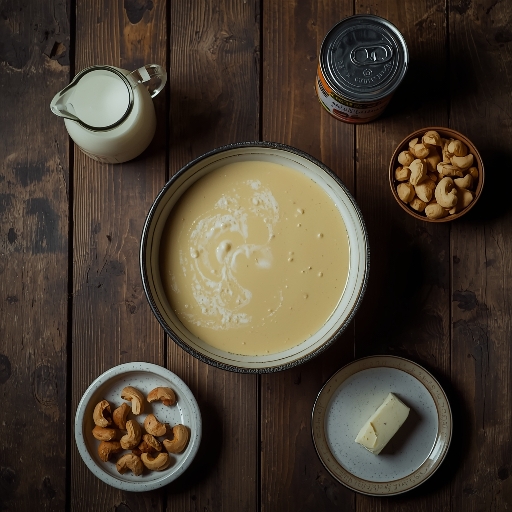
Heavy cream makes soup feel luxurious — silky, rich, coating your spoon in that way that makes you scrape the bowl. But what happens when you open the fridge and it’s just not there? Or you’re cooking for someone who can’t have dairy? Or you’re simply trying to cut back on saturated fat without sacrificing flavor?
Turns out, you have more options than you’d think. This guide covers the best substitutes for heavy cream in soup — not just a list, but real guidance on when to use each one, how to use it correctly, and what trade-offs you should expect.
Why Heavy Cream Is Used in Soup in the First Place
Before swapping it out, it helps to understand what heavy cream is actually doing in a recipe.
Heavy cream (typically around 36–40% milkfat) does three things in soup: it adds richness, acts as a stabilizer that prevents separation, and smooths out sharp or acidic flavors. Think of a tomato bisque — the cream tones down the acid and rounds out the finish. Or a potato leek soup, where cream gives it that velvety body.
When you substitute, you’re trying to replicate one or more of these functions. No single substitute is perfect for every situation. The best choice depends on what your soup actually needs.
The Best Substitutes for Heavy Cream in Soup
1. Whole Milk + Butter
Best for: Classic cream soups, chowders, potato soup
This is the closest approximation you can make from pantry staples. Combine three parts whole milk with one part melted unsalted butter — roughly ¾ cup milk and ¼ cup butter to replace one cup of heavy cream.
The butter adds fat back into the milk, which is why cream works so well to begin with. You get a liquid that behaves almost identically to light cream, and in soups with a lot of other flavors going on, most people genuinely can’t tell the difference.
The key: melt the butter first and whisk it into the milk before adding it to your soup. If you pour cold milk into hot soup and then add butter separately, you risk a greasy film floating on top.
One real-world note — this works better in thicker soups. In a delicate broth-based soup with just a splash of cream, the fat percentage gap is more noticeable.
2. Half-and-Half
Best for: Lighter soups, cream of mushroom, butternut squash soup
Half-and-half is literally half whole milk and half cream — sitting around 10–12% fat. It’s milder than heavy cream, which means your soup will be less rich, but it behaves in a very similar way.
Use it in a 1:1 ratio. The soup won’t be quite as thick or as indulgent, but the texture difference is subtle — especially when you’re working with a naturally thick base like roasted squash or cauliflower.
One practical tip: half-and-half can curdle if added to very acidic soups (tomato-based ones, especially) while the heat is too high. Lower the flame, add it slowly, and stir as you go.
3. Evaporated Milk
Best for: Creamy vegetable soups, dairy-forward recipes, budget cooking
Evaporated milk is regular milk with about 60% of its water removed, which concentrates both the protein and the fat. It’s shelf-stable, inexpensive, and surprisingly effective in soup.
Use it in a 1:1 ratio. The texture it produces is noticeably thicker than regular milk but slightly thinner than heavy cream. The flavor is slightly sweeter and more “milky” — which you’ll notice in simple soups but barely at all in spiced or herb-heavy ones.
It holds up well to heat, which makes it a reliable choice if your soup needs to simmer for a few minutes after adding the cream element. Unlike half-and-half, it doesn’t curdle as easily.
4. Full-Fat Coconut Milk
Best for: Thai-inspired soups, curries, lentil soup, vegan recipes
Full-fat coconut milk is the dairy-free substitute that actually delivers on richness. The canned version (not the carton) contains around 17–24% fat, which is close to some light creams.
Use it in a 1:1 ratio. It adds its own flavor — mildly sweet and distinctly coconut — which means it’s best suited to soups where that note fits naturally. A Thai coconut curry soup? Excellent. A French onion-style cream soup? Probably not.
For maximum richness, use the thick cream that settles at the top of an unshaken can. Scoop it out and stir it in just before serving to preserve its texture.
5. Greek Yogurt
Best for: Cold soups, lightly creamed vegetable soups, lower-fat versions
Full-fat Greek yogurt can stand in for cream in soups that don’t need to boil after the dairy is added. It adds tanginess, some protein, and a creamy texture — though the mouthfeel is slightly different from cream.
The important rule: don’t let it boil. Greek yogurt breaks and becomes grainy at high heat. Add it at the very end, off the heat or over very low flame, and stir it in gently.
Use about ¾ cup of Greek yogurt for every cup of heavy cream. The tanginess can actually be a plus — it brightens the flavor in potato, cucumber, or herb-forward soups. If the tartness is too strong, a small pinch of sugar balances it out.
6. Cashew Cream
Best for: Vegan soups, nut-forward recipes, bisques
Cashew cream has become popular in plant-based cooking for good reason — it produces a smooth, genuinely creamy texture with a neutral flavor that doesn’t compete with the rest of the soup.
To make it: soak raw cashews in water for 4–6 hours (or in hot water for 30 minutes if you’re in a hurry), then blend with fresh water until completely smooth. A ratio of 1 cup cashews to ½ cup water produces a thick cream. Thin it slightly with more water for a pouring consistency.
It holds up well to gentle heat and doesn’t separate easily. The only practical downside is that it adds some calories from fat and requires some prep time — but if you’re making soup from scratch anyway, blending cashews barely registers as extra work.
7. Silken Tofu (Blended)
Best for: Vegan soups, bisques, blended soups, high-protein diets
Silken tofu is about 85–90% water, but when blended until smooth, it creates a surprisingly creamy consistency. It has almost no flavor of its own — which is actually useful. It takes on whatever the soup tastes like.
Blend it before adding to the soup (not after, or you’ll end up with chunks). Use about the same volume as you would cream. It’s lower in fat than most other substitutes, so you might want to drizzle in a small amount of olive oil or a pat of vegan butter for richness.
Best suited for fully blended soups — tomato, sweet potato, pea — where it incorporates seamlessly. Less ideal for chunky soups where the texture inconsistency would be obvious.
8. Oat Milk or Soy Milk (Full-Fat)
Best for: Light cream soups, dairy-free diets, mild flavor soups
Plant-based milks have improved a lot. Full-fat oat milk and unsweetened soy milk are the two most reliable in soup — they have enough body to contribute some creaminess without being watery.
That said, they’re not a one-to-one replacement in recipes where cream is doing the heavy lifting. In a soup where cream is a supporting character — just stirred in at the end for a smooth finish — they work well. In a recipe where cream is the main event, they’ll produce a noticeably thinner result.
Use barista or “full fat” versions for best results. Standard oat milk and soy milk have more water content and will thin your soup.
Substitutes to Avoid (and Why)
Not everything labeled “creamy” belongs in soup. A few things that often come up in substitution guides but don’t really work:
Skim milk or fat-free milk: Too watery, too prone to curdling, adds almost nothing to texture. Even in a pinch, whole milk is significantly better.
Cream cheese: Can be blended into soup in small amounts, but it adds a heavy tang and density that changes the flavor profile considerably. Only works in specific recipes — not as a general swap.
Whipped cream (from a can): Deflates immediately, adds sugar, and falls apart in heat. Not appropriate for savory soup.
A Quick Reference Table
| Substitute | Fat Content | Flavor Impact | Best Use |
|---|---|---|---|
| Butter + Whole Milk | High | Neutral | Chowders, potato soup |
| Half-and-Half | Medium | Neutral | Vegetable soups, bisques |
| Evaporated Milk | Medium | Slightly sweet | Creamy vegetable soups |
| Full-Fat Coconut Milk | High | Coconut note | Curries, Thai soups |
| Greek Yogurt | Medium | Tangy | Cold or low-heat soups |
| Cashew Cream | Medium-High | Neutral, nutty | Vegan soups, bisques |
| Silken Tofu (blended) | Low-Medium | Neutral | Blended soups |
| Full-Fat Oat/Soy Milk | Low-Medium | Mild grain note | Light soups |
Tips for Getting the Best Results With Any Substitute
A few practical notes that apply regardless of which substitute you choose:
Temperature matters. Almost all dairy and dairy-alternative products behave better when they’re not ice cold. Let them sit at room temperature for 10–15 minutes before adding to hot soup.
Add slowly. Pour the substitute in gradually while stirring, rather than dumping it all in at once. This prevents separation and helps with even distribution.
Adjust thickness separately. If your soup is too thin, a slurry of cornstarch and water (or a tablespoon of flour whisked with butter) can thicken it independently — don’t expect the substitute to do all the structural work.
Taste as you go. Some substitutes are slightly sweeter, tangier, or more neutral than heavy cream. A small taste adjustment — a pinch of salt, a squeeze of lemon, a crack of pepper — can pull everything back into balance.
Final Thoughts
There’s no single perfect substitute for heavy cream — but there’s almost certainly a good one for whatever soup you’re making. The butter-and-milk combination gets you closest to the original in most classic recipes. Coconut milk delivers the richest dairy-free option. Greek yogurt adds a pleasant brightness where heat isn’t involved.
The most important thing is matching the substitute to the soup — not just swapping blindly. Once you understand what heavy cream is doing in a particular recipe, you can choose the replacement that covers those same bases. And in many cases, the substituted version ends up being something you’d make again on purpose.