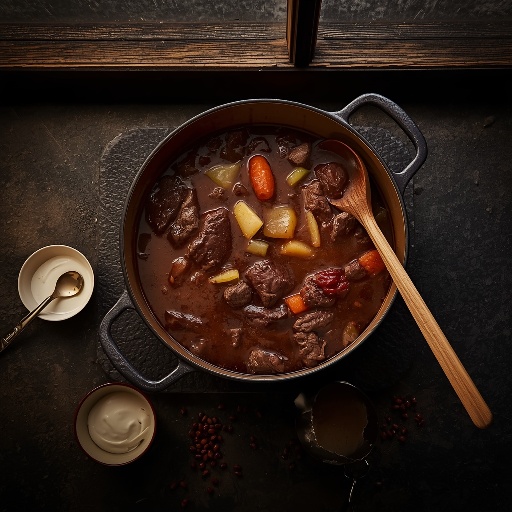
A thin beef stew is one of the more frustrating cooking outcomes. You’ve invested an hour or two — good beef, real stock, vegetables that took time to prep — and when you lift the lid, the broth runs off the spoon like water. It looks like soup, not stew, and the flavor can be great while the texture defeats the whole effort.
The standard fix is a flour roux or a cornstarch slurry. Both work. But for people cooking gluten-free, or those who simply don’t want to add flour, or anyone who started the stew without planning to thicken it and now needs a solution from what’s actually in the kitchen — there are plenty of other options.
This article covers every practical method for thickening beef stew without flour — how each one works, when to use it, and what to expect from the result.
Why Beef Stew Thins Out in the First Place
Before getting into fixes, it helps to understand what’s happening. Beef stew broth starts out thin because it’s mostly water — water from the stock, from the vegetables as they release moisture during cooking, and sometimes from wine or other liquids added deliberately.
As the stew cooks, the water reduces somewhat through evaporation. Collagen from the beef breaks down into gelatin, which adds body. Starchy vegetables contribute a small amount of natural thickening. But in many recipes, this natural process isn’t enough. The broth stays thinner than the finished dish deserves.
High altitude makes this worse, which is worth noting for Colorado cooks specifically. Water boils at a lower temperature at altitude — around 202°F at 5,000 feet, closer to 194°F at 10,000 feet. That lower boiling point means less evaporation during a covered simmer, and the broth doesn’t reduce as efficiently as it would at sea level. Thickening agents and techniques matter more, not less, in mountain kitchens.
Method 1: Cornstarch Slurry
Best for: Fast, last-minute thickening; clear, glossy broth; gluten-free cooking
Cornstarch is the most common flour alternative for thickening stew and it works reliably. It produces a slightly clearer, more glossy broth than flour does — which some people prefer and others find too shiny for a rustic stew.
Mix one tablespoon of cornstarch with one tablespoon of cold water (or cold broth) in a small bowl until completely smooth. Pour it into the simmering stew in a thin stream while stirring. The stew will begin to thicken within two to three minutes of moderate heat.
The ratio: one tablespoon of cornstarch thickens approximately one to one and a half cups of liquid. For a large pot of stew, use two to three tablespoons.
Important: Always mix cornstarch with cold liquid before adding to a hot stew. Adding dry cornstarch directly to hot broth causes instant clumping that can’t be stirred out.
Don’t boil aggressively. Cornstarch-thickened stew will thin again if subjected to a hard boil. Keep the heat at a gentle simmer once the slurry is added.
Method 2: Arrowroot Powder
Best for: Dairy-containing stews; clear, clean-looking broth; freezer-friendly batches
Arrowroot is a starch extracted from tropical roots that behaves very similarly to cornstarch but with a few advantages. It produces a clearer, more transparent broth with no cloudy appearance. It also handles acidic ingredients — red wine, tomatoes — better than cornstarch, which can break down in acidic environments.
Use in exactly the same way as cornstarch: one tablespoon mixed with one tablespoon cold water, stirred in while simmering. The ratio is roughly the same — one tablespoon thickens about one cup of liquid.
The key difference: arrowroot doesn’t hold up well to prolonged heat. Add it in the final five minutes of cooking, not during a long simmer. It also freezes significantly better than cornstarch — arrowroot-thickened stew retains its consistency after thawing where cornstarch versions can become watery or grainy.
For Colorado cooks who batch-cook and freeze at altitude, arrowroot is often the better choice precisely for this reason.
Method 3: Potato Starch
Best for: Gluten-free cooking; robust, high-heat applications; neutral flavor
Potato starch comes from dried, ground potatoes and is one of the more powerful thickeners available — it thickens more per gram than cornstarch. Use about three-quarters the volume you’d use of cornstarch.
Mix with cold liquid, add while simmering, and stir well. Potato starch tolerates slightly higher heat than arrowroot and produces a smooth, clean-tasting broth without any starchy aftertaste.
Available in most grocery stores in the baking or international food aisle. It’s particularly common in Jewish cooking (where it’s used as a kosher substitute in certain preparations) and is increasingly mainstream in gluten-free cooking.
The only real downside: like arrowroot, potato starch can thin again if the stew is held at very high heat for an extended period. Add it toward the end of cooking.
Method 4: Mashing Potatoes into the Stew
Best for: Stews that already contain potatoes; rustic texture; no added ingredients
This is the most overlooked and most forgiving method. If your beef stew already has potatoes in it — which most do — scoop out three or four chunks of cooked potato with a fork. Mash them coarsely in a bowl, then stir them back into the stew.
The mashed potato dissolves into the broth, releasing starch that thickens the liquid naturally. The texture becomes slightly more rustic and opaque. The flavor is completely neutral — it tastes like more stew, not like anything added.
This method is particularly well-suited to mountain cooking. It requires no additional ingredients, no planning, and no risk of over-thickening. You add a little, stir, wait two minutes, and add more if needed.
For a very thin stew with a lot of broth, remove a full cup of cooked potato and broth, blend smooth, and stir back in. This produces a more significant thickening effect than rough mashing alone.
Method 5: Tomato Paste
Best for: Adding depth and body simultaneously; savory, rich stews; slow cooker cooking
Tomato paste is thick, concentrated, and adds significant body to a broth without the neutral starchiness of potato or cornstarch. It also adds color — deepening a light broth to a richer, darker tone — and contributes umami that makes the stew taste more savory overall.
Stir one to two tablespoons directly into the simmering stew. It will dissolve within a minute. Let the stew simmer for another ten minutes after adding so the tomato flavor integrates rather than standing out as a separate note.
One tablespoon won’t make the stew taste tomato-forward — it’ll just make it taste deeper and more complex. Two tablespoons will be slightly more detectable. Both are appropriate depending on the recipe.
This works particularly well if the stew already contains some tomato element — diced tomatoes, a splash of tomato juice. It builds on an existing flavor thread rather than introducing something new.
Method 6: Pureed Vegetables
Best for: Adding nutrition; when you want the thickener to improve the stew; no starch cooking
Take one to two cups of cooked vegetables from the stew — cooked carrot, onion, parsnip, or celery. Remove them and blend until completely smooth using a blender or immersion blender. Stir the puree back into the pot.
The result is a stew with thicker, more cohesive broth and a slightly deeper, more complex flavor from the concentrated vegetable puree. This is a traditional French technique used in braises and stews — thickening the sauce with its own cooked aromatics rather than adding any outside ingredient.
It adds no calories beyond what the stew already contained, no starch, no gluten, and no additional flavors beyond what’s already in the pot. For a stew that’s already packed with vegetables, it’s an elegant, zero-waste solution.
The immersion blender approach lets you do this directly in the pot without removing vegetables — just blend briefly in one section of the pot while holding the blender below the surface, then stir to incorporate the puree throughout.
Method 7: Red Lentils (Added Early)
Best for: Long-braised stews; when you want the thickening to happen during cooking rather than at the end
Red lentils dissolve almost completely after thirty to forty minutes of simmering — they lose their shape and turn into a smooth, orange-tinted puree that dissolves into the broth and thickens it naturally. Adding two to three tablespoons of dry red lentils at the beginning of a long braise produces a noticeably thicker stew without any last-minute adjustment.
The flavor contribution is very mild and largely absorbed by the other ingredients. The color can shift the broth slightly warmer-toned, which most people find appealing in a beef stew.
This is a technique used extensively in Indian cooking and is increasingly common in Western slow-braised dishes. It’s particularly useful in a slow cooker where the long, moist cooking environment is exactly what red lentils need to fully dissolve.
Method 8: Reduction
Best for: When you want maximum flavor concentration; when time allows; high-altitude adjustment
Reduction is the oldest thickening technique: remove the lid and let the stew simmer uncovered until the liquid evaporates to the desired consistency. The broth concentrates, the flavors deepen, and the natural gelatin from the beef collagen becomes more prominent.
At sea level, this works well over moderate heat in twenty to thirty minutes. At high altitude in Colorado — 5,000 to 10,000 feet — reduction is less efficient because the lower boiling point means slower evaporation. It still works, just more slowly.
To compensate at altitude: keep the heat slightly higher during reduction (medium rather than low), use a wide, shallow pot that exposes more surface area to evaporation, and plan for thirty to forty-five minutes rather than twenty.
Reduction improves flavor beyond any other method — the stew becomes more intensely savory as the water evaporates and the solids concentrate. The trade-off is time. If you’re not in a hurry and the stew needs another thirty minutes anyway, uncovering it and letting it reduce is often the best first step before adding anything else.
Method 9: Instant Mashed Potato Flakes
Best for: Emergency thickening; when nothing else is available; quick results
This sounds like a shortcut, and it is. But it works. Instant mashed potato flakes are essentially dehydrated potato starch, and stirring a tablespoon or two into a thin stew thickens it quickly — within two minutes — with no lumps and no off-flavor.
Use plain, unflavored flakes without any seasoning packets. Add one tablespoon at a time, stir thoroughly, and assess before adding more. It’s easy to over-thicken with flakes because they absorb liquid quickly.
The result is slightly starchier-tasting than potato-mash thickening from actual potatoes, but in a well-seasoned, deeply flavored beef stew, the difference is minor. This is a good backup plan when you’ve tried something else and it didn’t work, or when the stew is nearly finished and needs an immediate fix.
Method 10: Xanthan Gum
Best for: Keto and low-carb diets; gluten-free cooking; very small quantities needed
Xanthan gum is a bacterial fermentation product used widely in gluten-free baking and food production as a thickener and stabilizer. A tiny amount — literally an eighth of a teaspoon per cup of liquid — thickens stew without heat required and produces a smooth, consistent texture.
The technique: sprinkle the xanthan gum over the surface of the simmering stew and whisk vigorously and immediately. Don’t let it sit dry in one spot — it clumps on contact with liquid if not dispersed quickly. A blender or immersion blender after adding produces the smoothest result.
It’s the most potent thickener on this list. A little too much produces an unpleasant, slightly gummy or gelatinous texture. Start with far less than you think you need and add more only if the stew is still too thin after two minutes.
For anyone cooking keto or low-carb in Colorado’s mountain communities — where hearty, warming stews are a winter staple — xanthan gum is the only thickener that adds no carbohydrates whatsoever.
A Note on High-Altitude Cooking in Colorado
Because this article specifically addresses Colorado cooks, it’s worth spending a moment on altitude and how it affects stew thickening beyond what’s been mentioned.
At 5,280 feet (Denver), 7,000 feet (mountain foothills), or above 10,000 feet (mountain communities), water boils at temperatures significantly below 212°F. This affects stew in two main ways:
Slower evaporation and reduction. A stew simmering at altitude doesn’t reduce as quickly. The lid trap moisture more effectively. Stews can end up thinner than the same recipe produces at sea level.
Starch thickeners may require adjustment. Cornstarch and arrowroot require heat to activate — they gelatinize between 150°F and 190°F. At altitude, simmering broth is well within this range, so the thickening itself works fine. But the broth may need more thickener than a sea-level recipe suggests because the starting point is often thinner.
Practical adjustment: At high altitude, use about 25% more thickener than a sea-level recipe calls for, or plan on a longer uncovered reduction period before adding any thickener at all.
Which Method Should You Actually Use?
Here’s a direct answer for the most common situations:
Stew is too thin and you need a fix in ten minutes: Cornstarch slurry or instant potato flakes. Both work immediately.
You’re cooking gluten-free and planned ahead: Arrowroot for the cleanest result and best freeze-thaw performance; cornstarch for the fastest fix.
You’re cooking in Colorado at altitude: Plan on uncovered reduction for the last twenty to thirty minutes, then add a cornstarch or arrowroot slurry if needed.
You want to improve flavor while thickening: Tomato paste or pureed vegetables — both thicken and deepen the stew simultaneously.
You’re cooking in a slow cooker: Red lentils added at the start, or a tablespoon of potato starch or cornstarch added to the broth before turning it on.
You’re on keto or low-carb: Xanthan gum, used very carefully in small quantities.
You want the simplest possible solution that requires nothing extra from the pantry: Mash some of the potatoes already in the stew and stir them back in.
Avoiding Over-Thickening
The flip side of a too-thin stew is a stew that’s too thick — gluey, heavy, where the broth has become paste. This happens most easily with cornstarch and potato starch when too much is added at once.
Add thickeners incrementally. One tablespoon, stir, wait two minutes, assess. Another tablespoon only if needed. It’s much easier to add more than to thin an over-thickened stew.
Thin with broth, not water. If the stew over-thickens, add warm beef or chicken broth in small splashes rather than water — water dilutes flavor while broth restores consistency without sacrificing the taste you’ve built.
Remember that stew thickens further as it cools. A stew that seems barely thick enough at serving temperature will be noticeably thicker at room temperature and almost solid when refrigerated overnight. Account for this — pull back slightly sooner than you think is necessary.
Quick Reference Table
| Method | Ratio | Best For | Notes |
|---|---|---|---|
| Cornstarch slurry | 1 tbsp per 1–1.5 cups broth | Fast fix, gluten-free | Don’t boil hard after adding |
| Arrowroot | 1 tbsp per 1 cup broth | Acidic stews, freezer batches | Add last 5 minutes only |
| Potato starch | ¾ tbsp per 1 cup broth | High heat, gluten-free | Similar to cornstarch |
| Mashed potato | 3–4 chunks per pot | Stews with potato already | Completely neutral flavor |
| Tomato paste | 1–2 tbsp per pot | Flavor + body | Adds depth and color |
| Pureed vegetables | 1–2 cups vegetables | No added ingredients | French braising technique |
| Red lentils | 2–3 tbsp dry per pot | Slow cooker, long braise | Add at the start |
| Reduction | N/A — time only | Maximum flavor | Slower at altitude |
| Instant potato flakes | 1 tbsp at a time | Emergency backup | Easy to over-thicken |
| Xanthan gum | ⅛ tsp per cup broth | Keto, low-carb | Use with extreme care |
Final Thoughts
Flour has been the default stew thickener for generations, and it works well. But it’s not the only answer, and for some kitchens and some cooks, it’s not the right one.
The methods in this article cover every situation — from a fast mid-cook fix to a slow, deliberate approach that improves the stew while thickening it. For Colorado cooks specifically, understanding how altitude affects reduction and thickening behavior is the piece that makes the biggest practical difference.
Start with reduction when time allows. Add a slurry when speed matters. Mash some potatoes when you want the simplest possible approach. None of these require anything the typical stew kitchen doesn’t already have.
See Also – Pennsylvania Dutch Chicken Pot Pie Recipe: Old Style
See Also – New England Boiled Dinner: The Real Deal with Corned Beef