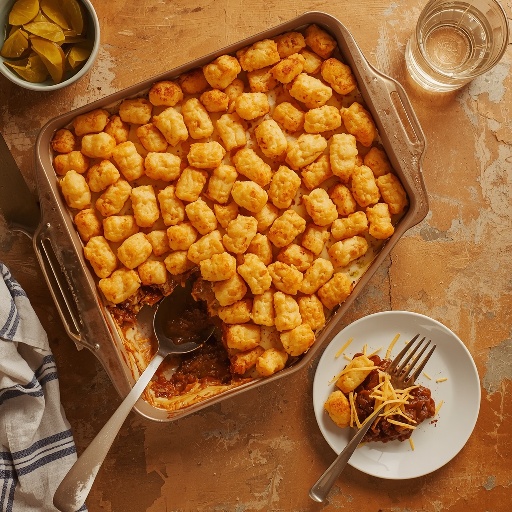
If you didn’t grow up in Minnesota, Wisconsin, the Dakotas, or anywhere in between, the word “hotdish” might not mean much to you. But in the Upper Midwest, it means everything. It’s the dish that showed up at every church potluck, every funeral reception, every school fundraiser, and every holiday table crowded with casseroles.
Tater tot hotdish is the most iconic version. Ground beef, a vegetable, a creamy binder, and a layer of frozen tater tots baked until golden on top. It sounds simple. It is simple. And it’s genuinely, unapologetically good in a way that more complicated food rarely is.
This article covers the full classic recipe, the techniques that make it work, honest variations, and what separates a good tater tot hotdish from a forgettable one.
What Makes Something a Hotdish (Not a Casserole)
People outside the region sometimes use the words interchangeably. In Minnesota, that’s a mild offense.
A hotdish is a specific thing: a one-dish meal baked in a single pan, always containing a starch, a protein, a vegetable, and a cream-based binder, all assembled together and baked. It’s not a casserole in the Southern sense — layered, often cheese-heavy, sometimes elegant. A hotdish is direct. It’s built for feeding a crowd without fuss, for transporting to a church basement still warm inside a towel-wrapped pan, for eating off a paper plate with a fork.
The tater tot version became the most beloved because it solved the starch problem beautifully. The tots go on top frozen, bake until crispy and golden, and provide a textural contrast to the creamy beef filling underneath that no other starch can match. They’re also visually distinctive — you know immediately what you’re looking at and what you’re about to enjoy.
This is Midwest comfort food at its most direct. No pretense, no apology.
The Classic Tater Tot Hamburger Hotdish Recipe
Ingredients (Serves 6–8)
For the filling:
- 1½ lbs (680g) ground beef (80/20 fat ratio — don’t go leaner)
- 1 medium yellow onion, diced
- 2 cloves garlic, minced
- 1 can (10.5 oz) condensed cream of mushroom soup (do not dilute)
- 1 can (10.5 oz) condensed cream of chicken soup (do not dilute)
- ½ cup sour cream
- 1 cup frozen corn, peas, or green beans (or a mix — about one cup total)
- 1 teaspoon Worcestershire sauce
- Salt and black pepper to taste
For the topping:
- 1 bag (32 oz) frozen tater tots — do not thaw
Optional:
- 1 cup shredded cheddar cheese (added halfway through baking)
- Pinch of onion powder and garlic powder in the filling
- A few dashes of hot sauce in the filling for a subtle kick
Step-by-Step Instructions
Step 1: Brown the beef. Heat a large skillet over medium-high heat. Add the ground beef and cook, breaking it apart with a wooden spoon, until no pink remains — about eight to ten minutes. Use 80/20 ground beef. Leaner beef dries out and lacks the richness the filling needs.
Drain most of the fat, but leave a thin coating in the pan. That residual fat carries flavor. Transfer the browned beef to a large mixing bowl.
Step 2: Cook the onion and garlic. In the same skillet with the remaining fat, add the diced onion and cook over medium heat until softened and translucent — about five minutes. Add the garlic and cook for another minute until fragrant. Don’t let the garlic brown.
Add the onion and garlic to the bowl with the beef.
Step 3: Build the filling. To the beef and onion mixture, add both cans of condensed soup straight from the can — undiluted. Add the sour cream, Worcestershire sauce, frozen vegetables, and a generous amount of black pepper. Mix until everything is thoroughly combined. Taste before adding salt — the condensed soup is already heavily salted, and you may not need any additional.
The filling should be thick, creamy, and smell deeply savory. If it seems too thick, add two tablespoons of water or beef stock to loosen it slightly.
Step 4: Transfer to the baking dish. Preheat the oven to 375°F (190°C). Lightly grease a 9×13 inch baking dish with butter or nonstick spray. Pour the filling into the dish and spread it into an even layer with a spatula. The filling should fill the dish about halfway.
Step 5: Add the tater tots. Arrange the frozen tater tots directly over the filling in a single, even layer. Pack them tightly — they’ll shrink slightly during baking. Don’t thaw them first. Frozen tots go directly from the bag to the pan.
Step 6: Bake. Bake uncovered at 375°F for 45–50 minutes. The tater tots should be golden brown and crispy on top, the filling should be bubbling at the edges, and the whole dish should smell like something worth eating.
If adding cheddar cheese: scatter it over the tater tots at the 30-minute mark and return to the oven for the final 15–20 minutes until melted and slightly browned.
Step 7: Rest and serve. Let the hotdish sit for five minutes out of the oven before serving. This allows the filling to set slightly so it scoops cleanly rather than pooling in the baking dish. Serve directly from the pan onto plates — hotdish is not a plated dish. It goes pan to table.
The Ingredients That Make or Break This Recipe
Condensed Soup: Why It Works
This is the ingredient that makes some cooks hesitate. Using canned condensed soup in a recipe feels like a shortcut, and it is. But it’s also a deliberate, historically grounded choice. The condensed soup tradition in Midwestern hotdish dates to the mid-twentieth century when convenience ingredients were embraced enthusiastically in home cooking, and the results — thick, well-seasoned, perfectly textured fillings — proved themselves over decades.
Cream of mushroom is the classic choice and provides the deepest savory flavor. Adding cream of chicken alongside creates a more complex binder without any single note dominating. Using both in combination is how most experienced hotdish makers build the filling.
If you want to make the binder from scratch: melt three tablespoons of butter in a saucepan, whisk in three tablespoons of flour, cook for one minute, then gradually add two cups of whole milk and half a cup of chicken or beef stock until thick. Season with salt, pepper, garlic powder, and a pinch of thyme. Use this in place of the two cans of condensed soup. The result is less intensely flavored but more nuanced.
Both versions are valid. The canned soup version is what most people mean when they say hotdish.
Ground Beef: Fat Content Matters
Eighty-twenty ground beef is the right choice here. The higher fat content stays moist through a long bake and provides richness that binds with the condensed soup filling rather than drying into crumbles. Ground turkey can be substituted for a lighter version, but it needs extra seasoning — a teaspoon of poultry seasoning and an additional tablespoon of Worcestershire sauce help compensate for the flavor difference.
The Tater Tots: One Rule
Frozen. Always frozen. Room-temperature or thawed tots steam instead of crisping and produce a soft, dense top layer that misses the point entirely. The contrast between the crispy, golden top and the creamy filling underneath is the defining characteristic of the dish. It only happens when frozen tots go directly into a hot oven.
Variations Worth Knowing
The Cheeseburger Version
Add a full cup of shredded cheddar inside the filling itself, not just on top. This makes the filling richer and produces a distinct cheeseburger flavor note that works especially well with a tablespoon of yellow mustard and a splash of ketchup added to the beef mixture. Lean into the burger character — add diced dill pickles to the filling, and serve with a side of ketchup at the table.
Green Bean Hotdish Variation
Replace the corn or peas with a full can of drained French-cut green beans and a small can of drained sliced mushrooms. This version is closer to traditional green bean casserole in character — it’s the version that feels most at home on a Thanksgiving table alongside other traditional dishes.
Spicy Southwest Variation
Add a small can of drained Rotel tomatoes (diced tomatoes with green chilies), a teaspoon of cumin, and a teaspoon of chili powder to the filling. Replace one of the cream of mushroom soups with a can of cream of jalapeño soup if available, or add a few tablespoons of salsa. Top with a mix of tater tots and shredded pepper jack. This version doesn’t really belong at a Minnesota church potluck — but it’s genuinely good.
Lighter Version
Use ground turkey, one can of condensed soup instead of two (replace the second with a cup of low-sodium chicken broth thickened with a tablespoon of cornstarch), and substitute Greek yogurt for the sour cream. The result is noticeably lighter but still satisfying. Salt carefully — the Greek yogurt is less salty than sour cream and the reduced soup means the filling needs more seasoning than the classic version.
What to Serve Alongside Hotdish
Hotdish is a complete meal in one pan. The protein, starch, and vegetable are already present. Sides are optional and should be simple.
A green salad with vinegar-forward dressing cuts through the richness of the filling. Keep it straightforward — iceberg lettuce with a French or Italian dressing is more traditionally appropriate than an arugula situation.
Dinner rolls or soft bread for soaking up filling. No butter necessary.
Pickles or pickled vegetables. The acidity genuinely helps. Dill pickles, bread-and-butter pickles, or quick-pickled cucumbers alongside a serving of hotdish balance the richness without complicating the meal.
Coleslaw is a good companion, particularly the creamy Midwestern kind with apple cider vinegar and a small amount of sugar.
What you don’t need: appetizers, multiple sides, or anything that competes with the dish. Hotdish is the main event.
Making It Ahead and Storing Leftovers
Make-Ahead Instructions
Tater tot hotdish is an excellent make-ahead dish — one of its many practical virtues.
Assemble the filling and transfer it to the baking dish up to twenty-four hours ahead. Cover and refrigerate without the tater tots. When ready to bake, add the frozen tots directly from the freezer to the cold filling and bake. You may need to add five to eight minutes to the total baking time to account for the cold filling.
Do not add the tater tots to a refrigerated, unbaked hotdish and then let it sit overnight — they’ll absorb moisture from the filling and won’t crisp properly.
Storing Leftovers
Cooled leftovers keep in the refrigerator for three to four days, covered. The tater tots will soften overnight — this is unavoidable. Reheating in a 375°F oven for fifteen minutes in an uncovered pan is the best way to restore some of the original crispness. Microwave reheating works but produces uniformly soft tots.
For single portions: reheat in a small skillet over medium heat with a lid on for five minutes, then remove the lid for two minutes to dry out the surface of the tots slightly.
Freezing
Fully baked hotdish freezes well. Cool completely, cover tightly with foil, and freeze for up to two months. Thaw overnight in the refrigerator and reheat in a 350°F oven, covered with foil for the first twenty minutes, then uncovered for another fifteen.
The tots won’t be as crispy as fresh-baked, but the filling holds up extremely well through the freeze-thaw cycle.
Tips from People Who’ve Made This Their Whole Life
A few notes gathered from the kind of knowledge that comes from making the same dish every church potluck for thirty years:
Season the beef aggressively while browning. Salt and pepper go in at the start, not the end. The beef needs to be well-seasoned before the filling is built around it.
Taste the filling before it goes in the pan. This is the moment to adjust. Once it’s under the tater tots and in the oven, you can’t change anything.
Pack the tots tightly. They shrink. Leave no visible filling showing through the tots before baking or you’ll have bare patches in the finished dish.
Let it bubble. The visual cue that hotdish is done isn’t just the golden tots — it’s the filling actively bubbling at the edges of the pan. If it’s not bubbling, give it more time.
Dig all the way through when serving. Scoop the full depth — tots, filling, and the slightly caramelized bottom layer. The bottom of the dish has the most concentrated flavor from the direct contact with the pan.
The Cultural Weight of Hotdish
This recipe isn’t just a dinner. In the Upper Midwest, hotdish carries genuine cultural significance — it’s the food of community, of gathering, of taking care of people. Bringing a hotdish to a neighbor after a loss or a surgery is as specific a cultural gesture as a condolence card. It says: I made something that will feed you without requiring anything from you.
The fact that tater tot hotdish uses simple, inexpensive ingredients is part of the point. It’s food that doesn’t require any particular economic privilege to make or share. A nine-by-thirteen pan feeds eight people for less than fifteen dollars in ingredients and can sit on a church hall table for an hour and still be worth eating.
That’s not a coincidence. That’s the design.
A Quick Reference Card
| Element | Classic Choice | Common Variation |
|---|---|---|
| Protein | 80/20 ground beef | Ground turkey, Italian sausage |
| Binder | Cream of mushroom + cream of chicken | Scratch white sauce, cream of celery |
| Vegetable | Frozen corn or peas | Green beans, mixed vegetables |
| Topping | Frozen tater tots | Tater tots + cheddar cheese |
| Extras | Worcestershire, sour cream | Hot sauce, mustard, pickles in filling |
| Bake temp | 375°F / 190°C | — |
| Bake time | 45–50 minutes | +5–8 min if baking from cold |
Final Thoughts
Tater tot hamburger hotdish is not trying to be sophisticated. It’s trying to be good, filling, and shareable — and it succeeds at all three in a way that more self-conscious cooking often doesn’t.
The condensed soup is intentional. The frozen tots are intentional. The nine-by-thirteen pan that goes directly on the table is intentional. Every element of this recipe was chosen for a reason that has nothing to do with trends and everything to do with feeding people well without making a production of it.
Make it once and you’ll understand why it’s survived for decades in an era that has otherwise moved on from almost everything else that came out of a mid-century Minnesota church kitchen.
See Also – Pressure cooker pulled pork from frozen — Arizona style
See Also – Muffin tin dinner recipes for busy New York families