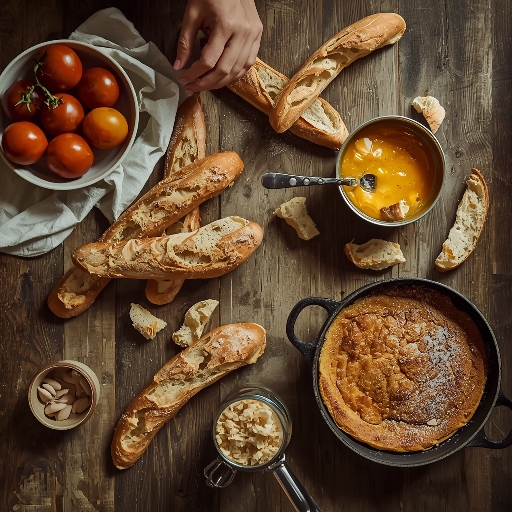
Because that leftover baguette deserves a better ending than the trash bin.
Why Day-Old French Bread Is Actually a Kitchen Treasure
Most people toss a baguette the moment it stops being soft. That’s a mistake. Day-old French bread — slightly stiff, a little dry, maybe a bit crusty on the outside — is one of the most useful ingredients you can have sitting on your counter. Its firm texture holds up to soaking, baking, and frying in ways that fresh bread simply can’t.
French bread has been a staple of European cooking for centuries, and so has the tradition of using every last bit of it. According to food historians, bread waste was considered almost offensive in many cultures, which is why so many classic recipes — from ribollita to pain perdu — were literally built around old bread.
This isn’t about being frugal for the sake of it. These are genuinely good dishes that people seek out. The old bread just happens to be what makes them work.
Soups and Stews: Where Stale Bread Shines
French Onion Soup
This is the obvious one, but it earns its place at the top. A thick slice of day-old baguette dropped into a bowl of caramelized onion broth, loaded with Gruyère and broiled until it bubbles — the bread needs to be stale to survive that without dissolving into mush. Fresh bread would fall apart. Day-old holds its structure and soaks up the broth from below while the cheese melts over the top.
If you’ve only had this from a restaurant, try making it at home once. It’s surprisingly straightforward, and the bread is the part that most people already have.
Ribollita (Italian Bread Soup)
Ribollita is a Tuscan peasant soup — cannellini beans, kale, tomatoes, vegetables — and the whole point is that you tear chunks of stale bread into it and let them absorb everything. It thickens the soup, gives it body, and turns something thin into something deeply satisfying.
The name literally means “reboiled.” It was designed to be made twice. You make the soup one day, add the old bread, and reheat it the next. Day-old bread isn’t just acceptable here — it’s the whole philosophy.
Gazpacho Thickening
Traditional Spanish gazpacho isn’t just a blended vegetable soup. The original recipe calls for stale bread soaked in water, then blended in with the tomatoes and peppers. It gives the soup a slightly thicker, more velvety consistency. Most modern recipes skip this step, but if you try it once, you’ll understand why it was there to begin with.
Bread Pudding and Sweet Dishes
Classic Bread Pudding
This is probably the single most well-known use for stale French bread, and it’s earned that reputation. You tear the bread into chunks, soak it in a custard of eggs, milk or cream, sugar, and vanilla, then bake it until it puffs up and turns golden. The slightly dried bread absorbs the custard without getting soggy. Fresh bread tends to get waterlogged and dense.
It’s a dessert that almost everyone likes, it’s easy to make in large quantities, and it works with or without add-ins — raisins, chocolate chips, bourbon sauce, whatever fits the moment.
Pain Perdu (French Toast, Properly Made)
The French name literally means “lost bread.” This was the original purpose: revive bread that was too stale to eat plain by soaking it in an egg and milk mixture and frying it in butter. It’s richer and more substantial than the thin-sliced American version, and the slightly firm texture of old French bread means it holds together through the soaking and frying without falling apart.
If you’ve never made French toast with actual day-old French bread instead of sandwich bread, it’s worth trying at least once. The texture is completely different — custardy inside, crisp outside.
Bread-Based Trifle Layers
Some trifle variations — particularly older English recipes — use stale bread or pound cake as the base layer instead of sponge cake. Soaked in sherry or fruit juice, the bread softens and takes on the flavor of whatever it’s sitting in. It’s not a common modern use, but it works surprisingly well, especially if you’re already layering in custard and fruit that will soak everything through.
Savory Dishes Beyond Soup
Panzanella (Tuscan Bread Salad)
Panzanella is one of those dishes that sounds strange until you eat it. Chunks of stale bread — the older and drier the better — tossed with ripe tomatoes, olive oil, vinegar, basil, and sometimes cucumber and red onion. The bread absorbs the tomato juices and dressing while still keeping some texture. It’s not soggy. It’s somewhere between a salad and a very casual bread dish.
This is peak summer food, and it requires stale bread. Fresh bread turns to paste almost immediately when it hits the tomato juice. Day-old French bread, cut into rough chunks, is exactly right.
Stuffing and Dressing
Whether you call it stuffing (cooked inside a bird) or dressing (cooked separately), the base is always stale bread. French bread gives you a slightly chewier, more rustic texture than regular sandwich bread, with a bit more character. It works especially well in herb-heavy recipes — sage, thyme, onion, celery — where the stronger flavor of the bread holds its own.
Cut it into cubes a day ahead and leave it out uncovered to dry even further if needed. The drier the better, within reason.
Strata (Savory Bread Casserole)
A strata is basically a savory version of bread pudding — bread, eggs, milk, cheese, and whatever vegetables or meat you want, layered and baked. It’s a great make-ahead breakfast or brunch dish, often assembled the night before and refrigerated so the bread can absorb the custard fully before baking in the morning.
Day-old French bread is ideal here for the same reasons it works in bread pudding. It soaks without disintegrating.
Meatballs and Meatloaf Binder
One of the quieter uses for stale bread: soaking chunks of it in milk and mixing it into meatballs or meatloaf. This is the traditional Italian technique called a panade, and it keeps ground meat from getting dense and tough. The soaked bread distributes moisture throughout as it cooks.
Most people use plain white breadcrumbs for this, but soaking actual pieces of day-old French bread in milk and then mixing that in gives a slightly softer, more delicate result. It’s one of those small technique differences that’s noticeable when you taste it side by side.
Bread Crumbs — But the Good Kind
Homemade Breadcrumbs for Coating
Yes, this is different from croutons. Cut or tear the bread into chunks, let it dry out completely (or use the oven at low heat for 10–15 minutes), then pulse it in a food processor. You get fresh breadcrumbs that are coarser and more flavorful than anything from a canister.
Use them for breading chicken cutlets, coating fried cheese, topping baked pasta, or finishing a gratin. The texture from French bread breadcrumbs is noticeably different — slightly irregular, with more surface variation, which means more crunch when fried or baked.
Gremolata or Toasted Breadcrumb Topping
In Southern Italian cooking, toasted breadcrumbs are often used the way Parmesan is used in the north — as a finishing element over pasta. Toast the crumbs in olive oil until deeply golden, toss in garlic and parsley if you want, and scatter them over pasta or roasted vegetables. It adds crunch and a toasty, nutty flavor that’s genuinely different from cheese.
The Culinary Institute of America’s bread traditions and other professional cooking programs have documented these techniques as fundamental to reducing kitchen waste.
Simple Snacks and Bites
Bruschetta
This doesn’t require anything fancy. Slice the bread, toast it in the oven or under a broiler, rub with a cut garlic clove while it’s still hot, drizzle with good olive oil, and top with whatever you have — diced tomatoes, white beans, roasted peppers, ricotta. The slightly dry texture of day-old bread makes it better for bruschetta than fresh, because it crisps up without getting too hard and holds toppings without going soggy immediately.
Pan Con Tomate (Spanish Tomato Bread)
This is the simplest version: toast the bread, rub with a ripe tomato so the juice and pulp go directly into the surface of the bread, drizzle with olive oil, add salt. That’s it. It sounds too simple, but the combination of toasted stale bread and fresh tomato is genuinely satisfying in a way that’s hard to explain until you try it.
Quick Crostini
Slice the bread thin on the diagonal, brush with olive oil, and bake at 375°F until golden and crisp. These are more versatile than you’d think — top them with anything spreadable (pâté, hummus, goat cheese, brie, white bean dip) for an instant appetizer. They keep well in an airtight container for a few days, so you can make a batch and use them across the week.
What to Do When the Bread Is Really Far Gone
Sometimes the bread isn’t just day-old — it’s closer to three or four days old, rock solid, more like a cutting tool than food. There’s still use for it.
Soak it in water for 20–30 minutes and it becomes workable again for stuffing or bread pudding. Grate it on a box grater to make very fine crumbs for coating or topping. Break it into pieces and simmer it directly into a thick soup where it will hydrate and dissolve. At minimum, dry it out fully in a low oven and store the crumbs in a bag for later use.
Throwing it away is almost always the least useful option.
A Few Practical Notes
- Don’t refrigerate French bread to extend its life. Refrigeration actually accelerates staling. Keep it at room temperature, wrapped loosely in a paper bag or cloth, and use it within a day or two for best results.
- The freezer is your friend. If you know you won’t use the bread in time, slice it and freeze it immediately. Frozen bread thaws quickly and works well for toast, French toast, or even bread pudding after a quick thaw.
- The drier, the better for most of these uses. If you want to accelerate staling for a recipe, cut the bread into pieces and leave it uncovered overnight, or put it in a 300°F oven for 10–15 minutes.
Summary: Stop Throwing It Away
Day-old French bread isn’t a problem to solve — it’s an ingredient waiting to be used. From ribollita to panzanella to a proper pain perdu, most of the best uses for stale bread are dishes people actually want to eat. The key is knowing what you have and matching it to the right technique.
Keep a few ideas in the back of your mind for the next time a baguette sits on your counter a day too long. The answer is almost never the trash bin.
See Also – Substitute for Dry Mustard in a Recipe: What to Use and How Much
See Also – Can I Use Greek Yogurt Instead of Sour Cream in Baking?