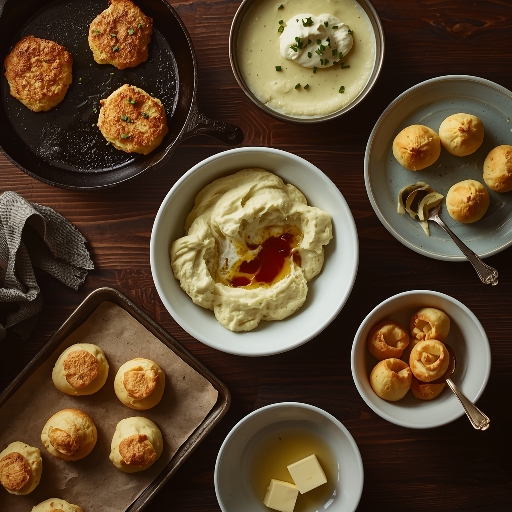
Mashed potatoes are almost impossible to make in a small quantity. You peel a few extra, add more butter than planned, and suddenly there’s a container in the fridge that could feed everyone again tomorrow. Reheating them straight is fine — but it’s also the least interesting option by a wide margin.
Leftover mashed potatoes have a quiet advantage over fresh ones: the starches have had time to firm up slightly, which makes them easier to shape, bind, and incorporate into other dishes. They’re essentially pre-cooked, pre-seasoned starch — and that’s a genuinely useful thing to have around.
This article covers twenty real recipes organized by meal type, with enough detail to actually make them rather than just recognize the name.
Why Leftover Mashed Potatoes Are Worth Using Creatively
Most people either reheat mashed potatoes or throw them away after a day. Both are reasonable choices. But leftover mash is also one of the better bases for other dishes — more versatile than most leftovers because potatoes are a neutral starch that takes on surrounding flavors easily.
Cold mashed potatoes behave differently than warm ones. They’re denser, firmer, and less sticky, which means they hold a shape when formed into patties, croquettes, or dough. Warm mashed potatoes are great on a plate; cold mashed potatoes are great in a recipe.
A few practical notes before starting:
Season to taste before using. Refrigerated mash tends to taste flatter than it did fresh. A pinch of salt, a small amount of butter, or a splash of warm milk stirred in can restore most of the original flavor before you incorporate it into a new dish.
Know your potato’s fat content. Rich, buttery mashed potatoes behave differently in recipes than plainer versions. Very rich mash can make croquettes too soft to hold together. If the potatoes are very heavily buttered, reduce any added fat in the recipe you’re making with them.
Most dishes work with cold mash straight from the fridge. No need to reheat first unless the recipe specifically requires it.
Breakfast and Brunch
Potato Cakes (Pan-Fried Potato Patties)
This is the most iconic use for leftover mashed potatoes and also one of the best breakfasts in this list. Mix cold mash with a beaten egg, a small amount of flour to bind, and any seasonings you like — salt, pepper, a pinch of garlic powder, a handful of grated cheese. Form into patties about an inch thick.
Cook in a skillet with a thin layer of butter or oil over medium heat. Four to five minutes per side until deeply golden and crisp. The outside becomes almost caramelized; the inside stays soft and creamy.
These are excellent with a fried egg on top, with sour cream, or just eaten standing over the stove before anyone else wakes up. They’re also good alongside eggs and bacon as a more substantial breakfast than toast.
Flavor variations: add sliced scallions, finely diced jalapeño, crumbled cooked bacon, or a small amount of Cheddar and chive directly into the mixture.
Potato Waffles
If you have a waffle iron, this is worth trying at least once. Mix leftover mash with an egg, a tablespoon of flour, a tablespoon of melted butter, and a pinch of salt. The batter will be thick — thicker than standard waffle batter. That’s fine.
Grease the waffle iron well. Cook until the waffles are genuinely golden and release cleanly from the plates, which takes slightly longer than standard batter — about five to six minutes depending on the iron.
The result is crispy on the outside, pillowy and creamy inside. Serve with sour cream and chives for a savory brunch, or with butter and a drizzle of maple syrup if you’re leaning sweet. Both directions work.
Hash Browns from Mash
Spread a thin, even layer of cold mashed potato into a well-oiled skillet over medium-high heat. Don’t stir. Let it cook undisturbed for four to five minutes until a brown crust forms on the bottom, then flip in sections. The crust is the point — resist the urge to move it too early.
These aren’t identical to shredded hash browns, but they have a satisfying crunch on the outside and a creamy center. Season aggressively with salt and black pepper. A sprinkle of smoked paprika before flipping adds a nice color and smokiness.
Potato Frittata
Beat six eggs with salt, pepper, and a splash of milk. Stir in cold mashed potato by the spoonful — no need to fully incorporate, just distribute it through the egg mixture. Add any mix-ins: diced ham, caramelized onion, grated cheese, roasted red pepper.
Cook in an oven-safe skillet on the stove over medium heat until the edges are set, then transfer to a 375°F oven for ten to twelve minutes until the center is just firm. Let it cool slightly before slicing — frittatas hold together better warm than hot.
This is a good weekend brunch dish and reheats well the next day.
Soups and Stews
Potato Soup
Leftover mashed potatoes are already most of the way to potato soup. Thin them with chicken or vegetable stock, whisking to remove lumps, over medium heat. The ratio is roughly one cup of mash to one and a half cups of stock — adjust to your preferred consistency.
Add sautéed onion and garlic, a pinch of white pepper, and a handful of shredded cheddar stirred in at the end. Top with crumbled bacon, a spoonful of sour cream, and chives.
This goes from container of leftovers to finished soup in about fifteen minutes. It’s a legitimately good soup — not just a way to use up old mash. The already-seasoned potatoes give it a flavor base that’s hard to replicate starting from scratch.
Vichyssoise
Vichyssoise is a classic French cold potato and leek soup — silky, lightly seasoned, and served chilled. Leftover mash simplifies the process significantly. Sauté sliced leeks (white and light green parts only) in butter until very soft, about ten minutes. Add chicken stock and bring to a simmer. Whisk in cold mashed potatoes, blend the whole mixture until completely smooth, then strain and chill for several hours.
Season with salt and white pepper. Serve with a drizzle of heavy cream and a few fresh chives.
This is an elegant first course that costs almost nothing to make and uses leftovers as its base. The texture, when properly blended and strained, is remarkable — smooth and almost velvety.
Potato Thickener for Other Soups
Mashed potatoes dissolve easily into broth and act as a natural thickener without the cloudiness that flour can create. Whisk a spoonful or two into any thin soup — vegetable soup, chicken soup, lentil soup — to add body and a subtle creaminess.
This works especially well in soups that already have potato in them. The extra mash just deepens what’s already there.
Dinner and Main Dishes
Shepherd’s Pie (or Cottage Pie)
This is the most traditional use for leftover mashed potatoes in British and Irish cooking, and it earns that status. Make or use leftover ground lamb (shepherd’s pie) or ground beef (cottage pie) cooked with onion, carrot, peas, Worcestershire sauce, and stock until the mixture is thick and savory. Transfer to a baking dish, spread leftover mash over the top, rough up the surface with a fork, and bake at 400°F until the potato topping is golden and the filling is bubbling at the edges.
About thirty minutes. The peaks and ridges of the mash catch heat and become lightly crisp while the valleys stay soft. It’s one of the most satisfying combinations in comfort food.
The leftover mash doesn’t need to be perfectly smooth for this — in fact, a slightly textured topping gives better results than something very smooth and dense.
Potato Croquettes
Croquettes take slightly more effort than most other recipes here, but the results are worth it. Mix cold mash with egg yolk, grated Parmesan, finely chopped parsley, salt, and pepper. Shape into cylinders or balls. Roll each one in flour, dip in beaten egg, then coat in breadcrumbs.
Shallow-fry in an inch of neutral oil until golden all around, turning as needed. Or bake at 425°F, turning halfway through, for a slightly less crispy but much easier result.
The outside shatters; the inside is creamy and savory. These are excellent alongside a simple salad as a light dinner, or served as an appetizer with aioli or sour cream.
Filling variations: push a small cube of mozzarella or a piece of cooked ham into the center of each croquette before forming. It melts during cooking into a small molten core.
Potato Gnocchi
This is the most technically involved recipe on this list, but it’s also one of the most rewarding. Gnocchi made from leftover mash is actually easier than gnocchi made from freshly baked and riced potato — the hard work is already done.
Combine one cup of cold mashed potato with one egg yolk, a pinch of salt, and roughly half a cup of flour. Add flour gradually — the dough should be soft and slightly sticky but hold its shape. Overworking develops gluten and makes gnocchi tough; mix just until combined.
Roll into ropes on a floured surface, cut into one-inch pieces, and roll over a fork to create ridges if you’re feeling precise (or skip that step entirely if you’re not).
Cook in salted boiling water until they float, then one minute more. Finish in brown butter with sage, or toss with marinara or a cream sauce.
Twice-Baked Potato Filling
If you have whole baked potato skins leftover or can quickly bake a few, twice-baked potatoes are straightforward. Mix the mash with sour cream, shredded cheddar, crumbled bacon, chives, salt, and pepper. Pile generously into potato skins. Top with more cheese. Bake at 375°F for twenty minutes until heated through and browned.
These are excellent as a side dish or as a casual dinner on their own. They also work well for a crowd — make a dozen at once and they hold well at room temperature for thirty minutes or more.
Mashed Potato Soup Dumplings (A Modern Variation)
For adventurous cooks: make a simple dumpling dough (flour, water, salt, knead until smooth, rest for thirty minutes). Roll thin, fill each round with a spoonful of cold mash mixed with caramelized onion and a pinch of thyme, fold and seal into half-moon shapes.
Pan-fry in oil until crispy on the bottom, then add a splash of water and cover to steam. Three to four minutes steaming, then uncover to crisp the bottoms again.
These are a fusion idea that works better than it sounds. Serve with sour cream and fresh dill.
Bread, Biscuits, and Dough
Mashed Potato Bread
Mashed potato in bread dough produces a loaf with an exceptionally soft, slightly dense crumb and a crust that browns beautifully. The starch from the potato feeds the yeast and keeps the interior moist for longer than standard white bread.
Combine half a cup of leftover mash with two teaspoons of active dry yeast, one cup of warm water, two tablespoons of oil, a teaspoon of salt, and enough flour (usually two and a half to three cups) to form a soft dough. Knead for eight minutes, let rise until doubled, shape, let rise again, and bake at 375°F for thirty minutes.
The bread is excellent for sandwiches and toasts particularly well. It stays soft for longer than a standard loaf because of the potato’s moisture content.
Mashed Potato Biscuits
Mix cold mashed potatoes with flour, baking powder, salt, and a small amount of cold butter cut in until crumbly. Add just enough cold milk or buttermilk to bring the dough together. Don’t overwork. Pat out and cut into rounds or squares.
Bake at 425°F for twelve to fifteen minutes until risen and golden. These are remarkably tender — the potato adds a softness that standard biscuits can sometimes lack. They’re excellent with butter, with gravy, or alongside soup.
Potato Flatbreads
Mix cold mash with flour, olive oil, and salt to form a soft dough. Roll thin on a floured surface and cook in a dry cast-iron pan over medium-high heat, two to three minutes per side until charred spots appear.
These are somewhere between a tortilla and a naan in texture — flexible, slightly chewy, with a mild potato flavor. Use them for wraps, serve alongside hummus and dips, or top them like a pizza and finish under the broiler.
Sides and Small Dishes
Duchess Potatoes
Duchess potatoes are a classic French preparation: piped mashed potato baked until golden. Mix leftover mash with egg yolks, a small amount of butter, salt, pepper, and a pinch of nutmeg. Transfer to a piping bag with a star tip. Pipe rosettes or swirls onto a parchment-lined baking sheet. Brush with egg wash.
Bake at 400°F for fifteen to twenty minutes until the ridges are golden and slightly crisp.
These look impressive on a plate and take about twenty minutes of actual work. They’re a good way to make a casual dinner feel more put-together than it is.
Potato-Stuffed Peppers
Cut bell peppers in half and remove seeds. Mix leftover mash with diced ham or bacon, shredded cheese, and fresh herbs. Fill the pepper halves generously and bake at 375°F for twenty-five minutes until the peppers are tender and the filling is hot.
This is a simple, complete meal with almost no hands-on preparation. The sweetness of the roasted pepper against the savory, creamy potato filling is a good combination.
Mashed Potato Pancakes (Savory Latke-Style)
Similar to potato cakes but with a slightly different texture. Mix cold mash with egg, flour, finely grated onion, salt, and pepper. Fry in oil over medium-high heat, pressing flat with a spatula. Cook until dark golden and crisp — these benefit from a hotter pan than regular potato cakes.
Serve with applesauce, sour cream, or both. These are essentially a simpler version of latkes that require no grating — the texture is slightly different (softer inside) but the exterior crunch and flavor are comparable.
Sweet Dishes
Potato Doughnuts
Mashed potato in doughnut dough sounds unconventional. The result is one of the lightest, most tender doughnuts imaginable — the potato starch inhibits gluten development, keeping the texture soft and almost airy.
Combine half a cup of mash with two cups of flour, a quarter cup of sugar, two teaspoons of baking powder, one egg, three tablespoons of melted butter, and enough milk to make a soft dough. Roll to about half-inch thickness, cut with a doughnut cutter, and fry in 375°F oil until golden — about two minutes per side.
Drain and toss in cinnamon sugar or glaze with a simple powdered sugar icing. These are good enough to make deliberately — not just when you have leftover potatoes to use up.
Potato Chocolate Cake
This sounds more surprising than it is in practice. Mashed potato in chocolate cake adds moisture and produces a dense, fudgy crumb that’s genuinely excellent. The potato itself is undetectable — you cannot taste it.
Use any basic chocolate cake recipe and replace some of the fat (butter or oil) with an equal volume of mashed potato. About half a cup of mash substituting for a quarter cup of fat works well. The cake will be slightly denser and moister than standard versions.
This works particularly well in brownie recipes — add a few tablespoons of leftover mash to your standard brownie batter for a fudgier, slightly more substantial texture.
Storage Tips for Leftover Mashed Potatoes
Cold mashed potatoes keep well in an airtight container in the refrigerator for three to four days. They can also be frozen, though the texture changes slightly upon thawing — they tend to become a bit grainy or watery. This doesn’t matter much when they’re being incorporated into another dish, but it’s less ideal for straight reheating.
To freeze: portion into amounts you’ll realistically use, seal in bags or containers, and freeze for up to two months. Thaw in the refrigerator overnight before using.
When using for recipes, most dishes work best with the mash cold and straight from the fridge. The firmer texture is actually an asset for croquettes, potato cakes, gnocchi, and bread dough.
A Quick Reference by Effort Level
| Effort Level | Recipes |
|---|---|
| Under 20 minutes | Potato cakes, potato soup, hash browns, soup thickener, flatbreads |
| 20–40 minutes | Potato waffles, biscuits, twice-baked potatoes, frittata, stuffed peppers |
| 40+ minutes (worth it) | Shepherd’s pie, gnocchi, croquettes, potato bread, duchess potatoes |
| Creative / weekend | Potato doughnuts, chocolate cake, vichyssoise, dumpling variations |
Final Thoughts
Leftover mashed potatoes are one of the more underrated things to have in a fridge. They’re already cooked, already seasoned, and already soft — which means they slot into other dishes with almost no preparation time.
The simplest uses — potato cakes, soup, biscuits — are genuinely excellent and take less than twenty minutes. The more involved ones — gnocchi, croquettes, potato bread — are worth attempting on a weekend when you have time to enjoy the process.
And if all else fails, potato cakes in a cast-iron pan with butter, eaten with a fried egg and black coffee, is not a bad way to spend a Saturday morning.
See Also – Substitute for Worcestershire Sauce in Burgers: What Works, What Doesn’t, and Why
See Also – What Can I Substitute for Buttermilk in a Recipe?