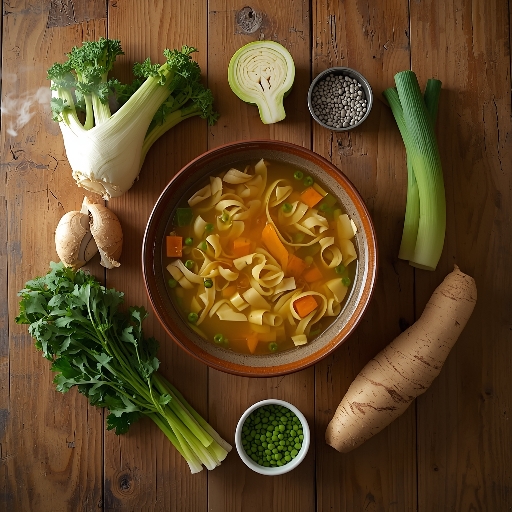
Celery is one of those ingredients that feels permanent in a chicken soup recipe. It’s been there so long — in virtually every version of the dish across so many cultures — that questioning it seems almost unnecessary. And yet people do need to substitute it, for all kinds of reasons. Celery allergy, an empty crisper drawer, a dislike of the flavor, or simply curiosity about what else might work.
The good news is that chicken soup is actually one of the more forgiving recipes when it comes to this swap. The dish has enough depth from the chicken itself, the stock, and the aromatics that no single vegetable is truly irreplaceable. You just need to understand what celery is contributing — and then find something that covers that ground.
What Celery Actually Does in Chicken Soup
Before you can substitute intelligently, it’s worth being specific about celery’s role. Because it’s doing more than just adding flavor.
Flavor. Celery contributes a mild, slightly bitter, herby note that’s difficult to describe in isolation but immediately recognizable. It’s part of the aromatic backbone of soup alongside onion and carrot — the classic mirepoix trio that forms the flavor foundation of countless Western broths and soups.
Texture and structure. Celery holds its shape reasonably well during long cooking. It softens but doesn’t dissolve, which means it contributes something to chew and to the visual composition of the soup.
Moisture and lightness. Celery is about 95% water. It releases liquid as it cooks, gently adding to the volume of the broth while keeping its own calorie contribution near zero.
Aromatic compounds. The volatile compounds in celery — phthalides and other chemicals — contribute to what makes chicken soup smell the way it does. That particular savory, herby, slightly green aroma is partly celery.
Any substitute ideally covers at least one or two of these functions. Not every option covers all four, but that’s fine. A good chicken soup can accommodate the gap.
The Best Substitutes for Celery in Chicken Soup
1. Celery Root (Celeriac)
Best for: The closest flavor match, hearty soups, cold-weather cooking
If you want to replace celery and keep the flavor as close as possible to the original, celeriac is the answer. It’s literally the root of the celery plant — same family, closely related flavor, but earthier and denser. It tastes like celery that’s been turned up a notch: more concentrated, more complex, slightly nutty.
Peel it and chop it into the same size pieces you’d use for celery. Use roughly the same quantity. It takes longer to soften than celery stalks because of its density — add it to the pot at the same time as your carrots rather than later in the cooking process.
Celeriac also adds body to the broth in a way that celery stalks don’t. If you blend a portion of it into the soup at the end, it thickens the broth naturally without any starch needed.
One practical note: celeriac can be hard to find in some grocery stores. It tends to show up more reliably at farmers markets in autumn and winter.
2. Fennel (Bulb and Stalks)
Best for: Bright, aromatic soups; Mediterranean-style variations; when you want something slightly different but still complementary
Fennel has a mild anise or licorice flavor when raw — which sounds alarming to people who aren’t fennel fans. But here’s the thing: that flavor softens dramatically with heat. After twenty minutes of simmering in chicken soup, fennel tastes much closer to celery than you’d expect. The anise note fades and what remains is a clean, slightly sweet, herby background.
Use the bulb, sliced or diced, in the same quantity as celery. The stalks can be used too — they’re fibrous but add flavor to the broth during a long simmer and can be removed before serving (treat them like a bouquet garni). The feathery fronds make a beautiful garnish.
Fennel also happens to be one of the best flavor pairings with chicken. It’s used alongside chicken across Italian, French, and Middle Eastern cooking traditions. If anything, this substitution might improve your soup rather than simply replace what’s missing.
3. Leeks
Best for: Mild, delicate chicken soups; when you want to avoid the bitterness of celery entirely
Leeks are in the allium family — related to onions and garlic — and they have a gentle, mildly sweet flavor that’s less assertive than regular onion. They don’t replicate celery’s flavor exactly, but they add the aromatic depth that celery contributes to the base of the soup.
Use the white and light green parts, sliced into rounds or half-moons. Rinse them well — leeks trap soil between their layers and need a thorough wash. Use them in roughly the same quantity as the celery you’re replacing.
Leeks soften beautifully in soup. They become silky and almost melt into the broth, which produces a particularly smooth, rounded flavor in the finished soup. If the recipe called for celery to add texture, you’ll want to pair leeks with another vegetable that holds its shape.
4. Parsley Root
Best for: Traditional European-style chicken soup, deeply savory broths
Parsley root looks like a pale, slightly stubby parsnip and is used extensively in Eastern European and German home cooking — particularly in chicken soup. If you’ve ever had a Jewish-style chicken soup made by someone whose family came from Poland, Hungary, or Romania, there was almost certainly parsley root in it.
The flavor is herbaceous, slightly earthy, and gently peppery — closer to celery’s aromatic character than carrots or parsnips are, without celeriac’s intensity. It adds flavor primarily to the broth rather than contributing much in terms of texture.
Use it in the same quantity as celery. It may be challenging to find outside of specialty grocery stores or markets serving Eastern European communities, but if you encounter it, it’s worth using.
5. Bok Choy
Best for: Lighter soups, Asian-influenced variations, texture-forward cooking
Bok choy has stalks that are crunchy and mildly flavored, and leaves that wilt quickly into the broth. It doesn’t taste like celery — it’s more neutral, with a faint brassica note — but its texture in soup is similar, and it holds up reasonably well without turning mushy.
Use the stalks chopped into similar-sized pieces as celery. Add them to the soup toward the end of cooking — bok choy softens much faster than celery, and if added too early it can become unpleasantly limp. The leaves can be stirred in during the last five minutes.
This substitution shifts the character of the soup slightly. It works well if you’re already incorporating ginger, soy, or other Asian flavors. In a strictly traditional chicken noodle soup, bok choy can read as a bit out of place — though it’s still perfectly edible.
6. Parsnips
Best for: Sweeter, more filling soups; winter cooking; cold and flu season
Parsnips have a sweet, slightly spiced flavor and a starchy texture that softens fully during long cooking. They don’t mimic celery’s flavor — they’re sweeter and more substantial — but they add body, sweetness, and a kind of old-fashioned warmth to chicken soup that is genuinely satisfying.
Cut them into chunks the same size as your other root vegetables. Add them at the beginning of cooking alongside carrots and onion. They’ll soften fully during a long simmer and can be partially mashed into the broth if you want to add thickness.
The flavor profile of the soup will shift toward something richer and sweeter than celery-based versions. Some people strongly prefer this. It’s worth trying deliberately, not just as a fallback substitute.
7. Green Bell Pepper
Best for: Cajun and Southern-style chicken soups, bold flavor profiles
Green bell pepper is one of the three ingredients in the “holy trinity” — the Cajun and Creole equivalent of mirepoix, alongside onion and celery. In Louisiana cooking, it’s treated as an aromatic vegetable in the same functional category as celery: something you cook down at the start to build the flavor base.
In traditional chicken noodle soup, green bell pepper is a noticeable substitution — it adds a distinct vegetable sweetness and a slightly grassy, almost peppery flavor that’s recognizably bell pepper. It’s not a neutral swap. But in a heartier chicken soup with tomatoes, hot sauce, or strong seasoning, it integrates well.
Dice it and sweat it alongside your onion in the early stages of cooking. It will soften and largely dissolve into the flavor base rather than remaining as a distinct vegetable in the finished soup.
8. Zucchini
Best for: Light, summery soups; mild flavor substitution; when you want texture without much flavor impact
Zucchini has a very mild, almost neutral flavor and a high water content — similar to celery in that respect. It contributes moisture and a soft texture without pushing the soup in any particular flavor direction.
Cut into half-moons or small cubes and add toward the last fifteen minutes of cooking. Zucchini softens quickly and can turn mushy if overcooked, so timing matters. It won’t replace celery’s aromatic contribution, but it fills the structural role and adds vegetables to the bowl without changing the overall character of the soup.
This works well in a chicken soup you’re already happy with that simply needs more vegetable content — especially if you’re cooking for people who are sensitive to or dislike stronger vegetable flavors.
9. Celery Seeds or Celery Salt
Best for: Capturing celery’s flavor without the texture; when you have no vegetables to substitute
This is a different category from the vegetable substitutes above — it adds flavor only, with no texture contribution. But celery seeds (or celery salt, used more carefully to control sodium) can approximate the aromatic and flavor compounds in fresh celery remarkably well.
Use about ½ teaspoon of celery seeds per stalk of celery called for. Add them early in cooking so they have time to release their flavor into the broth. Celery salt contains salt alongside the seeds — reduce other added salt in the recipe if using it.
This works especially well combined with one of the vegetable substitutes above. Use fennel or leeks for texture and structural vegetable content, and add a pinch of celery seeds for the flavor note that fresh celery would have provided.
10. Simply Leave It Out
Best for: Simplifying the soup; cooking for people with celery allergies; purist broth-focused recipes
Chicken soup without celery is not a lesser soup. It’s just a different soup. The chicken, onion, carrot, garlic, herbs, and good stock carry the dish more than most people realize. Celery is part of a team, not the star player.
If you’re cooking for someone with a celery allergy — which is recognized as a major allergen in the European Union and many other countries — leaving it out entirely is the right call. Don’t substitute with celery seeds or celery salt either; they contain the same allergenic compounds.
A clean, well-made chicken soup with just onion, carrot, garlic, fresh thyme and parsley, and a good quality stock is excellent. Try it once deliberately and see whether you actually miss the celery.
Combining Substitutes for the Best Result
The most effective approach for many people is a combination: one vegetable for texture, one for flavor.
Some combinations that work well together:
- Leeks + celery seeds: Leeks provide aromatic depth and silky texture; celery seeds carry the celery flavor note
- Fennel + parsnip: Fennel brings the herby background; parsnip adds sweetness and body
- Celeriac + leeks: Both add flavor, celeriac more intensely; leeks soften it with mildness
- Bok choy + a pinch of celery seeds: Neutral texture from bok choy plus captured flavor from the seeds
None of these are rules. They’re starting points based on what tends to work. The best combination is ultimately whatever you have in the kitchen and whatever your family prefers eating.
A Quick Reference Table
| Substitute | Flavor Match | Texture | Best Soup Style | Notes |
|---|---|---|---|---|
| Celeriac | Excellent | Dense, holds shape | Any | Closest overall match |
| Fennel | Good | Softens well | Mediterranean, classic | Anise note fades with heat |
| Leeks | Moderate | Silky, melts in | Delicate, classic | Pair with texture vegetable |
| Parsley root | Good | Softens, adds to broth | Eastern European | Hard to find |
| Bok choy | Low | Firm then soft | Asian-influenced | Add late in cooking |
| Parsnip | Low | Starchy, soft | Winter, hearty | Sweeter profile |
| Green bell pepper | Low | Softens, dissolves | Cajun, bold | Distinctive flavor |
| Zucchini | Very low | Soft, mild | Light, summery | Add in last 15 minutes |
| Celery seeds | Excellent (flavor only) | None | Any | Combine with vegetable sub |
| Omit entirely | — | — | Any | Valid, often overlooked |
Tips for Getting the Best Flavor When Substituting
Sweat your aromatics first. Whatever vegetable you’re using in place of celery, cook it in a little oil or butter before adding the stock. Two to three minutes over medium heat softens the vegetable and develops flavor compounds that don’t emerge in a raw simmer.
Salt in layers. Celery contributes a natural mineral salinity. When leaving it out, taste the soup carefully and adjust seasoning — you may find you need slightly more salt than the recipe suggests.
Simmer the bones. If you’re making stock from scratch with a whole chicken or carcass, the long simmer does more flavor work than any single vegetable. A beautifully made chicken stock with good bones needs less aromatic support than a quick soup made with water.
Add fresh herbs. Fresh parsley stems — not leaves — simmered in the soup contribute a herbaceous, slightly vegetal note that overlaps with celery’s aromatic function. Add them tied in a bundle at the beginning and remove before serving.
A Note on Celery Allergy
Celery allergy is worth taking seriously. It’s one of the fourteen major allergens listed in EU food labeling law, and reactions can range from mild oral allergy symptoms to severe anaphylaxis in sensitive individuals.
If you’re cooking for someone with a confirmed celery allergy, avoid not just the stalks and leaves but also:
- Celery seeds and celery salt
- Many commercial soup stocks and bouillon cubes (which often contain celery extract)
- Spice blends that include celery seed
Read labels carefully on any packaged ingredient. Make your stock from scratch if possible, so you have full control over what goes in. Fennel, leeks, parsnip, and zucchini are all safe alternatives that carry no celery-related allergens.
Final Thoughts
Celery is a foundational ingredient in chicken soup, but not an irreplaceable one. Celeriac comes closest to replacing it in full — flavor, texture, and aromatic depth. Fennel is the most interesting substitution, often producing a soup that people find they prefer. Leeks offer the quietest, most elegant swap for those who dislike celery’s slightly bitter edge.
And sometimes the most honest answer is to simply leave it out, make a good soup with what you have, and realize that chicken soup is more resilient than its recipe suggests.
See Also – Substitute for Worcestershire Sauce in Burgers: What Works, What Doesn’t, and Why
See Also – What to Use Instead of Eggs in Meatloaf (And How to Get It Right)