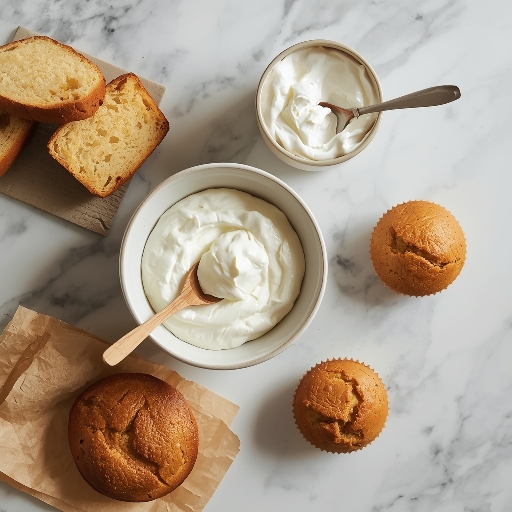
Yes — and in many cases, Greek yogurt works so well that people can’t tell the difference. But the swap isn’t quite automatic. There are situations where it performs identically, situations where you need to make a small adjustment, and a few specific recipes where sour cream really is the better tool for the job.
This article goes through all of it. What these two ingredients actually share, where they differ, how to substitute correctly, and which baked goods respond best to the swap.
How Greek Yogurt and Sour Cream Compare
Before anything else, it helps to look at what you’re actually working with.
Sour cream is a cultured dairy product made by fermenting regular cream with lactic acid bacteria. The fat content sits around 18–20% in standard versions, and the texture is thick, smooth, and rich. The flavor is tangy but not aggressively so — mild enough to blend into batters without standing out.
Greek yogurt is strained yogurt — regular yogurt with most of the liquid whey removed, which concentrates both the protein and the fat. Full-fat Greek yogurt runs around 5–10% fat depending on the brand, significantly lower than sour cream. Its tanginess is slightly sharper, and its texture is thicker and denser.
In baking, both contribute:
- Moisture
- Acidity (which reacts with baking soda to help baked goods rise)
- Tenderness (acid weakens gluten development, producing a softer crumb)
- A subtle tang in the finished flavor
That overlap is why the substitution works as often as it does. The meaningful differences are fat content and protein level — and those matter more in some recipes than others.
The Short Answer: When You Can Swap 1:1
For most everyday baking, you can replace sour cream with full-fat Greek yogurt in equal amounts without changing anything else in the recipe. The results are close enough that it’s a reliable swap.
Recipes where 1:1 works consistently:
- Muffins — banana, blueberry, bran, chocolate
- Quick breads — zucchini bread, lemon loaf, pumpkin bread
- Coffee cake — the crumb holds well, texture stays tender
- Pound cake — works well, especially with full-fat yogurt
- Pancakes and waffles — texture is virtually identical
- Chocolate cake — moisture and tang both carry through
- Cornbread — Greek yogurt produces a slightly lighter crumb
- Cookies — particularly soft-baked drop cookies
In all of these, the structural role of sour cream is primarily about moisture and acidity. Greek yogurt covers both. The slightly lower fat content rarely makes a perceptible difference because these recipes also include butter, oil, or eggs that carry the richness.
Where the Fat Difference Actually Matters
Fat does more than add richness — in baking, it coats flour proteins and limits gluten development. More fat generally means a more tender, melt-in-your-mouth texture.
Sour cream’s higher fat content becomes noticeably relevant in a few specific situations:
Very Rich or Buttery Cakes
Recipes that are already high in fat — like a classic sour cream bundt cake or a dense cream cheese pound cake — are engineered with that fat content in mind. Swapping to lower-fat Greek yogurt can produce a slightly less tender crumb. Still good, just marginally different.
The fix: if the recipe calls for ½ cup or more of sour cream and you’re substituting Greek yogurt, add an extra tablespoon of melted butter or neutral oil to compensate for the fat difference.
Cheesecake and Cream-Based Fillings
Sour cream is sometimes used as a topping layer on cheesecake (baked briefly after the filling sets) or mixed into the filling itself. Here the fat and texture are both important — sour cream’s silkiness is part of the finished texture.
Greek yogurt can work in cheesecake filling, but the result will be slightly tangier and may have a firmer texture due to the higher protein content. It’s not wrong, just different. For the topping layer specifically, it’s worth noting that Greek yogurt can release a small amount of liquid during baking — blotting it before use helps.
Dips and Frostings That Don’t Get Baked
This isn’t baking, but it comes up constantly: sour cream-based dips, dressings, and uncooked frostings. In these applications, the fat difference is more noticeable because nothing is being transformed by heat. Greek yogurt in a cold dip is tangier and slightly less creamy. For some people that’s fine; for others it reads as distinctly different.
The Protein Difference and What It Does
Greek yogurt has significantly more protein than sour cream — roughly 10 grams per 100g versus 2 grams. This matters in baking because protein builds structure.
In most baked goods, a little extra protein is neutral or even slightly beneficial — it can help muffins and quick breads hold their shape. But in very delicate recipes that depend on a soft, almost crumbly structure (certain shortbreads, delicate tea cakes), the extra protein can make the result slightly chewier than intended.
In practice, this effect is subtle. Most home bakers won’t notice unless they’re comparing the two versions side by side. But it’s worth knowing, particularly if you’re baking something specifically for its delicate texture.
How to Substitute Greek Yogurt for Sour Cream in Baking
The Basic Rule
Use full-fat Greek yogurt in a 1:1 ratio. If your recipe calls for ½ cup of sour cream, use ½ cup of full-fat Greek yogurt. That’s it, in most cases.
When to Adjust
If the recipe has ½ cup or more of sour cream and is a rich cake or loaf: Add 1 tablespoon of melted butter or oil per ½ cup of Greek yogurt to bring the fat content closer to what sour cream would provide.
If you’re using low-fat or non-fat Greek yogurt: These are noticeably thinner and lower in fat. The moisture output changes and the fat reduction is more significant. Either use full-fat, or add a tablespoon of oil and expect a slightly less rich result.
If Greek yogurt seems thicker than the sour cream your recipe expects: Thin it slightly — a teaspoon of milk stirred in is enough to loosen it to a sour cream-like consistency.
What About Strained vs. Unstrained?
Some Greek yogurt is very thick — the kind that practically holds its shape when spooned. If a recipe specifies regular sour cream and yours is particularly dense, thin it slightly before measuring. The moisture ratio in baked goods is important, and an unusually thick yogurt can make a batter stiffer than intended.
Recipe-by-Recipe Breakdown
Banana Bread and Zucchini Bread
Works perfectly. These are already moist recipes with fruit or vegetable content providing extra liquid. Greek yogurt blends in without issue, and the crumb is tender and well-structured. No adjustments needed.
Chocolate Cake
One of the strongest performing swaps. The acidity of Greek yogurt reacts with cocoa and baking soda in the same way sour cream does — it helps develop the chocolate flavor and produces a dark, rich color. The result is almost indistinguishable.
Muffins
Reliable across the board. The slight extra protein in Greek yogurt can actually help muffins hold their domed shape. Use 1:1, full-fat, no adjustments.
Coffee Cake
Works well. The streusel and cinnamon sugar carry most of the flavor anyway, and Greek yogurt keeps the cake moist without making it dense. Some bakers actually prefer the slightly lighter texture it produces.
Pound Cake
Works, with the fat caveat noted above. If the recipe leans heavily on sour cream for richness (more than ½ cup), add a tablespoon of butter.
Cheesecake
Use with awareness. In the filling, it works but adds tanginess — which some people prefer. In the baked topping layer, blot the yogurt first to remove excess liquid. For an uncooked sour cream topping, the texture difference will be noticeable.
Scones and Biscuits
Reasonable substitution. Scones depend heavily on fat for their crumbly layered texture, so the fat difference is slightly more relevant here. Use full-fat Greek yogurt and consider adding a teaspoon of extra butter to the recipe.
Pancakes and Waffles
Interchangeable. The batter doesn’t depend on the baked structure being particularly delicate, and Greek yogurt produces fluffy, well-risen results.
Does the Tanginess Come Through in the Finished Bake?
This is one of the most common questions, and the answer is: usually not in any obvious way.
Both sour cream and Greek yogurt produce a subtle background tang in baked goods — the kind you notice as depth of flavor rather than as sourness. In most finished cakes, muffins, and breads, the sugar, vanilla, and other flavors dominant the palate, and the dairy tang is simply part of what makes the texture taste rich and satisfying rather than flat.
If you’re making something where dairy tang would be immediately noticeable — a very plain, lightly sweetened recipe — Greek yogurt might taste marginally sharper than sour cream. But in most baking contexts, the difference in tanginess is not a practical concern.
Which Type of Greek Yogurt to Use
Not all Greek yogurt behaves the same way in baking, and the type you choose makes a real difference.
Full-fat (whole milk) Greek yogurt is always the best choice for baking substitution. The fat content is closest to sour cream, the texture is richest, and it behaves most predictably in batters and doughs.
2% Greek yogurt works in most recipes with only a very minor difference in richness. It’s a reasonable middle ground.
Non-fat or fat-free Greek yogurt is significantly thinner and lower in fat. Baked goods made with it will be less rich and can be slightly rubbery if the recipe relied heavily on sour cream’s fat content. It’s not ideal for direct substitution without compensating with added fat.
Flavored Greek yogurt — vanilla, honey, fruit — should not be used in savory substitutions and should be avoided in most baking unless the recipe can accommodate the added sugar and flavor. Plain is always the right choice.
A Quick Reference Table
| Baked Good | Swap Works? | Notes |
|---|---|---|
| Banana bread / zucchini bread | Yes, 1:1 | No adjustments needed |
| Chocolate cake | Yes, 1:1 | Works very well |
| Muffins (most varieties) | Yes, 1:1 | Reliable |
| Coffee cake | Yes, 1:1 | Slightly lighter texture |
| Pound cake | Usually, with note | Add 1 tbsp butter if >½ cup |
| Pancakes / waffles | Yes, 1:1 | Interchangeable |
| Scones / biscuits | Yes, with note | Add a touch of extra butter |
| Cheesecake filling | Works, tangier | Test before committing |
| Cheesecake topping (baked) | Use carefully | Blot yogurt first |
| Dips / uncooked frostings | Noticeable difference | Greek yogurt is tangier, thinner |
Why People Make This Swap (Beyond Running Out)
Most people land on this substitution for one of a few reasons:
Greek yogurt is higher in protein. For those tracking macros or trying to add protein to everyday cooking, it’s a straightforward win — same volume, more protein, less fat.
It’s what they already have. Sour cream is often bought for one recipe and then sits in the fridge. Greek yogurt tends to be a breakfast staple that’s always available. Convenience drives most of these substitutions in real kitchens.
Fat reduction. Full-fat sour cream is noticeably higher in saturated fat. Swapping to Greek yogurt reduces overall fat without sacrificing too much in texture or flavor — a tradeoff that works well for everyday baking.
The Bottom Line
Greek yogurt is a legitimate, practical substitute for sour cream in baking — not a compromise, not a workaround. For the majority of everyday baking, it performs the same job and produces results that are genuinely comparable.
The places to pay attention are fat-heavy recipes where sour cream’s richness is structural, and cold or uncooked preparations where texture and fat content are more immediately perceptible.
Use full-fat Greek yogurt, substitute 1:1, add a tablespoon of butter if the recipe is particularly rich, and in almost every case you’ll get a baked good that’s moist, tender, and well-flavored — exactly what the sour cream was there to produce.
See Also – What to Use Instead of Eggs in Meatloaf (And How to Get It Right)
See Also – Spinach and Broccoli Enchiladas: The Cheesy, Veggie-Packed Comfort Dish That Even Picky Eaters Love