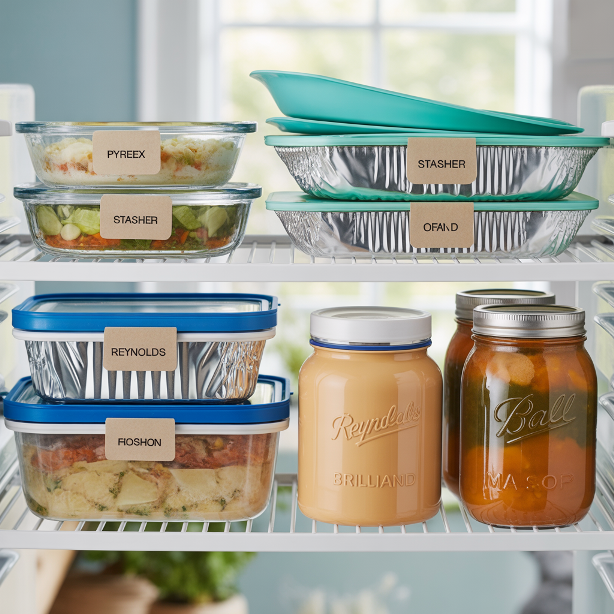
You’ve spent your Sunday afternoon cooking.
Casseroles are bubbling, soups are simmering, and you’re ready to freeze meals for the week ahead.
But then you open your freezer—and face a jumble of cracked plastic, mystery bags, and containers that leak sauce all over your frozen peas.
What if you could store meals safely, save space, and pull out perfect portions—without the mess?
Good news: you can. And it starts with choosing the right freezer containers.
In 2025, with more Americans embracing meal prep and reducing food waste (the USDA estimates we throw away 30–40% of our food supply), smart storage isn’t just convenient—it’s essential.
After testing dozens of containers over 15 years of meal prepping, I’ll show you exactly which ones work—and which ones fail—so you never lose another batch of lasagna to freezer burn.
Why Your Freezer Container Matters More Than You Think
A bad container doesn’t just leak. It:
- Causes freezer burn (that dry, icy texture)
- Absorbs odors (hello, fishy-tasting soup)
- Cracks or warps in extreme cold
- Wastes precious freezer space
- Makes reheating messy
The right one? Keeps food fresh, saves space, and survives the freezer-to-oven journey.
The Top 5 Best Freezer Containers for Meals (Tested & Trusted)
1. Glass Meal Prep Containers (Like Pyrex or Anchor Hocking)
Best for: Casseroles, soups, stews, leftovers
Why they win:
- Oven, microwave, freezer, and dishwasher-safe
- Non-porous (won’t absorb stains or smells)
- See-through (no guessing what’s inside)
- Eco-friendly (no plastic waste)
Pro tip: Leave 1 inch of headspace—liquids expand when frozen. Never take from freezer to oven without thawing first.
Real-life win: I freeze my chicken broccoli casserole in Pyrex 8×8 pans. Thaw overnight, bake covered, and it’s like fresh.
2. Reusable Silicone Bags (Like Stasher or ZipTop)
Best for: Soups, sauces, marinated meats, portioned grains
Why they win:
- Stand upright when filled
- Lay flat to freeze (saves 50% more space than rigid containers)
- Dishwasher-safe and endlessly reusable
- BPA-free and odor-resistant
Pro tip: Freeze soup flat, then stack like books. Thaw in cold water in under 20 minutes.
Real-life win: My friend freezes individual portions of chili in Stasher bags. She tosses one in her lunch bag at 7 a.m.—it’s thawed by noon.
3. Aluminum Foil Pans with Lids (Like Reynolds or If You Care)
Best for: Gifting casseroles, large-batch meals, potlucks
Why they win:
- Oven-to-table ready
- Disposable (great for sharing meals)
- Inexpensive and widely available
- Recyclable (check local rules)
Pro tip: Line with parchment paper before filling—makes removal easy and prevents sticking.
Real-life win: I made three lasagnas for a new mom. Wrapped in foil, tied with twine—they looked thoughtful and required zero dish return.
4. BPA-Free Plastic Meal Prep Containers (Like Rubbermaid Brilliance or Prep Naturals)
Best for: Lunches, grain bowls, non-liquid meals
Why they win:
- Leakproof lids (seriously—shake test approved)
- Stackable and lightweight
- Affordable and durable
- Often come with portion dividers
Avoid: Thin, flimsy plastic—it cracks in the freezer.
Note: Not ideal for soups or saucy dishes unless specifically labeled “freezer-safe.”
5. Wide-Mouth Mason Jars (Like Ball or Kerr)
Best for: Soups, broths, smoothies, sauces
Why they win:
- Inexpensive and widely available
- Plastic-free and eco-friendly
- Perfect single servings
- Double as drinking glasses
Critical rule: Use wide-mouth jars only. Leave 1.5 inches of headspace. Freeze upright—not on their side.
Warning: Regular-mouth jars crack. Always use freezer-safe glass.
What to Avoid (Even If They’re Cheap)
- Takeout containers: Thin plastic cracks. Lids don’t seal.
- Zip-top plastic bags: Prone to leaks and punctures. Only use for short-term freezing.
- Non-freezer-safe glass: Can shatter. Look for “freezer-safe” labels.
- Old yogurt tubs: Not designed for freezing—they warp and leak.
Real-Life Scenarios Where the Right Container Saves the Day
- Postpartum meals: Glass pans go from freezer to oven—no extra dishes for exhausted parents.
- Office lunches: Silicone bags thaw fast and fit in lunch boxes.
- Holiday gifting: Foil pans look thoughtful and require no return.
- Tiny freezers: Flat silicone bags maximize every inch.
- Allergy-safe storage: Glass won’t retain traces of dairy, nuts, or gluten.
Pro Tips From Someone Who’s Frozen Thousands of Meals
- Label everything: Use masking tape and a Sharpie. Include name, date, and reheating instructions.
- Cool food first: Never freeze hot meals—it raises freezer temp and risks spoilage.
- Portion wisely: 2-cup servings for soup, 1-lb portions for meat, single casserole slices.
- Rotate stock: “First in, first out.” Older meals go in front.
- Double-wrap: For long-term storage (2+ months), add a layer of foil or a freezer bag for extra protection.
Top 5 FAQs People Actually Search For
1. Can I put glass containers directly from freezer to oven?
No. Always thaw in the fridge first. Sudden temperature changes can cause shattering.
2. Are silicone bags safe for boiling water?
Yes—most (like Stasher) are safe up to 400°F. Great for sous vide or quick thawing.
3. How long do meals last in freezer containers?
2–3 months for best quality. Properly sealed, they’re safe indefinitely—but flavor degrades over time.
4. Can I reuse aluminum foil pans?
Not recommended. They warp and lose integrity after one use.
5. Do mason jars really work for soup?
Yes—if you use wide-mouth, leave headspace, and freeze upright. Never fill to the top.
The Bottom Line
The best freezer containers for meals aren’t about fancy gadgets.
They’re about practicality, safety, and peace of mind.
When you choose the right vessel, you protect your time, your food, and your sanity. You ensure that every meal you prep comes back to life just as delicious as the day you made it.
So next time you’re stocking up, skip the flimsy plastic. Invest in glass, silicone, or quality foil. Your future self—pulling out a perfect, leak-free, freezer-burn-free meal—will thank you.
See Also – Soup Too Thin? Here’s Exactly How to Thicken It (Without Ruining Flavor or Texture)