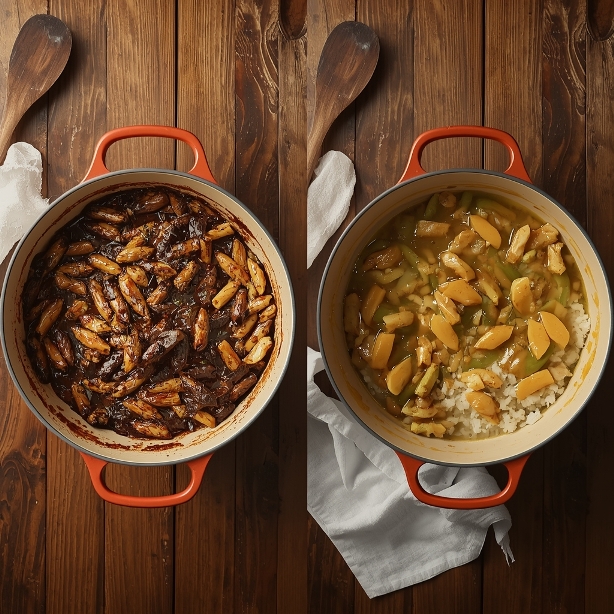
You love one-pot dinners.
Less cleanup. Fewer dishes. One pot, one meal, done.
But sometimes… it’s a soggy mess. Or burnt on the bottom. Or tastes like everything got lost in the sauce.
What went wrong?
Good news: most one-pot disasters come from just a few common mistakes—and they’re easy to fix.
In 2025, with over 68% of Americans cooking one-pot meals weekly (National Grocers Association), these errors are more common than you think. But once you know what to avoid, your skillet pastas, rice bakes, and creamy stews will turn out perfect every time.
Let’s save your dinner—and your sanity.
Mistake #1: Overcrowding the Pot
You toss in chicken, rice, broth, veggies, and cheese—all at once.
Result? Steamed, not seared. Mushy, not tender.
Why it happens: Too much food lowers the pan’s temperature. Ingredients release water instead of browning.
The fix:
- Brown proteins first. Remove and set aside.
- Sauté aromatics (onion, garlic) next.
- Add dry grains or pasta.
- Pour in liquid last.
Real-life win: My friend used to dump everything in at once. Now she browns her chicken first—and her one-pot lemon chicken rice is golden, not gray.
Mistake #2: Using the Wrong Pot Size
A 12-inch skillet for four servings? Perfect.
That same skillet for six? Disaster.
Why it happens: Shallow pans cause boil-overs. Deep pots trap steam, making food soggy.
The fix:
- Skillet meals: Use 12-inch for 4 servings, 14-inch for 6.
- Soup/stew: Use a Dutch oven (5–7 quarts).
- Rice/pasta bakes: Use a deep 9×13 casserole dish—even if it’s “one pot,” depth matters.
Pro tip: If your liquid bubbles over the rim, your pot is too small.
Mistake #3: Adding Pasta or Rice Too Early
You throw in dry pasta with broth and let it simmer.
But after 20 minutes, it’s gluey. Or crunchy.
Why it happens: Most one-pot pasta recipes require precise liquid-to-pasta ratios. Too much = mush. Too little = hard centers.
The fix:
- Use short, sturdy pasta (penne, rotini, orzo)—not long strands.
- Follow liquid ratios exactly: usually 2 cups liquid per 8 oz pasta.
- Stir once halfway to prevent sticking—but don’t over-stir.
- For rice: use long-grain white, and never skip the pre-toast step (sauté in oil 2 minutes before adding liquid).
Bonus: Undercook pasta by 1 minute—it keeps softening off-heat.
Mistake #4: Skipping the Rest Time
You pull the pot off the stove and serve immediately.
But the rice is watery. The sauce is thin.
Why it happens: Starches need time to absorb liquid. Sauces thicken as they cool.
The fix:
- Cover and rest 5–10 minutes before serving.
- This lets flavors meld and textures set.
- Especially crucial for risotto-style or rice-based one-pot meals.
Real-life win: My neighbor used to serve her one-pot chicken wild rice right away. Now she covers it while setting the table—and it’s perfectly creamy.
Mistake #5: Overloading with Wet Ingredients
Frozen spinach straight from the bag. Raw zucchini. Canned tomatoes with juice.
You add them all—and end up with soup.
Why it happens: Water-rich ingredients release liquid as they cook, diluting flavor and texture.
The fix:
- Squeeze frozen spinach in a towel until no drops fall.
- Salt and drain zucchini 20 minutes before cooking.
- Drain canned tomatoes or reduce added broth by ¼ cup.
- Pat chicken dry before browning—it sears better and releases less steam.
Pro tip: When in doubt, under-sauce. You can always add broth later—but you can’t remove it.
Real-Life Scenarios Where These Fixes Save Dinner
- “My one-pot pasta is sticky!” → Use less liquid, stir once, and rest covered.
- “Burnt bottom, raw top” → Lower heat and use a heavy-bottomed pot (like enameled cast iron).
- “Tastes bland” → Season in layers: salt meat, season broth, finish with acid (lemon or vinegar).
- “Too much liquid!” → Simmer uncovered for 5–10 minutes at the end to reduce.
- “Everything’s mushy” → Add delicate veggies (peas, spinach) in the last 5 minutes.
Pro Tips From Someone Who’s Tested Hundreds of One-Pot Meals
- Use a heavy-bottomed pot. Thin pans scorch. Dutch ovens or stainless steel with aluminum cores distribute heat evenly.
- Don’t walk away. One-pot meals need attention during the first 10 minutes.
- Taste before serving. Adjust salt, acid, or heat at the end—it makes all the difference.
- Make it ahead. Many one-pot meals taste better the next day. Just store and reheat gently.
- Clean as you go. Even with one pot, wash your cutting board and knife while it simmers.
Top 5 FAQs People Actually Search For
1. Can I use regular pasta in one-pot meals?
Yes—but avoid long strands (spaghetti, fettuccine). Short shapes like penne hold up better.
2. Why does my one-pot rice burn on the bottom?
Heat is too high. Use medium-low, and stir once after adding liquid to scrape the bottom.
3. Can I double a one-pot recipe?
Not in the same pot. Double the ingredients but use a larger pot—or cook in batches.
4. What if I don’t have a Dutch oven?
Use a heavy stainless steel pot with a tight-fitting lid. Avoid nonstick for browning.
5. How do I thicken a watery one-pot meal?
Simmer uncovered 5–10 minutes. Or mix 1 tsp cornstarch with 1 tbsp cold water, stir in, and cook 2 minutes.
The Bottom Line
One-pot dinners aren’t foolproof—but they’re worth mastering.
With these fixes, you’ll turn kitchen chaos into calm, delicious success.
Remember: the goal isn’t perfection. It’s real food, made simply, with only one pot to wash.
So next time you’re tempted to order takeout, grab your Dutch oven instead. Brown that chicken. Toast that rice. Trust the process.
Your future self—sitting down to a flavorful, fuss-free meal with only one dish to scrub—will thank you.
See Also – Dairy-Free Comfort Food Recipes That Actually Satisfy (No, You Don’t Have to Give Up Creaminess)