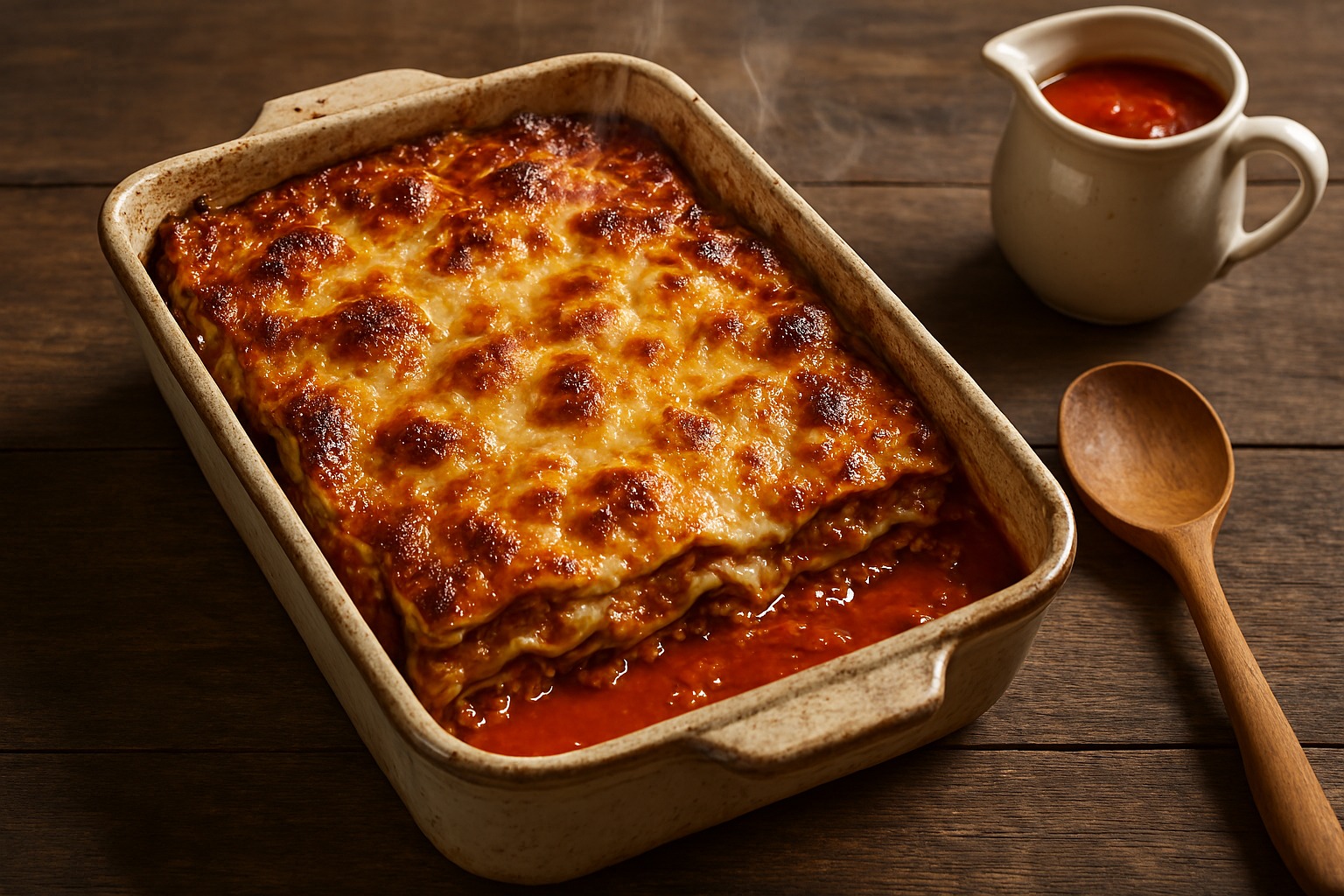
You pull your lasagna out of the oven.
It looks gorgeous—golden cheese, bubbling edges, that perfect crust on top.
But when you take a bite?
It’s dry. Crumbly. Like eating a savory bread pudding with no moisture in sight.
We’ve all been there.
And if you’re using no-boil noodles or watching your sauce-to-noodle ratio too closely, it’s easy to swing too far in the other direction.
The good news? Dry lasagna is fixable—sometimes even after it’s baked. And with a few smart tweaks, you can prevent it entirely next time.
Let’s bring back the saucy, tender, melt-in-your-mouth comfort you deserve.
Why Your Lasagna Turns Out Dry (It’s Usually One of These 3 Things)
- Not enough sauce – Especially with no-boil noodles, which need liquid to rehydrate properly.
- Overbaking – That extra 10 minutes “just to be sure” can suck all the moisture right out.
- Too much dry filling – Thick layers of ricotta or cheese without enough sauce to bind them create a dense, dry texture.
According to food scientists at Cook’s Illustrated, the ideal lasagna has a sauce-to-noodle ratio that allows the pasta to absorb just enough liquid to soften—but not so much that it turns soggy. The sweet spot? About 3½ to 4 cups of sauce for a standard 9×13-inch pan.
Go below that, and you’re flirting with cardboard territory.
Before You Bake: Prevent Dryness from the Start
Use enough sauce—even if it feels like too much.
For no-boil noodles: aim for at least 3½ cups total (meat sauce + moisture from ricotta).
For pre-cooked noodles: you can go slightly lighter, but don’t drop below 3 cups.
Don’t skip the bottom layer.
Always start with ¾ cup of sauce in the baking dish. This keeps noodles from sticking and gives them something to absorb from below.
Add moisture-rich ingredients:
- Stir ¼ cup milk or cream into your ricotta
- Mix a splash of broth into your meat sauce
- Add a thin layer of sautéed mushrooms or spinach (well-drained, but still moist)
Cover tightly with foil.
This traps steam, which helps cook the noodles and keeps everything tender. Uncover only for the last 10–15 minutes to brown the top.
During Baking: Watch the Clock Like a Hawk
Lasagna doesn’t need to be “bubbling violently” to be done.
Once the cheese is melted and the center is hot (165°F), it’s ready.
Set a timer. Walk away. Don’t peek too often—every time you lift the foil, you lose precious steam.
And remember: it keeps cooking as it rests. Pull it out just before it looks perfect.
After Baking: Rescue a Dry Lasagna (Yes, Really)
Already cut into it and realized it’s dry? Don’t panic.
Option 1: Sauce it on the plate
Warm extra marinara or béchamel on the stove. Spoon generously over each slice. Instant moisture boost.
Option 2: Steam it back to life
Place dry lasagna slices in a covered dish with a splash of broth or water. Reheat in a 325°F oven for 10–15 minutes. The steam revives tenderness.
Option 3: Serve with a moist side
Pair it with a saucy meatball, garlic butter green beans, or a creamy tomato soup. The contrast saves the meal.
Real-Life Scenarios Where This Happens (And How to Avoid Them)
- “Healthy” swaps gone wrong: Using low-fat ricotta, skim mozzarella, and lean turkey without adding back moisture = dry disaster. Solution: Use full-fat dairy and add a splash of olive oil or broth to the meat.
- Freezer lasagna: Frozen lasagna loses moisture during storage. Always bake covered, and consider adding an extra ¼ cup of sauce before freezing.
- Leftovers: Reheating in the microwave dries lasagna fast. Instead, cover with foil and warm in a 325°F oven with a damp paper towel over the top.
- No-boil noodle panic: Many people under-sauce because they’re afraid of sogginess. But no-boil noodles need liquid. Trust the process—use enough sauce, and rest after baking.
Pro Tips From Someone Who’s Tested Every Method
- Use whole-milk ricotta and full-fat mozzarella. Fat = moisture and flavor.
- Add a splash of wine or broth to your meat sauce while simmering—it adds depth and liquid.
- Don’t overmix ricotta. Keep it fluffy; dense packing reduces tenderness.
- When in doubt, underbake slightly. It finishes cooking as it rests.
- Always let it rest 15 minutes—but if it’s dry, shorten rest time to 10 minutes to retain more steam.
Top 5 FAQs People Actually Search For
1. Can I add water to dry lasagna while baking?
Not plain water—it dilutes flavor. Instead, add a splash of broth, tomato juice, or milk around the edges of the dish during the last 10 minutes of baking.
2. Why is my zucchini lasagna dry?
Zucchini releases water early, then dries out. Make sure you’re using enough sauce and covering tightly during baking.
3. Does resting make lasagna drier?
Only if it’s already under-sauced. Properly sauced lasagna firms up but stays moist. Resting is still essential for clean slices.
4. Can I use Alfredo sauce to keep it moist?
Yes! Cream-based sauces add richness and moisture. Just balance with a touch of acidity (like lemon zest) to cut the heaviness.
5. How do I know if I’ve added enough sauce?
After assembling, you should see small pools of sauce bubbling up between noodle gaps. If the surface looks dry, add ¼–½ cup more.
The Bottom Line
Dry lasagna isn’t a lost cause.
It’s a signal—your dish needed a little more love in the moisture department.
With the right sauce ratio, smart layering, and gentle baking, you can create lasagna that’s tender, flavorful, and deeply satisfying—never dusty or dull.
So next time you assemble that 9×13 dish, pour that extra half-cup of sauce. Cover it well. Set that timer.
Your future self—savoring a forkful of perfectly balanced, saucy comfort—will thank you.
See Also – Lasagna Watery? Here’s Exactly How to Fix It (Before, During, and After Baking)