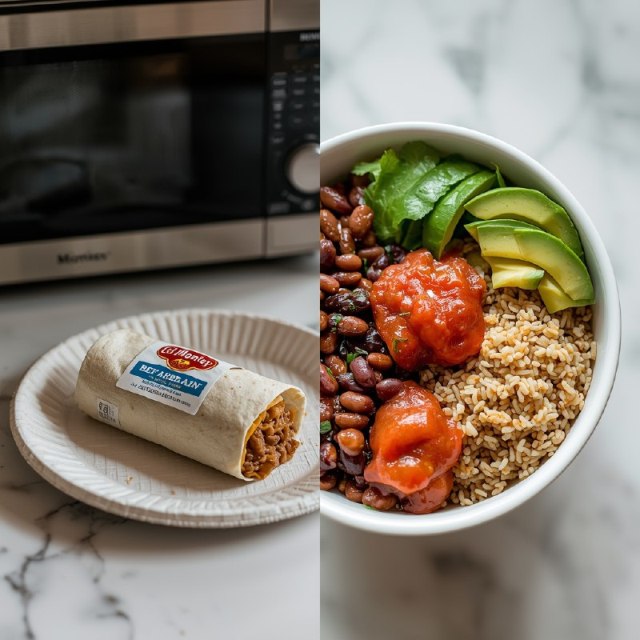
You’re standing in the frozen food aisle, tired after work, staring at a box of El Monterey Beef and Bean Burritos.
They’re cheap. They’re fast. They heat up in 2 minutes.
But you’re wondering: Are these actually healthy?
Good news: we’re cutting through the marketing hype with real nutrition facts, ingredient analysis, and practical advice—so you can decide if they fit your lifestyle.
In 2025, with more Americans relying on convenience foods (the frozen food market hit $80 billion last year), it’s smart to ask what’s really in that burrito. Let’s break it down—no judgment, just facts.
What’s Inside an El Monterey Beef and Bean Burrito?
First, let’s look at the standard Beef & Bean Burrito (not the “XXL” or “Loaded” versions). According to the official El Monterey website and USDA data, one burrito (5 oz / 142g) contains:
- Calories: 290
- Total Fat: 11g (3.5g saturated)
- Cholesterol: 20mg
- Sodium: 620mg
- Total Carbs: 35g (2g fiber, 2g sugar)
- Protein: 12g
Ingredients:
Enriched wheat flour tortilla, water, cooked beef, pinto beans, onions, green chiles, tomato paste, salt, spices, and preservatives like sodium phosphate and TBHQ (a synthetic antioxidant).
So—is it healthy? It depends on what you mean by “healthy.”
The Good: What This Burrito Gets Right
- Real protein source: 12g of protein from beef and beans helps keep you full.
- Beans add fiber: Pinto beans provide plant-based fiber and complex carbs.
- No artificial colors: Unlike some frozen meals, it doesn’t use Red 40 or Yellow 5.
- Affordable: At $1–$1.50 per burrito, it’s cheaper than fast food.
- Convenient: Ready in 2 minutes—ideal for emergencies or exhausted nights.
Real-life win: My neighbor keeps a box in her freezer for nights when her kids have soccer practice and dinner is an afterthought. “It’s not gourmet,” she says, “but it’s better than chips.”
The Not-So-Good: Where It Falls Short
- High sodium: 620mg is 27% of your daily limit (2,300mg). If you eat two, you’re over halfway there—before adding ketchup or chips.
- Refined carbs: The tortilla is made from enriched white flour—low in fiber and spikes blood sugar.
- Processed meat: The beef contains sodium phosphates and is likely from lower-grade trimmings.
- Preservatives: TBHQ (tertiary butylhydroquinone) is FDA-approved but controversial—some studies link it to inflammation in high doses.
- Low fiber: Only 2g per burrito. Most adults need 25–38g daily.
For context: a homemade beef and bean burrito with whole wheat tortilla, fresh veggies, and no added preservatives would have more fiber, less sodium, and cleaner ingredients.
How It Compares to Other Options
| Feature | El Monterey Beef & Bean | Homemade Version | Fast Food Burrito (e.g., Taco Bell) |
|---|---|---|---|
| Calories | 290 | ~350 | 400–500 |
| Sodium | 620mg | ~300mg | 900–1,200mg |
| Fiber | 2g | 6–8g | 3–5g |
| Protein | 12g | 18g | 10–14g |
| Preservatives | Yes (TBHQ, phosphates) | None | Yes (multiple) |
Surprisingly, El Monterey is better than most fast food burritos—lower in calories, fat, and sodium. But it’s still a processed food, not a health food.
When It Can Fit Into a Healthy Diet
This burrito isn’t “junk food”—but it’s not a superfood either. Here’s how to make it work:
- Pair it wisely: Serve with a side of baby carrots, sliced bell peppers, or a simple salad to add fiber and nutrients.
- Limit frequency: Once or twice a week as a backup—not a staple.
- Hydrate well: Drink water to help flush excess sodium.
- Choose the right version: Stick to the original “Beef & Bean.” Avoid “XXL” or “Cheese & Jalapeño” versions—they’re higher in fat and sodium.
- Add freshness: Top with avocado slices, salsa, or plain Greek yogurt (instead of sour cream) for extra nutrients.
Tip: If you’re managing blood pressure, diabetes, or heart health, this burrito should be an occasional choice—not a regular meal.
A Healthier Homemade Alternative (Ready in 20 Minutes)
Want the same convenience with cleaner ingredients? Try this:
Quick Beef & Bean Burrito Bowl
- Brown ½ lb lean ground beef with cumin and garlic.
- Stir in 1 cup canned pinto beans (rinsed).
- Serve over brown rice or cauliflower rice.
- Top with salsa, avocado, and shredded lettuce.
Total time: 20 minutes. Total cost: ~$2.50/serving. And you control the salt, fat, and fiber.
Top 5 FAQs People Actually Search For
1. Are El Monterey burritos gluten-free?
No. The tortilla is made from wheat flour. They do offer a “Gluten Free” line—but it’s limited and uses corn tortillas.
2. Can I eat them on a weight-loss diet?
Yes—in moderation. At 290 calories, it fits most plans. Just watch sodium and pair with veggies.
3. Do they contain MSG?
Not listed in ingredients. But “spices” and “natural flavors” can sometimes hide it. Check the label if you’re sensitive.
4. Are they safe for kids?
Generally yes—but high sodium is a concern for young children. Limit to once a week and serve with fruit or veggies.
5. How long do they last in the freezer?
Up to 6 months past the “best by” date if kept at 0°F. But quality declines after 3 months.
The Bottom Line
El Monterey Beef and Bean Burritos aren’t “healthy” in the clean-eating sense—but they’re one of the better options in the frozen aisle.
They’re affordable, convenient, and surprisingly balanced compared to fast food. But they’re still processed, high in sodium, and low in fiber.
So if you’re in a pinch? Go ahead.
If you’re building a long-term healthy diet? Use them sparingly—and boost them with fresh sides.
Because real health isn’t about perfection.
It’s about making smarter choices—one burrito at a time.
See Also – The Habit Burger Steak Sandwich: Why This Under-the-Radar Gem Is America’s Best-Kept Secret