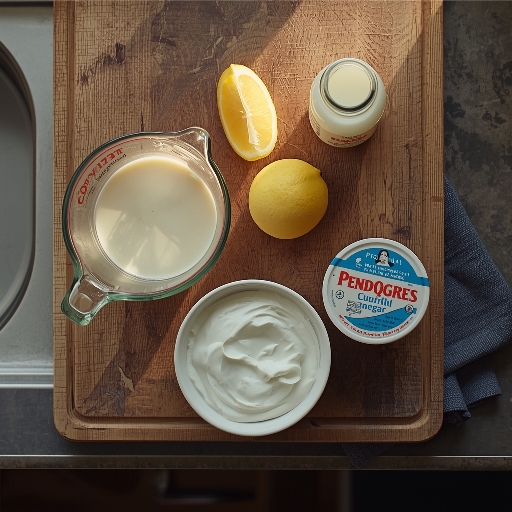
You can substitute buttermilk by mixing 1 tablespoon of white vinegar or lemon juice with enough regular milk to make 1 cup — let it sit for 5 minutes and it works just as well. But that’s just the beginning. Read on for 8 more solid options depending on what’s in your fridge right now.
You’re halfway through making buttermilk pancakes on a lazy Sunday morning. You grab your carton of buttermilk from the fridge — and it’s either empty or expired.
Yeah, we’ve all been there.
Here’s the good news: you don’t need to run to the grocery store. Your kitchen almost certainly has everything you need to make a quick, effective buttermilk substitute right now.
Why Buttermilk Matters in Baking
Before we get into the swaps, let’s quickly talk about why buttermilk actually exists in a recipe.
Buttermilk is acidic. That acidity reacts with baking soda to create carbon dioxide bubbles, which is what makes your pancakes fluffy, your biscuits tall, and your cornbread tender.
The slight tang it adds also deepens flavor in ways that regular milk just can’t match.
So a good buttermilk substitute needs to do two things: add acidity and provide a creamy liquid base. Keep that in mind as you pick your swap.
The 9 Best Buttermilk Substitutes
These aren’t just random guesses — these are real substitutes that bakers across the US use every single day.
1 Milk + White Vinegar (The Classic Fix)
Ratio: 1 tbsp vinegar + milk to fill 1 cup
Works best for: pancakes, cakes, muffins, quick breads
Pour 1 tablespoon of white vinegar into a measuring cup. Add whole milk (or 2%) until you reach the 1-cup line. Stir it gently and let it sit for 5 minutes. You’ll notice it starts to curdle slightly — that’s exactly what you want. Use it cup-for-cup in your recipe.
2 Milk + Lemon Juice (Same Idea, Brighter Flavor)
Ratio: 1 tbsp lemon juice + milk to fill 1 cup
Works best for: blueberry muffins, lemon cakes, scones
This works exactly like the vinegar method, but lemon juice adds a subtle citrus note that’s incredible in fruity baked goods. Use freshly squeezed if you have it. Bottled lemon juice works too — no judgment here.
3 Plain Yogurt (The Thick, Rich Option)
Ratio: ¾ cup yogurt + ¼ cup water = 1 cup
Works best for: waffles, cakes, banana bread, muffins
Plain yogurt is naturally acidic, making it one of the best buttermilk subs out there. Thin it with a little water or milk to reach the right consistency. Greek yogurt works too — just thin it a bit more since it’s thicker. Avoid flavored yogurts unless you want that flavor in your food.
4 Sour Cream (For Extra Richness)
Ratio: ¾ cup sour cream + ¼ cup water = 1 cup
Works best for: chocolate cake, coffee cake, biscuits
Sour cream adds fat and tang. Baked goods made with sour cream come out incredibly moist. Same idea as yogurt — just thin it down to a pourable consistency. Great for recipes where you want a denser, richer result.
5 Kefir (If You Happen to Have It)
Ratio: 1:1 — straight swap
Works best for: any recipe, no adjustments needed
Kefir is fermented milk — it’s literally the closest thing to actual buttermilk you’ll find in a regular grocery store. The texture and acidity are nearly identical. If you drink kefir for gut health, it’s already in your fridge. Lucky you.
6 Non-Dairy Milk + Acid (The Vegan Fix)
Ratio: 1 tbsp vinegar or lemon juice + non-dairy milk to fill 1 cup
Works best for: vegan baking, dairy-free households
This works with oat milk, soy milk, almond milk, or coconut milk. Soy milk curdles the best and behaves most like dairy. Oat milk is a close second. Almond milk doesn’t curdle as much but still provides the acidity needed for the leavening reaction.
7 Cream of Tartar + Milk
Ratio: 1¾ tsp cream of tartar + 1 cup milk
Works best for: cakes, cookies, quick breads
Cream of tartar is a powdered acid that’s already in most bakers’ spice cabinets. Whisk it into the milk — it won’t curdle the way vinegar does, but the acidity is there. Works especially well in delicate cakes where you don’t want any sour flavor.
8 Cottage Cheese + Water
Ratio: Blend ¾ cup cottage cheese + ¼ cup water until smooth
Works best for: pancakes, biscuits, savory baked goods
This one surprises people. Blend small-curd cottage cheese with water until completely smooth, and you’ve got a surprisingly great buttermilk sub. It adds protein and keeps things moist. Especially good in pancakes — the results are fluffy and filling.
9 Evaporated Milk + Vinegar
Ratio: 1 tbsp vinegar + evaporated milk to fill 1 cup
Works best for: recipes needing richness, such as cornbread
Evaporated milk is richer and creamier than regular milk. Add the same amount of vinegar or lemon juice, and you get a thicker, richer buttermilk substitute. Great for Southern-style cornbread or dense quick breads.
Buttermilk Substitutes at a Glance
| Substitute | Best For | Rating |
|---|---|---|
| Milk + white vinegar | All-purpose, pancakes, cakes | Best Overall |
| Milk + lemon juice | Fruity bakes, scones, muffins | Best Flavor |
| Kefir | Any recipe | Closest Match |
| Plain yogurt + water | Waffles, banana bread | Great Option |
| Sour cream + water | Chocolate cake, biscuits | Rich & Moist |
| Non-dairy milk + acid | Vegan baking | Dairy-Free |
| Cream of tartar + milk | Delicate cakes | No Sour Taste |
How to Make the Vinegar Substitute Step by Step
Since the milk-and-vinegar method is what most people reach for first, here’s exactly how to do it:
- Pour 1 tablespoon of white vinegar into a liquid measuring cup.
- Add regular milk until the total reaches 1 cup (the 8 oz line).
- Stir it gently with a spoon — just a few swirls.
- Let it sit undisturbed for 5 minutes at room temperature.
- You’ll see it thicken slightly and get a little lumpy. That’s normal.
- Use it exactly as the recipe calls for buttermilk. Done.
Pro tip – Whole milk gives the closest result to real buttermilk because of its fat content. But 2% works just fine for most recipes. Skim milk produces a thinner result — fine for pancakes, less ideal for rich cakes.
Does It Really Work the Same?
For the most part, yes — especially in quick breads, pancakes, biscuits, muffins, and cakes. These recipes rely on the acid reacting with baking soda, and any acidic liquid will trigger that reaction.
Where you might notice a tiny difference is in recipes where buttermilk is the star of the show — like Southern-style buttermilk pie or very tangy buttermilk dressing. In those cases, the real stuff has a more complex, cultured tang that’s hard to replicate exactly.
But for everyday baking? Your substitute will work beautifully. Guests won’t know the difference.
Watch out for this – Don’t use apple cider vinegar as your first choice — it can add a slightly fruity flavor that shows up in mild-flavored recipes like vanilla cake. White vinegar is neutral and reliable. Save apple cider vinegar for recipes with strong flavors like carrot cake or gingerbread where it won’t be noticed.
What If the Recipe Calls for Just a Little Bit?
Sometimes a recipe asks for only 2 tablespoons or ¼ cup of buttermilk. In that case, just scale everything down proportionally.
For ¼ cup: use ¾ teaspoon of vinegar and fill the rest with milk to reach ¼ cup total.
For ½ cup: use 1½ teaspoons of vinegar and milk to reach ½ cup total.
It’s that simple. No complicated math required.
Can You Freeze Buttermilk for Later?
Yes, you absolutely can — and this is a great strategy if you only use buttermilk occasionally. Pour it into an ice cube tray, freeze it, then store the cubes in a zip-lock bag. Each standard ice cube is about 2 tablespoons.
Thaw overnight in the fridge or in a bowl of warm water. Give it a quick stir before using. The texture may look slightly separated, but once stirred it performs just like fresh.
You’ll never waste a half-used carton again.
The Bottom Line
Running out of buttermilk is one of the most common mid-recipe panics in the American kitchen — and it’s also one of the easiest problems to solve. A splash of vinegar or lemon juice in regular milk is all it takes most of the time.
If you want something richer, reach for yogurt or sour cream. If you’re baking dairy-free, oat milk or soy milk plus acid gets the job done. And if you want a near-perfect match, grab kefir next time you’re at the grocery store — it’s a game-changer for buttermilk recipes.
Now get back to baking. Those biscuits aren’t going to make themselves.
Frequently Asked Questions
Q – Can I use regular milk instead of buttermilk?
Ans – Regular milk alone won’t work as a direct swap because it lacks the acidity. Without acid, the baking soda in your recipe won’t activate properly and your baked goods will come out flat and dense. Always add an acid — vinegar, lemon juice, or cream of tartar — to your milk before using it as a substitute
Q – How long can buttermilk substitute sit before it goes bad?
Ans – A DIY buttermilk substitute (milk plus acid) is best used right away. It’ll be fine sitting on the counter for the 5–10 minutes you need it to curdle. Don’t store it overnight or make it in advance — the fresh milk in it can start to spoil faster than real cultured buttermilk. Make it fresh, use it immediately.
Q – What’s the best buttermilk substitute for fried chicken?
Ans – For fried chicken marinades, plain yogurt thinned with a little water or milk is the best choice. It’s thick enough to coat the chicken, acidic enough to tenderize the meat, and produces a deeply flavorful, crispy crust. The milk-and-vinegar method also works great if you let the chicken soak for at least an hour — overnight is even better.
Q – Is there a buttermilk substitute that works for buttermilk dressing (like ranch ) ?
Ans – For dressings, kefir is your best bet since the flavor is the most similar to real buttermilk. The milk-and-vinegar substitute also works, though it tastes slightly thinner. If you want a rich, creamy ranch, try a 50/50 mix of thinned sour cream and milk plus a squeeze of lemon juice. It’ll be even better than store-bought.
Q – Can I substitute buttermilk in combread?
Ans – Absolutely. Cornbread is one of the most forgiving recipes for buttermilk substitutes. The milk-and-vinegar method works perfectly. For a richer, more traditional Southern-style cornbread, try using evaporated milk with a tablespoon of vinegar — the extra fat content makes it noticeably more tender and moist.
More – Creamy Chili Crisp Pasta Recipe: The 15-Minute Weeknight Wonder That’s Taking Over American Kitchens