You made a big pot of soup.
It’s perfect—rich, flavorful, and comforting.
But now you’re wondering: How long can I keep this? Can I freeze it? And how do I reheat it without turning it into mush or sludge?
Good news: with the right storage and reheating methods, your soup can taste just as good on day four—or even month two—as it did on day one.
In 2025, with more Americans embracing meal prep, reducing food waste, and cooking in batches, soup is having a serious moment. According to the USDA, over 60% of households report making large-batch soups weekly. But improper storage is the #1 reason people toss perfectly good food.
Let’s fix that—once and for all.
How Long Does Soup Last? (The Real Timeline)
Not all soups are created equal. Here’s how long yours will stay fresh:
- Vegetable, chicken, or beef broth-based soups: 3–4 days in the fridge
- Cream-based soups (chowder, broccoli cheese): 2–3 days (dairy spoils faster)
- Seafood soups: 2 days max
- Bean, lentil, or tomato-based soups: 4–5 days (acid and fiber help preservation)
- All soups: Up to 2–3 months in the freezer
⚠️ Critical rule: Cool soup within 2 hours of cooking. Leaving it out longer invites bacteria—even if it looks and smells fine.
The Right Way to Store Soup (Step by Step)
1. Cool it fast
Don’t put a hot pot straight in the fridge—it raises the temperature and risks spoiling other foods.
- Pro method: Divide large batches into shallow containers.
- Faster method: Place the pot in an ice bath and stir for 10–15 minutes until lukewarm.
2. Choose the right container
- Fridge: Airtight glass or BPA-free plastic containers
- Freezer: Freezer-safe bags (lay flat to save space) or wide-mouth mason jars (leave 1 inch of headspace for expansion)
- Portion wisely: Freeze in 2-cup servings—the perfect single-meal size.
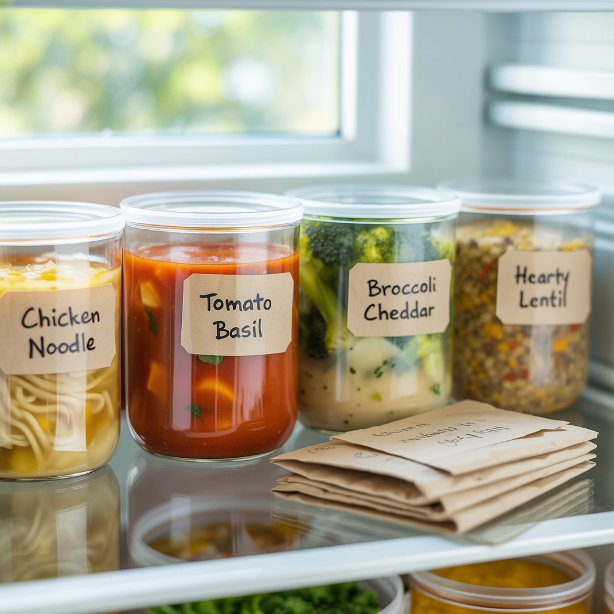
3. Label everything
Use masking tape and a marker: “Chicken Noodle – 3/12” or “Lentil – GF.” You’ll thank yourself later.
4. Freeze smart
- Leave room for expansion (liquids swell when frozen).
- Lay freezer bags flat—they thaw faster and stack neatly.
- For creamy soups, freeze before adding dairy (see FAQ).
How to Reheat Soup Without Ruining It
The goal: hot, flavorful, and texturally intact—not boiled, separated, or gluey.
✅ Stovetop Method (Best for Most Soups)
- Pour soup into a pot. Add a splash of water, broth, or milk if it’s thickened.
- Heat over medium-low, stirring occasionally.
- Bring to a gentle simmer (not a rolling boil).
- Cook 5–10 minutes until heated through (165°F internal temp).
Why it works: Gentle heat preserves texture and prevents scorching.
✅ Microwave Method (For Single Servings)
- Place soup in a microwave-safe bowl.
- Cover with a damp paper towel or vented lid.
- Heat on 50% power in 2-minute intervals, stirring between.
- Stop when steaming hot.
Pro tip: Never microwave cream-based soups on high—they’ll curdle.
❌ What Not to Do
- Don’t boil vigorously—it breaks down veggies and makes noodles mushy.
- Don’t reheat the whole pot if you only need one bowl—repeated heating degrades quality.
- Don’t skip the stir—hot spots can burn while other parts stay cold.
Special Tips for Tricky Soups
- Cream-based (broccoli cheddar, potato): Reheat gently. If it separates, blend with an immersion blender or whisk in 1 tbsp cold cream.
- Noodle or rice soups: Undercook grains slightly when making. They soften more in storage. Reheat with extra broth.
- Pureed soups (butternut squash, tomato): Stir often while reheating—they scorch easily.
- Bean or lentil soups: They thicken in the fridge. Add water or broth while reheating to restore consistency.
Real-Life Scenarios Where This Saves Dinner
- Sunday prep, Wednesday dinner: Your chicken tortilla soup tastes fresh midweek because you cooled it fast and stored it right.
- Post-illness comfort: Frozen portions of ginger-carrot soup are ready in 10 minutes when you’re too tired to cook.
- Holiday leftovers: That Thanksgiving turkey soup stays safe and delicious for days because you portioned and labeled it.
- Office lunch: Grab a frozen bag, thaw overnight, and reheat at work—no sad desk salad.
Pro Tips From Someone Who’s Stored Hundreds of Pots
- Skim fat before storing. It solidifies in the fridge and can make reheated soup greasy.
- Hold delicate toppings. Add fresh herbs, avocado, or croutons after reheating.
- Revive flavor: A squeeze of lemon, dash of hot sauce, or sprinkle of Parmesan can brighten stored soup.
- Thaw safely: Move frozen soup to the fridge 24 hours before reheating. Or use the cold water thaw method (submerge sealed bag in cold water, changing every 30 minutes).
Top 5 FAQs People Actually Search For
1. Can I freeze soup with potatoes or pasta?
Yes—but they may soften. For best texture, undercook them slightly and add fresh when reheating.
2. Why does my soup taste bland after storing?
Flavors meld and mellow over time. Always season lightly when cooking—you can adjust salt and acid after reheating.
3. Can I refreeze thawed soup?
Only if it was thawed in the fridge and hasn’t been left out more than 2 hours. When in doubt, don’t risk it.
4. How do I know if soup has gone bad?
Trust your senses: sour smell, off color, mold, or fizzy bubbles. When in doubt, throw it out.
5. Can I store soup in the pot I cooked it in?
Not recommended. Metal pots can react with acidic soups (like tomato), and large volumes cool too slowly.
The Bottom Line
Soup storage and reheating isn’t just about safety—it’s about respecting your time and effort.
When you take a few extra minutes to cool, containerize, and label your soup, you’re not just saving food. You’re giving your future self the gift of a hot, nourishing meal on a chaotic day.
So next time you lift that lid off a bubbling pot, don’t just ladle a bowl. Think ahead. Portion it. Freeze it. Label it.
Your future self—wrapped in a blanket, steam rising from a perfect bowl—will thank you.
See Also – Dairy-Free Comfort Food Recipes That Actually Satisfy (No, You Don’t Have to Give Up Creaminess)