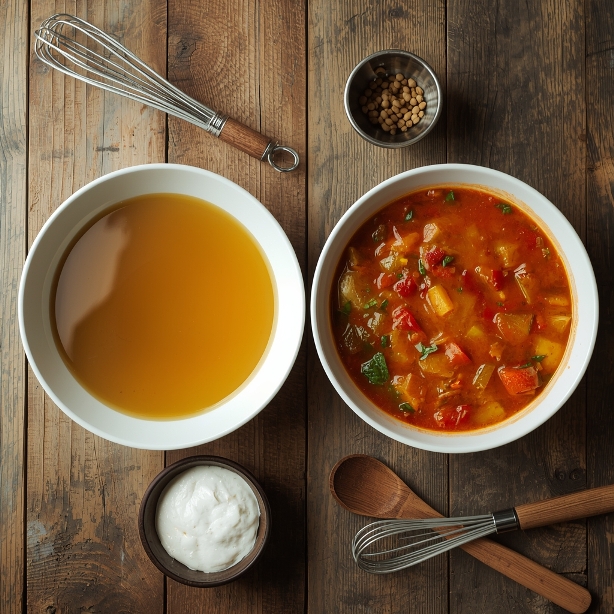
You’ve spent time simmering broth, chopping veggies, and building flavor.
But when you ladle a bowl… it’s watery. Broth-like. Not the rich, comforting soup you dreamed of.
What now?
Good news: thin soup isn’t a lost cause. In fact, with the right technique, you can fix it in under 10 minutes—without turning it into glue, altering the taste, or starting over.
In 2025, with more Americans cooking from scratch and embracing homemade meals, soup-making is surging. But even experienced cooks run into this issue. The key isn’t guessing—it’s knowing which thickening method matches your soup type.
Let’s turn that watery disappointment into a velvety triumph.
Why Your Soup Is Too Thin (And How to Diagnose It)
Most thin soups suffer from one of these:
- Not enough reduction (simmered too briefly)
- Too much liquid (overzealous broth pouring)
- Low-starch ingredients (like zucchini or tomatoes)
- Skipping natural thickeners (potatoes, beans, lentils)
The fix depends on your soup’s base. A creamy chowder needs a different approach than a rustic minestrone.
The 5 Best Ways to Thicken Soup (Tested & Trusted)
1. Simmer It Down (The Simplest Fix)
Sometimes, all your soup needs is time.
- How: Remove the lid. Simmer gently for 15–30 minutes.
- Best for: Broth-based soups (chicken noodle, vegetable, pho).
- Pro tip: Stir occasionally to prevent scorching. Don’t walk away—evaporation speeds up fast.
Real-life win: My neighbor’s chicken soup was too thin. She simmered it uncovered while folding laundry. By dinner, it was perfect.
2. Blend Part of the Soup (Creamy Without Cream)
Use the soup’s own ingredients as thickener.
- How: Remove 1–2 cups of soup (mostly solids). Blend until smooth. Stir back in.
- Best for: Potato, bean, lentil, or vegetable soups.
- Pro tip: Yukon Gold potatoes, white beans, or cooked carrots blend into silky richness.
Bonus: This adds body without extra ingredients—ideal for clean-eating households.
3. Make a Slurry (Quick & Neutral)
A slurry is cornstarch + cold water—a classic thickener that works fast.
- How: Mix 1 tbsp cornstarch + 2 tbsp cold water. Whisk into simmering soup. Cook 2–3 minutes until clear and thickened.
- Best for: Clear broths, Asian-inspired soups, or dairy-free recipes.
- Pro tip: Never add dry cornstarch—it clumps. Always mix with cold liquid first.
Note: Use 1 tbsp per 2 cups of liquid. Add gradually—you can’t undo over-thickening.
4. Add a Roux (Classic French Technique)
Butter + flour = the foundation of creamy soups.
- How: Melt 2 tbsp butter. Whisk in 2 tbsp flour. Cook 1–2 minutes until golden. Whisk into soup. Simmer 5 minutes.
- Best for: Chowders, stews, broccoli cheese, or potato soup.
- Pro tip: For gluten-free, swap flour for rice flour or gluten-free all-purpose.
Warning: Don’t boil after adding roux—it can break. Keep heat gentle.
5. Stir in Dairy or Starch-Rich Foods (Flavor + Function)
Kill two birds with one stone: add richness and thickness.
- Options:
- Mashed potatoes or cauliflower: ½ cup stirred in
- Cooked lentils or white beans: blend or mash
- Heavy cream or coconut milk: adds body (add at the end, off heat)
- Egg yolk: temper with hot broth, then stir in (for avgolemono-style soups)
- Best for: Creamy soups, purees, or heartier stews.
Real-Life Scenarios Where These Fixes Save Dinner
- “I added too much broth!” → Simmer it down or blend part of the soup.
- “My potato soup is watery.” → Blend half the pot—it’ll thicken instantly.
- “Gluten-free and need thickener.” → Use cornstarch slurry or blended white beans.
- “Dairy-free creamy soup?” → Blend cooked cauliflower or add full-fat coconut milk.
- “Last-minute dinner party?” → Whisk in a quick roux—no one will know it wasn’t planned.
Pro Tips From Someone Who’s Fixed Hundreds of Pots
- Taste before thickening. Reducing or adding starch concentrates salt. Adjust seasoning after thickening.
- Go slow. It’s easier to add more thickener than to thin out a gluey mess.
- Avoid flour bombs. Never sprinkle flour directly into hot soup—it creates lumps.
- Use an immersion blender. Safer and faster than transferring hot soup to a countertop blender.
- Rest after thickening. Let soup sit 5 minutes—texture continues to improve off-heat.
Top 5 FAQs People Actually Search For
1. Can I use flour instead of cornstarch?
Yes—but make a roux (butter + flour) or mix flour with cold water first. Dry flour clumps.
2. Why did my soup get gluey?
Overuse of starch or over-blending. Start with half the recommended amount—you can always add more.
3. Can I thicken soup in a slow cooker?
Yes—turn to HIGH, remove lid, and simmer 30–60 minutes. Or stir in a slurry during the last 30 minutes.
4. What if I don’t have cornstarch or flour?
Use mashed potatoes, cooked rice, or even a handful of uncooked oats (blend after cooking).
5. Does blending make soup thicker?
Yes—if it contains starchy ingredients like potatoes, beans, or squash. Blending releases their natural thickeners.
The Bottom Line
Soup too thin isn’t a failure.
It’s a fixable moment—one that happens to every home cook, from beginners to pros.
With these tested methods, you’ll never serve watery soup again. Whether you simmer, blend, or whisk in a slurry, you’ve got the power to transform your pot into the rich, comforting bowl you intended.
So next time your soup looks more like broth, don’t panic. Grab a spoon, choose your method, and give it the second chance it deserves.
Your future self—sipping a perfectly textured, deeply satisfying bowl—will thank you.