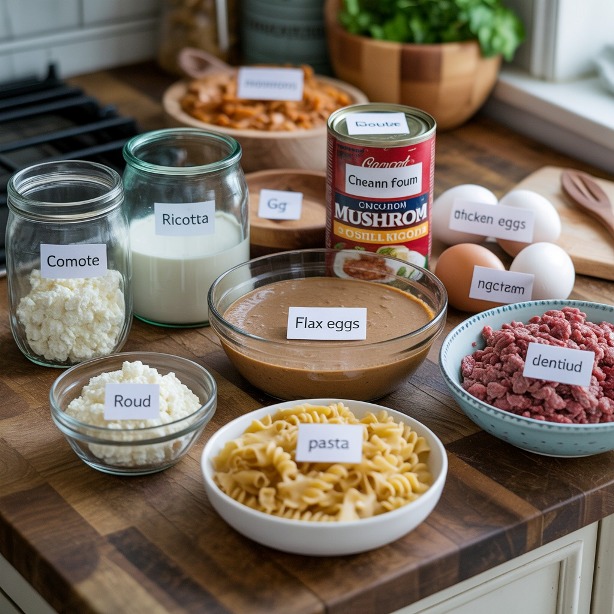
You’re ready to make your go-to casserole.
But the recipe calls for cream of mushroom soup—and you’re out.
Or ricotta—but your store only has cottage cheese.
Or maybe you’re avoiding gluten, dairy, or meat altogether.
What now?
Good news: you don’t need to cancel dinner. With smart swaps, you can adapt almost any casserole to what’s in your pantry, your diet, or your budget—without sacrificing flavor or texture.
In 2025, with more Americans cooking at home and embracing flexible diets (plant-based, gluten-free, budget-conscious), knowing how to substitute confidently is a superpower. According to the International Food Information Council, over 60% of U.S. households report making ingredient swaps weekly.
This guide gives you the real substitutions that work—not just “you can try this,” but “this will actually hold up in the oven.”
Why Substitutions Matter (Beyond Just “Making Do”)
Casseroles are forgiving—but not magic. A bad swap can lead to:
- Soggy layers
- Rubbery cheese
- Bland flavor
- Structural collapse
The key? Match function, not just flavor.
Need creaminess? Think fat + moisture.
Need binding? Think protein or starch.
Need umami? Think fermented or aged ingredients.
Let’s break it down by category.
Dairy & Cheese Swaps That Actually Work
Ricotta → Cottage cheese
Yes! Drain well and blend until smooth. It’s tangier but works great in lasagna or stuffed shells.
Pro tip: Add 1 tbsp flour to absorb excess moisture.
Heavy cream → Half-and-half + butter
Mix ¾ cup half-and-half + ¼ cup melted butter. Not quite as rich, but won’t curdle like milk.
Shredded cheese → Vegan shreds
Brands like Violife or Miyoko’s melt surprisingly well. Add a pinch of nutritional yeast for umami.
Sour cream → Greek yogurt
Use full-fat, plain Greek yogurt. It’s tangy and thick—but don’t bake it uncovered; stir into fillings instead.
Soup & Sauce Substitutions (No Canned Soup Needed)
Cream of mushroom soup → Homemade roux
Melt 3 tbsp butter, whisk in 3 tbsp flour, slowly add 1½ cups warm broth + ½ cup milk. Simmer until thick. Add sautéed mushrooms for authenticity.
Cream of chicken soup → Same roux + chicken broth
Use low-sodium broth to control salt. Add a splash of white wine for depth.
Marinara → Crushed tomatoes + herbs
Simmer 1 (28 oz) can crushed tomatoes with garlic, oregano, and a pinch of sugar for 15 minutes.
Meat & Protein Swaps
Ground beef → Lentils or plant-based crumbles
Brown 1½ cups cooked lentils with onions and spices. They absorb flavor beautifully and add fiber.
Chicken → Chickpeas or tofu
For baked casseroles, use extra-firm tofu (pressed and cubed) or canned chickpeas (drained). Toss in sauce to coat.
Bacon → Coconut bacon or smoked paprika
For smokiness without pork, add ½ tsp smoked paprika to your filling—or use store-bought coconut bacon.
Grain & Starch Substitutions
White rice → Brown rice or quinoa
Increase liquid by ¼ cup and bake 10–15 minutes longer. Quinoa cooks faster—use same liquid, reduce time by 5 minutes.
Egg noodles → Gluten-free pasta
Use GF penne or rotini. Cook 1 minute less than directed—they soften more in the oven.
Bread cubes (for stuffing casseroles) → GF bread or cauliflower rice
For gluten-free, use certified GF bread. For low-carb, mix riced cauliflower with Parmesan and herbs.
Egg Replacers That Bind (Not Just “Vegan Options”)
1 egg → 1 tbsp ground flax + 3 tbsp water
Let sit 5 minutes to gel. Best for savory bakes like breakfast casseroles.
1 egg → ¼ cup blended silken tofu
Adds moisture and structure without flavor. Great for ricotta mixes.
1 egg → 2 tbsp cornstarch + 3 tbsp water
Whisk into sauces to thicken—ideal for creamy casseroles.
Real-Life Scenarios Where This Saves Dinner
- “I forgot to buy ricotta!” → Drain cottage cheese, blend, add nutmeg. No one will know.
- “We’re out of cream of chicken soup.” → Make a quick roux with broth and milk. Done in 5 minutes.
- “My guest is vegan.” → Swap meat for lentils, cheese for Violife, eggs for flax. Still hearty.
- “Gluten-free household.” → Use GF pasta, GF bread, and cornstarch-thickened sauce. Safe and satisfying.
Pro Tips From Someone Who’s Tested Every Swap
- Taste as you go. Substitutes change salt levels. Adjust seasoning before baking.
- Don’t overmix. Especially with cottage cheese or tofu—gentle folding keeps texture light.
- When in doubt, under-sauce. Substitutes like GF pasta or lentils absorb more liquid. Start with less, add if needed.
- Label your freezer meals with substitutions used—so you remember what worked!
Top 5 FAQs People Actually Search For
1. Can I use milk instead of heavy cream in a casserole?
Yes—but only if you add fat. Mix milk with melted butter (3:1 ratio) to mimic richness and prevent curdling.
2. Is cottage cheese a good ricotta substitute in lasagna?
Yes—if drained and blended. It’s higher in protein and lower in fat, but still creamy when baked.
3. What can I use instead of cream of celery soup?
Make a roux with butter, flour, and vegetable broth. Add sautéed celery for authentic flavor.
4. Can I skip eggs in a breakfast casserole?
Yes—use blended silken tofu or a flax egg. The casserole will be softer but still hold together.
5. How do I make a casserole gluten-free without it falling apart?
Use GF pasta or rice, and thicken sauces with cornstarch instead of flour. Add an extra egg or 2 tbsp grated Parmesan for binding.
The Bottom Line
Casserole substitutions aren’t about compromise.
They’re about cooking with confidence, no matter what’s in your kitchen.
With these tested swaps, you’ll never let a missing ingredient—or a dietary need—stop you from making a comforting, satisfying meal.
So next time you’re staring at a recipe with something you don’t have, don’t panic. Grab a pen, check this guide, and make the swap.
Your future self—serving a golden, bubbling casserole that tastes just right—will thank you.