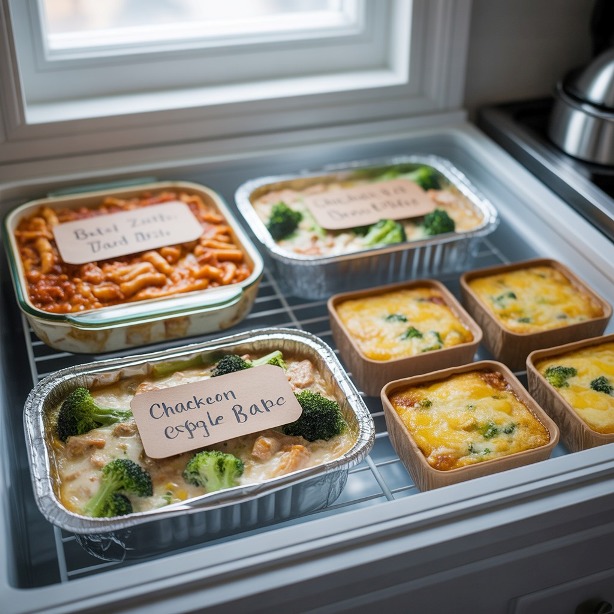
You love homemade meals.
But you don’t love cooking every single night.
What if you could spend one afternoon baking 4–6 casseroles—then pull out hot, comforting dinners on your busiest, most exhausted nights like you’re some kind of kitchen wizard?
Good news: you can. And with the right strategy, your freezer meals will taste fresh, never icy or bland.
In 2025, with more Americans juggling work, kids, and rising grocery costs, freezer meal prep is surging. According to the National Grocers Association, sales of freezer-safe containers have jumped 45% since 2022—and casseroles remain the #1 requested freezer meal in online communities.
This isn’t about eating “frozen dinners.” It’s about strategic comfort—so you always have a nourishing, homemade meal waiting in the wings.
Why Casseroles Are the Perfect Freezer Meal
Casseroles are uniquely suited for freezing:
- They’re saucy (moisture prevents freezer burn)
- They hold structure well
- They reheat evenly
- They taste even better after resting (flavors meld over time)
Unlike stir-fries or salads, casseroles actually improve with a little time in the deep freeze. The key? Freezing them unbaked.
Yes—skip the oven until you’re ready to eat. Unbaked casseroles freeze better because pasta doesn’t overcook, cheese stays creamy, and veggies retain texture.
Your Step-by-Step Freezer Casserole Game Plan
Step 1: Choose the Right Recipes
Not all casseroles freeze well. Stick to these winners:
- Baked ziti or lasagna
- Chicken broccoli casserole
- Beef and rice bake
- Breakfast egg casserole
- Tuna noodle casserole (with real sauce)
Avoid:
- Casseroles with mayo or sour cream (they separate)
- Raw potatoes or zucchini (they turn grainy)
- Delicate greens like spinach (use frozen instead)
Step 2: Prep Like a Pro
- Use freezer-safe, oven-safe pans (glass Pyrex or aluminum).
- Line pans with parchment paper, leaving overhang on two sides. This lets you lift the whole block out later for easy slicing or gifting.
- Go light on salt—flavors concentrate in the freezer.
- Use no-boil noodles for pasta bakes—they hydrate perfectly during the bake.
Step 3: Freeze It Right
- Cool assembled (unbaked) casseroles at room temp for 30 minutes—never freeze hot.
- Cover tightly with plastic wrap, then heavy-duty foil.
- Label with name, date, and baking instructions.
- Freeze flat for 2–3 hours, then store upright if space is tight.
Step 4: Reheat Like a Hero
- Thaw overnight in the fridge (best method).
- Remove plastic wrap. Cover with fresh foil.
- Bake at 375°F:
- 9×13 pan: 60–75 minutes
- 8×8 pan: 45–55 minutes
- Uncover for last 10–15 minutes to brown.
- Rest 10–15 minutes before serving.
No time to thaw? Bake from frozen: cover, bake at 375°F for 90–110 minutes, then uncover to finish.
Real-Life Wins This Strategy Delivers
- Postpartum lifesaver: My friend made six casseroles before her baby came. For eight weeks, she had hot, homemade dinners with zero effort.
- Holiday prep: Freeze individual portions before Thanksgiving. Pull them out when relatives stay late—you look like a hero.
- Budget stretch: Ground beef and cheese go on sale? Double your batch and freeze half. Cost per serving drops dramatically.
- Gifting gold: Wrap a frozen casserole in foil, tie with twine, and drop it off for a sick neighbor or new parent. It’s the gift that says, “I care—and I fed you.”
- Empty-nester ease: Bake two small pans. Eat one tonight, freeze the other for a quiet night in.
Pro Tips From Someone Who’s Frozen Dozens of Pans
- Portion it: Make one full pan and four mini loaves (8×4-inch). Perfect for couples or solo servings.
- Add moisture: Include an extra ¼ cup of sauce or broth before freezing—it compensates for liquid loss during storage.
- Don’t top with cheese before freezing. Add fresh mozzarella and Parmesan after thawing for best texture.
- Use quality sauce: Jarred is fine—but choose low-sugar, high-quality brands like Rao’s or Victoria. Cheap sauce turns grainy when frozen.
- Rotate your stash: Follow the “first in, first out” rule. Most casseroles last 3 months—label everything!
Top 5 FAQs People Actually Search For
1. Can I freeze baked casseroles?
Yes—but it’s riskier. Baked casseroles can dry out or become soggy when reheated. Unbaked is always superior.
2. How long do freezer casseroles last?
Up to 3 months for the best quality. After that, they’re safe but may develop freezer burn or off-flavors.
3. Can I use glass dishes in the freezer?
Yes—Pyrex and Anchor Hocking are freezer-safe. But never take them directly from the freezer to the oven. Always thaw first.
4. What’s the best way to reheat individual slices?
Thaw in fridge overnight, then warm in a 325°F oven covered with foil for 20 minutes. Or use the skillet steam method (add broth, cover, heat 8–10 minutes).
5. Do I need to thaw before baking?
Not required—but recommended. Baking from frozen adds 30+ minutes and can lead to uneven cooking.
The Bottom Line
Freezer meal casseroles aren’t about stockpiling food.
They’re about buying back your time, energy, and peace of mind.
On nights when you’re exhausted, overwhelmed, or just done, knowing there’s a pan of homemade comfort waiting in the freezer changes everything.
So this weekend, double your recipes. Line those pans. Wrap them tight. Tuck them into the freezer like promises to your future self.
Because everyone deserves a hot, hearty, soul-soothing meal—even on the hardest days.
See Also – How to Reheat Casserole Without Drying It Out (Because Nobody Likes Cardboard Comfort Food)