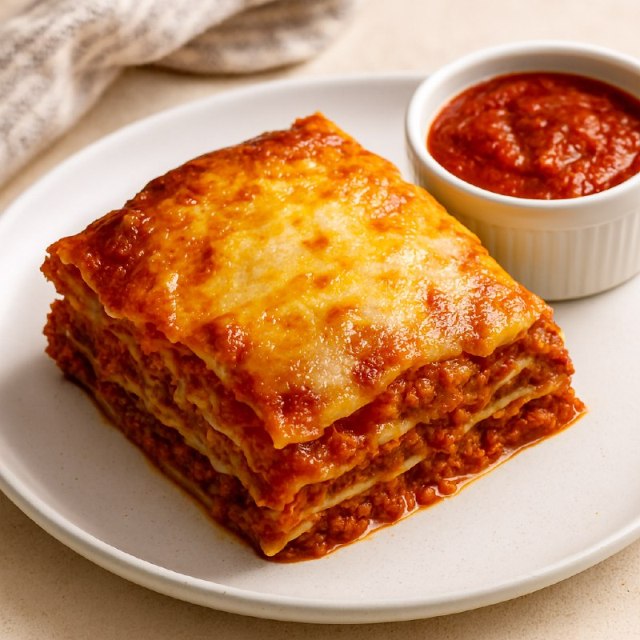
You made lasagna.
It was perfect—cheesy, saucy, tender layers that held together like a dream.
But now it’s day two. And you’re staring at that leftover square, wondering: How do I warm this up without turning it into a dry, rubbery brick?
If you’ve ever microwaved lasagna only to find a crusty top and a cold center, you’re not alone. Reheating lasagna is an art—not a science. And with the right method, you can bring it back to life so well, your family won’t believe it’s leftovers.
Good news: whether you’ve got a full pan or a single slice, there’s a foolproof way to reheat it—moist, melty, and just as satisfying as night one.
Why Lasagna Dries Out When Reheated (And How to Stop It)
Lasagna is a delicate balance of pasta, sauce, cheese, and moisture. When reheated too aggressively—or without protection—it loses steam fast. The noodles harden. The cheese toughens. The ricotta turns grainy.
The culprit? Dry heat + no added moisture.
Microwaves zap water molecules. Ovens blast hot air. Both suck the life out of lasagna if you’re not careful.
The fix? Add moisture, trap steam, and go low and slow.
The Best Way to Reheat Lasagna (Spoiler: It’s Not the Microwave)
✅ Oven Method (Best for Full Portions or Multiple Slices)
This is the gold standard. It heats evenly, melts cheese beautifully, and keeps everything tender.
Here’s how:
- Preheat oven to 325°F (not 375°—lower heat prevents drying).
- Place lasagna in an oven-safe dish.
- Add 2–3 tablespoons of water, broth, or marinara around the edges.
- Cover tightly with aluminum foil—this traps steam and gently rehydrates the noodles.
- Bake 20–25 minutes for a full portion, 15–20 for a single slice.
- Remove foil. Broil 1–2 minutes if you want a crispy top.
Result? Tender noodles, melted cheese, and that “just baked” flavor.
✅ Skillet Method (Best for One Slice—Fast & Crispy-Bottomed)
Want a little crunch on the bottom? This is your move.
- Heat a nonstick skillet over medium-low.
- Add slice of lasagna.
- Pour 1–2 tablespoons of water or broth around it.
- Cover with a lid or foil.
- Steam 8–10 minutes, flipping once halfway if desired.
You’ll get a slightly caramelized bottom and a steamed-top—like a lasagna grilled cheese hybrid.
❌ Microwave Method (Use Only in a Pinch—But Do It Right)
Yes, you can use the microwave—but only if you follow these rules:
- Place slice on a microwave-safe plate.
- Add 1–2 teaspoons of water or sauce on top.
- Cover with a damp paper towel—this creates steam and blocks splatter.
- Heat on 50% power for 1 minute. Check. Repeat in 30-second bursts until hot.
Never nuke on high. Never skip the damp towel. And never expect it to be as good as oven-reheated.
Real-Life Scenarios Where This Saves Dinner
- Office lunch: Pack a slice with a side of marinara. At work, add sauce, cover with a paper towel, and microwave gently.
- Late-night craving: Reheat one square in a skillet while watching TV—ready in 10 minutes, zero dishes.
- Holiday leftovers: Got a half-pan after Sunday dinner? Store it covered, then reheat in the oven with a splash of broth—tastes like fresh.
- Meal prep revival: Your Sunday-prepped lasagna cubes come back to life with this method—no rubbery cheese, no dry edges.
Pro Tips From Someone Who’s Tested Every Method
- Always store lasagna covered. Uncovered = surface dries out before you even reheat it.
- Portion before storing. Individual slices reheat more evenly than digging into a big pan.
- Freeze smart: Wrap slices in parchment, then foil. Thaw overnight in the fridge before reheating.
- Revive dry lasagna: If it’s already stiff, place a bowl of water in the microwave with it, or add extra broth when reheating in the oven.
- Don’t skip the rest: Let reheated lasagna sit 2–3 minutes before eating. It finishes warming through gently.
Top 5 FAQs People Actually Search For
1. Can I reheat frozen lasagna without thawing?
Yes! Add 10–15 minutes to the oven time, cover tightly, and include ¼ cup water or broth in the dish.
2. Why does my cheese get rubbery?
High heat causes proteins in cheese to tighten. Reheat low and slow—and avoid overheating.
3. Is it safe to reheat lasagna more than once?
Technically yes—if cooled and stored properly—but quality declines. Best to reheat only what you’ll eat.
4. Can I use milk instead of water when reheating?
Sure! Milk adds richness, especially for white-sauce lasagnas. Just don’t boil it.
5. How long does cooked lasagna last in the fridge?
3–5 days, stored in an airtight container. Label it so you don’t forget!
The Bottom Line
Reheating lasagna doesn’t have to mean sacrificing texture or flavor.
With a little moisture, gentle heat, and a tight cover, you can bring those leftovers back to life—so well, they might even taste better than night one.
So next time you’re eyeing that leftover pan, don’t reach for the microwave on high. Grab some foil, splash in a little broth, and give your lasagna the second chance it deserves.
Your taste buds—and your inner Italian nonna—will thank you.
See Also – Skillet Lasagna (One Pan!): All the Comfort of Classic Lasagna—Without the Dishes