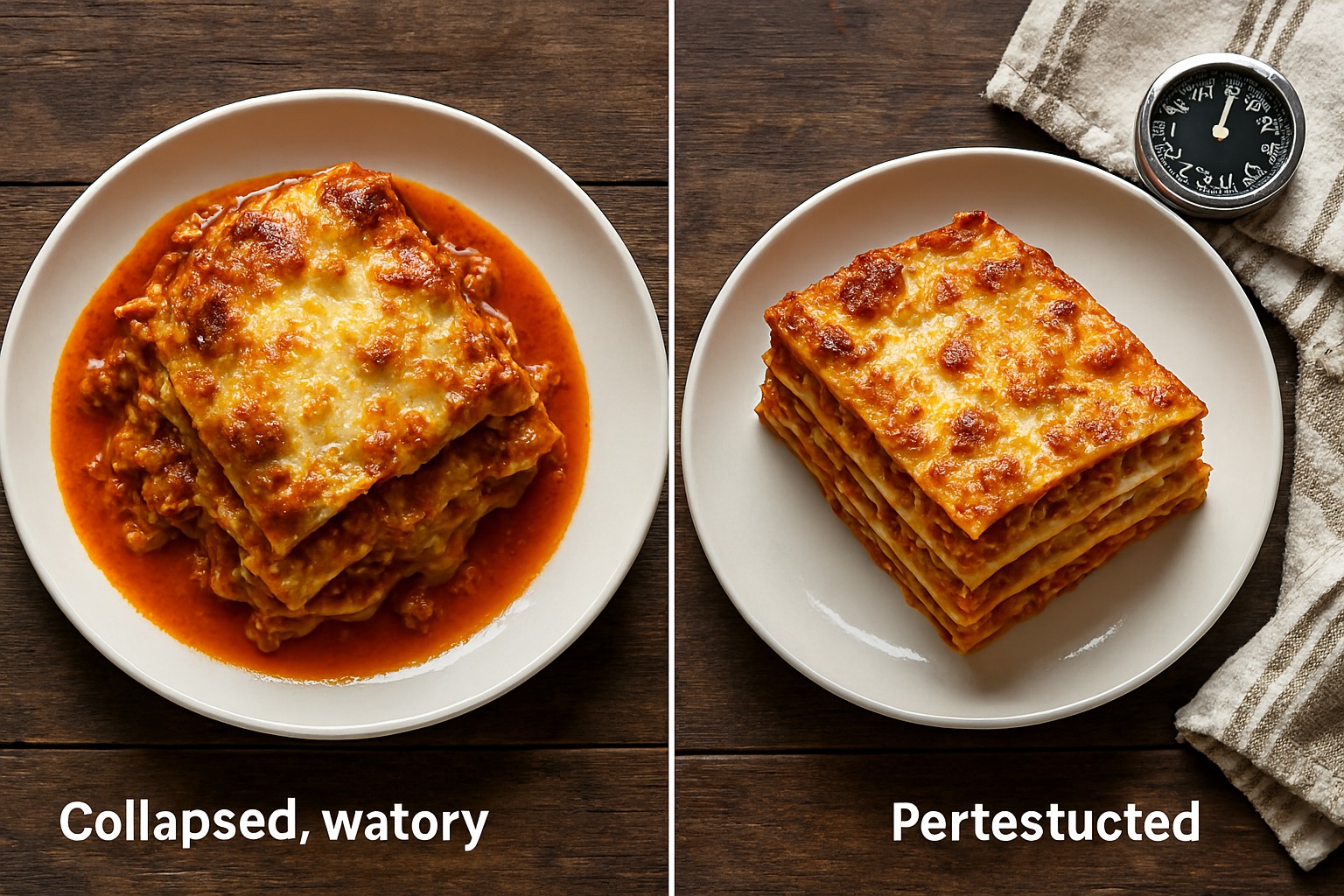
You pulled your lasagna out of the oven.
It smells amazing. Golden cheese. Bubbling edges.
But when you cut into it… soup.
Sauce floods the plate. Layers slide apart. That beautiful slice you imagined? Now a soggy puddle.
If this sounds familiar, you’re not alone. Watery lasagna is the #1 complaint from home cooks across America—and it’s almost always preventable.
The good news? Whether you’re making meat lasagna, veggie lasagna, or zucchini “no-noodle” lasagna, there are clear, practical fixes. And most take less than five minutes of extra effort.
Let’s turn your mushy mess into perfect, sliceable comfort—every single time.
Why Your Lasagna Turns Watery (It’s Not Just “Bad Luck”)
Water comes from three main sources:
- Too much sauce – Especially with no-boil noodles, excess liquid has nowhere to go.
- Wet fillings – Ricotta, spinach, zucchini, mushrooms, and even ground meat release moisture as they bake.
- Skipping the rest – Cutting too soon traps steam, which condenses into water.
According to food scientists at America’s Test Kitchen, the ideal lasagna has just enough moisture to hydrate the noodles—but not so much that it overwhelms the structure.
The fix? Control liquid at every stage.
Before You Bake: Prep Like a Pro
1. Drain and dry your ricotta
Whole-milk ricotta often sits in whey. Line a fine-mesh strainer with cheesecloth or paper towels. Let it drain 15–30 minutes. You’ll be shocked how much liquid comes out.
2. Squeeze spinach like your dinner depends on it
Frozen or fresh, spinach holds gallons of water. Thaw frozen spinach, then wrap it in a clean kitchen towel. Twist hard over the sink until no drops fall. Do the same with sautéed fresh spinach.
3. Salt and drain zucchini (if using)
For zucchini lasagna: slice, salt both sides, wait 20 minutes, then pat bone-dry with paper towels. This step alone prevents 80% of sogginess.
4. Simmer your sauce
If using jarred marinara, pour it into a saucepan and simmer uncovered for 10–15 minutes. Reducing it by ¼ concentrates flavor and removes excess water.
5. Use the right noodle-to-sauce ratio
For a 9×13-inch pan:
- No-boil noodles: max 3½ cups total sauce
- Pre-cooked noodles: up to 4 cups
More than that? You’re making soup.
During Baking: Trap Steam, Not Water
Cover tightly with foil for the first 30 minutes. This creates a steamy environment that cooks the noodles evenly—without letting moisture escape.
Then uncover for the last 10–15 minutes. This lets excess steam evaporate and helps the top crisp.
And whatever you do—don’t skip the resting time.
After Baking: The Non-Negotiable Step
Let your lasagna rest for 15–20 minutes before cutting.
Why?
- The starches in the noodles and sauce need time to set.
- Steam inside condenses and gets reabsorbed—not spilled onto your plate.
- Layers firm up so you get clean slices, not collapse.
Set a timer. Walk away. Pour a glass of wine. Your patience will be rewarded.
Real-Life Fixes If It’s Already Watery
Uh-oh. You cut too soon. Or forgot to drain the spinach. Now what?
Option 1: Re-bake it
Scoop excess liquid off the top with a spoon. Cover loosely with foil. Return to a 350°F oven for 10–15 minutes. Let rest again.
Option 2: Thicken with cheese
Sprinkle a thin layer of shredded Parmesan or breadcrumbs over the top. The fat and starch absorb surface moisture.
Option 3: Serve it smarter
Use a slotted spatula to lift slices, leaving pooled liquid behind. Plate with a paper towel underneath to catch drips.
Not ideal—but better than tossing it.
Pro Tips From Someone Who’s Been There
- Use whole-milk dairy. Low-fat ricotta and mozzarella release more water.
- Add an egg to ricotta. It binds the filling and reduces seepage.
- Layer strategically: sauce → noodles → filling → sauce → cheese. Don’t drown layers in wet ingredients.
- Go easy on veggies. Mushrooms, eggplant, and tomatoes all weep water. Pre-cook and drain them first.
- When in doubt, under-sauce. You can always add more on the side.
Top 5 FAQs People Actually Search For
1. Why is my lasagna watery the next day?
Moisture redistributes as it cools. Always reheat covered at 325°F—don’t microwave, which turns it rubbery and wet.
2. Can I use cornstarch to thicken lasagna?
Not recommended. It can create a gummy texture. Better to reduce sauce beforehand or drain fillings.
3. Does no-boil noodle lasagna need more sauce?
Yes—but only slightly. They need liquid to cook, but too much = soup. Stick to 3–3½ cups total for a 9×13 dish.
4. Is ricotta or cottage cheese less watery?
Cottage cheese is often wetter unless well-drained. Whole-milk ricotta, properly drained, is more reliable.
5. How do I know if my sauce is reduced enough?
It should coat the back of a spoon and leave a clear trail when you run your finger through it.
The Bottom Line
Watery lasagna isn’t a failure.
It’s a fixable mistake—even after it’s baked.
With smart prep, controlled moisture, and a little patience, you can turn any lasagna into the sliceable, satisfying centerpiece your family deserves.
So next time you assemble that dish, remember: less liquid, more love, and always—always—let it rest.
Your fork (and your dinner guests) will thank you.
See Also – Lasagna Layering Order Explained: The Secret to Perfect Slices (No More Soggy Mess!)