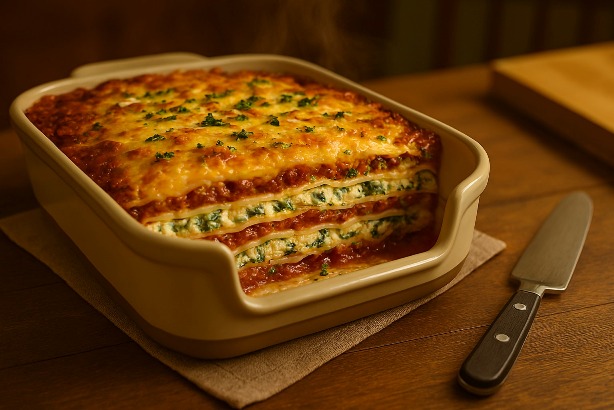
You’ve made lasagna before.
But when you cut into it… everything collapses.
Sauce oozes out. Cheese slides off. Noodles stick together like a wet blanket.
What went wrong?
Spoiler: It’s not your recipe. It’s your layering order.
Lasagna isn’t just about ingredients—it’s architecture. And like any good building, it needs a strong foundation, balanced layers, and a solid roof.
Get the order right, and you’ll get clean, sliceable, restaurant-worthy lasagna every time. Get it wrong? You’re serving soup with cheese on top.
Let’s fix that—once and for all.
Why Layering Matters More Than You Think
According to food science experts (and decades of home cook trial-and-error), lasagna fails for three reasons: too much moisture, uneven distribution, and poor structural support.
The solution? A strategic layering sequence that controls liquid, binds ingredients, and creates stability.
Think of it like this: your lasagna is a sandwich—with 6+ layers. If you put mayo on the outside, it gets soggy. Same logic applies here.
The Golden Rule of Lasagna Layering
Always start and end with sauce.
Why?
- The bottom layer of sauce keeps noodles from sticking to the pan and steaming instead of absorbing flavor.
- The top layer of sauce (under cheese) prevents noodles from drying out and burning.
Everything in between? Follow this foolproof order:
- Thin layer of sauce (meat or tomato-based)
- Noodles (slightly overlapping)
- Cheese filling (ricotta, spinach, béchamel, etc.)
- More sauce
- Sprinkle of mozzarella
- Repeat
- Finish with noodles → sauce → generous cheese
Yes, that means noodles go on top—not cheese alone. The cheese melts into the top noodle layer, creating a seal that holds everything together.
How to Layer Every Popular Lasagna Type
Classic Meat Lasagna
- Bottom: ¾ cup marinara
- Layer: noodles → ricotta mix → meat sauce → mozzarella
- Repeat twice
- Top: noodles → meat sauce → mozzarella + Parmesan
Ricotta Spinach Lasagna
- Bottom: ¾ cup marinara
- Layer: noodles → spinach-ricotta → marinara → mozzarella
- Repeat
- Top: noodles → marinara → cheese blend
Chicken Lasagna with White Sauce
- Bottom: ¾ cup béchamel
- Layer: noodles → chicken + white sauce → mozzarella
- Repeat
- Top: noodles → white sauce → mozzarella + Parmesan
Zucchini “No-Noodle” Lasagna
- Bottom: ¾ cup sauce
- Layer: zucchini slices → ricotta or meat → sauce → cheese
- Repeat
- Top: zucchini → sauce → cheese
Pro Tips From Someone Who’s Tested Every Method
- Don’t overfill. Too much ricotta or meat between layers = bulging, unstable lasagna. Keep fillings thin and even.
- Use no-boil noodles. They absorb moisture better and create more uniform layers than pre-cooked noodles.
- Press down gently after each layer. This eliminates air pockets and improves cohesion.
- Rest is non-negotiable. Let lasagna sit 15–20 minutes after baking. This allows layers to set and moisture to redistribute.
- Cover tightly with foil for the first half of baking. Trapped steam cooks noodles evenly without drying edges.
Real-Life Scenarios Where This Saves Dinner
- Holiday hosting: You’re making lasagna for 12. Clean slices = instant credibility.
- Meal prep: Portion leftovers into containers. Proper layering means it reheats without turning into mush.
- Kid-friendly meals: My neighbor’s picky eater only eats “the square one.” Good structure = happy kid.
- Potluck perfection: Transport it across town. If layered right, it arrives intact and gorgeous.
Top 5 FAQs People Actually Search For
1. Do I put cheese on the very top?
Yes—but only after a final layer of sauce over the top noodles. Cheese directly on noodles dries them out. Sauce first, then cheese.
2. Should I overlap the noodles?
Slightly, yes. But don’t double-thick. Overlapping by ½ inch ensures full coverage without dense, chewy spots.
3. Can I skip the bottom sauce layer?
Never. Without it, noodles stick to the pan and scorch. Plus, they won’t hydrate properly in no-boil versions.
4. How many layers should I make?
Three layers of noodles is ideal (meaning 4 sauce/cheese layers total). Fewer = skimpy. More = unstable and undercooked center.
5. Why does my lasagna fall apart when I cut it?
Likely causes: cutting too soon, too much wet filling, or missing the top noodle layer. Rest 15+ minutes, control moisture, and always finish with noodles under cheese.
The Bottom Line
Lasagna isn’t just cooking. It’s construction.
And once you understand the layering logic, you’ll never serve a sloppy mess again.
It’s not about fancy ingredients. It’s about smart sequencing—sauce as mortar, noodles as bricks, cheese as the sealant.
So next time you assemble that 9×13 dish, remember: start saucy, end cheesy, and keep those layers tight.
Your future self—serving perfect, sliceable squares to oohs and ahhs—will thank you.
See Also – Ricotta Spinach Lasagna: The Creamy, Cheesy Comfort Dish That Feels Like a Hug